

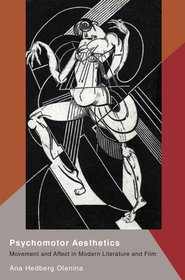
Psychomotor Aesthetics
Movement and Affect in Modern Literature and Film
-
10% KEDVEZMÉNY?
- A kedvezmény csak az 'Értesítés a kedvenc témákról' hírlevelünk címzettjeinek rendeléseire érvényes.
- Kiadói listaár GBP 127.50
-
57 566 Ft (54 825 Ft + 5% áfa)
Az ár azért becsült, mert a rendelés pillanatában nem lehet pontosan tudni, hogy a beérkezéskor milyen lesz a forint árfolyama az adott termék eredeti devizájához képest. Ha a forint romlana, kissé többet, ha javulna, kissé kevesebbet kell majd fizetnie.
- Kedvezmény(ek) 10% (kb. 5 756 Ft)
- Kedvezményes ár 51 810 Ft (49 343 Ft + 5% áfa)
Iratkozzon fel most és részesüljön kedvezőbb árainkból!
Feliratkozom
57 566 Ft

Beszerezhetőség
Megrendelésre a kiadó utánnyomja a könyvet. Rendelhető, de a szokásosnál kicsit lassabban érkezik meg.
Why don't you give exact delivery time?
A beszerzés időigényét az eddigi tapasztalatokra alapozva adjuk meg. Azért becsült, mert a terméket külföldről hozzuk be, így a kiadó kiszolgálásának pillanatnyi gyorsaságától is függ. A megadottnál gyorsabb és lassabb szállítás is elképzelhető, de mindent megteszünk, hogy Ön a lehető leghamarabb jusson hozzá a termékhez.
A termék adatai:
- Kiadó OUP USA
- Megjelenés dátuma 2020. június 22.
- ISBN 9780190051259
- Kötéstípus Keménykötés
- Terjedelem412 oldal
- Méret 159x241x27 mm
- Súly 708 g
- Nyelv angol
- Illusztrációk 88 figures 0
Kategóriák
Rövid leírás:
In Psychomotor Aesthetics, author Ana Hedberg Olenina explores the effects of newly-emerging physiological psychology on Russian and American art and cultural production at the turn of the 20th century.
TöbbHosszú leírás:
In the late 19th century, modern psychology emerged as a discipline, shaking off metaphysical notions of the soul in favor of a more scientific, neurophysiological concept of the mind. Laboratories began to introduce instruments and procedures which examined bodily markers of psychological experiences, like muscle contractions and changes in vital signs. Along with these changes in the scientific realm came a newfound interest in physiological psychology within the arts - particularly with the new perception of artwork as stimuli, able to induce specific affective experiences.
In Psychomotor Aesthetics, author Ana Hedberg Olenina explores the effects of physiological psychology on art at the turn of the 20th century. The book explores its influence on not only art scholars and theorists, wishing to understand the relationship between artistic experience and the internal processes of the mind, but also cultural producers more widely. Actors incorporated psychology into their film acting techniques, the Russian and American film industries started to evaluate audience members' physical reactions, and literary scholars began investigations into poets' and performers' articulation. Yet also looming over this newly emergent field were commercial advertisers and politicians, eager to use psychology to further their own mass appeal and assert control over audiences. Drawing from archival documents and a variety of cross-disciplinary sources, Psychomotor Aesthetics calls attention to the cultural resonance of theories behind emotional and cognitive experience - theories with implications for today's neuroaesthetics and neuromarketing.
This book is a fabulous addition to a growing literature on the crucial early twentieth-century exchanges between physiological psychology, aesthetics, and early modernism in the arts, here focused especially on Russia and the early Soviet Union.
Tartalomjegyzék:
Acknowledgements
Introduction
Chapter 1. Sound-Gesture: Embodiment in Russian Futurist Poetry
Chapter 2. Motor Impulses of Verse: Russian Formalists on Poetry Recitation
Chapter 3. Scores of Movement: Lev Kuleshov Approach to Film Acting
Chapter 4. Kinesthetic Empathy: Sergei Eisenstein's Theory of Spectatorship
Chapter 5. The Pulse of Film: Psychophysiological Studies of Film Audience
Epilogue
Bibliography

