

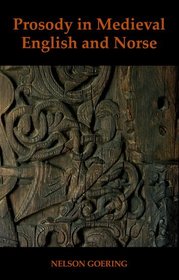
Prosody in Medieval English and Norse
Sorozatcím: British Academy Monographs;
- Kiadói listaár GBP 100.00
-
47 775 Ft (45 500 Ft + 5% áfa)
Az ár azért becsült, mert a rendelés pillanatában nem lehet pontosan tudni, hogy a beérkezéskor milyen lesz a forint árfolyama az adott termék eredeti devizájához képest. Ha a forint romlana, kissé többet, ha javulna, kissé kevesebbet kell majd fizetnie.
47 775 Ft

Beszerezhetőség
Becsült beszerzési idő: A Prosperónál jelenleg nincsen raktáron, de a kiadónál igen. Beszerzés kb. 3-5 hét..
A Prosperónál jelenleg nincsen raktáron.
Why don't you give exact delivery time?
A beszerzés időigényét az eddigi tapasztalatokra alapozva adjuk meg. Azért becsült, mert a terméket külföldről hozzuk be, így a kiadó kiszolgálásának pillanatnyi gyorsaságától is függ. A megadottnál gyorsabb és lassabb szállítás is elképzelhető, de mindent megteszünk, hogy Ön a lehető leghamarabb jusson hozzá a termékhez.
A termék adatai:
- Kiadó The British Academy
- Megjelenés dátuma 2023. április 13.
- ISBN 9780197267462
- Kötéstípus Keménykötés
- Terjedelem390 oldal
- Méret 240x162x10 mm
- Súly 722 g
- Nyelv angol
- Illusztrációk No 403
Kategóriák
Rövid leírás:
Prosody in Medieval English and Norse reconstructs aspects of linguistic prosody from the medieval records of two closely related languages: English and Norse. Evidence from a series of case studies points to continuity in the internal rhythms of words in these languages, especially the enduring role of the bimoraic trochee.
TöbbHosszú leírás:
How can we reconstruct the rhythms and cadences – the prosody – of past languages? Prosody in Medieval English and Norse approaches this problem by comparing two closely related languages with a long written history in the Middle Ages. Through a series of case studies on vowel reductions and alliterative verse forms, Kaster identifies important continuities in the internal rhythmic structure of words and explores the enduring role of the bimoraic trochee.
The main rhythmic building block of these languages, the bimoraic trochee, shapes both linguistic change and poetic structure. The bimoraic trochee played a defining role in the loss of many unstressed vowels that took place in English and Norse in the 6th and 7th centuries, and continued to influence vowel reductions in later English. In alliterative poetry, the bimoraic trochee explains previously opaque restrictions against using certain words in certain metrical contexts, especially the controversial Kaluza's law in Beowulf and Craigie's law in the Poetic Edda. Together, these case studies allow prosodic change and stability to be traced over time.
Goering's ambitious book effectively spans a broad chronological, geographic, topical, and poetic range in its pursuit of the history of the bimoraic trochee in early English and Scandinavian linguistics and metrics. Több
Tartalomjegyzék:
- List of Tables
- Acknowledgements
- Abbreviations and Symbols
- 1: Introduction: Bones and the Beast
- 2: The Toolkit: Syllables, Moras, Feet, and Words
- 3: Rum, Ram, Ruf: The Prosody of Alliterative Verse
- 4: The Hēafudu-problem: Early Old English Foot Structure
- 5: The Sandwich Rule: Kaluza's Law and Resolution in Beowulf
- 6: Feet in Early Middle English: Ie-Reduction
- 7: Metrical Resolution in Early Middle English
- 8: Later Middle English Prosody
- 9: The Norse Syllable Controversy
- 10: Vowel Loss in Runic Inscriptions
- 11: Resolution in Fornyrðislag
- 12: The Constrained Position: Non-resolution and Craigie's Law
- 13: Conclusion: Bimoraism in Medieval English and Norse
- Appendices
- Bibliography
- Note on Alphabetisation
- Index of Verses
- Index of Words
- Index of Subjects

