

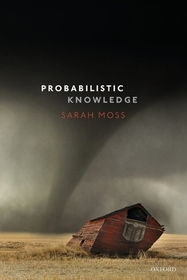
Probabilistic Knowledge
-
10% KEDVEZMÉNY?
- A kedvezmény csak az 'Értesítés a kedvenc témákról' hírlevelünk címzettjeinek rendeléseire érvényes.
- Kiadói listaár GBP 29.99
-
13 540 Ft (12 895 Ft + 5% áfa)
Az ár azért becsült, mert a rendelés pillanatában nem lehet pontosan tudni, hogy a beérkezéskor milyen lesz a forint árfolyama az adott termék eredeti devizájához képest. Ha a forint romlana, kissé többet, ha javulna, kissé kevesebbet kell majd fizetnie.
- Kedvezmény(ek) 10% (kb. 1 354 Ft)
- Kedvezményes ár 12 186 Ft (11 606 Ft + 5% áfa)
Iratkozzon fel most és részesüljön kedvezőbb árainkból!
Feliratkozom
13 540 Ft

Beszerezhetőség
Becsült beszerzési idő: A Prosperónál jelenleg nincsen raktáron, de a kiadónál igen. Beszerzés kb. 3-5 hét..
A Prosperónál jelenleg nincsen raktáron.
Why don't you give exact delivery time?
A beszerzés időigényét az eddigi tapasztalatokra alapozva adjuk meg. Azért becsült, mert a terméket külföldről hozzuk be, így a kiadó kiszolgálásának pillanatnyi gyorsaságától is függ. A megadottnál gyorsabb és lassabb szállítás is elképzelhető, de mindent megteszünk, hogy Ön a lehető leghamarabb jusson hozzá a termékhez.
A termék adatai:
- Kiadó OUP Oxford
- Megjelenés dátuma 2020. február 27.
- ISBN 9780198858096
- Kötéstípus Puhakötés
- Terjedelem280 oldal
- Méret 231x154x1 mm
- Súly 432 g
- Nyelv angol 0
Kategóriák
Rövid leírás:
Sarah Moss argues that in addition to full beliefs, credences can constitute knowledge. She introduces the notion of probabilistic content and shows how it plays a central role not only in epistemology, but in the philosophy of mind and language. Just you can believe and assert propositions, you can believe and assert probabilistic contents.
TöbbHosszú leírás:
Traditional philosophical discussions of knowledge have focused on the epistemic status of full beliefs. Sarah Moss argues that in addition to full beliefs, credences can constitute knowledge. For instance, your 0.4 credence that it is raining outside can constitute knowledge, in just the same way that your full beliefs can. In addition, you can know that it might be raining, and that if it is raining then it is probably cloudy, where this knowledge is not knowledge of propositions, but of probabilistic contents.
The notion of probabilistic content introduced in this book plays a central role not only in epistemology, but in the philosophy of mind and language as well. Just as tradition holds that you believe and assert propositions, you can believe and assert probabilistic contents. Accepting that we can believe, assert, and know probabilistic contents has significant consequences for many philosophical debates, including debates about the relationship between full belief and credence, the semantics of epistemic modals and conditionals, the contents of perceptual experience, peer disagreement, pragmatic encroachment, perceptual dogmatism, and transformative experience. In addition, accepting probabilistic knowledge can help us discredit negative evaluations of female speech, explain why merely statistical evidence is insufficient for legal proof, and identify epistemic norms violated by acts of racial profiling. Hence the central theses of this book not only help us better understand the nature of our own mental states, but also help us better understand the nature of our responsibilities to each other.
Essential reading for philosophers of language, semanticists, and formal epistemologists. . . . Probabilistic Knowledge offers a persuasive case for a radical revision of some foundational ideas about the nature of content and communication. . . . rich and rewarding.
Tartalomjegyzék:
The case for probabilistic contents
The case for probabilistic assertion
Epistemic modals and probability operators
Indicative conditionals
The case for probabilistic knowledge
Factivity
Skepticism
Knowledge and belief
Knowledge and action
Knowledge and persons
Appendix: A formal semantics for epistemic vocabulary

