

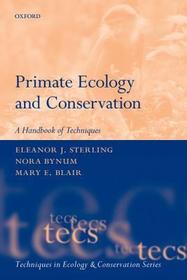
Primate Ecology and Conservation
Sorozatcím: Techniques in Ecology & Conservation;
-
10% KEDVEZMÉNY?
- A kedvezmény csak az 'Értesítés a kedvenc témákról' hírlevelünk címzettjeinek rendeléseire érvényes.
- Kiadói listaár GBP 137.50
-
62 081 Ft (59 125 Ft + 5% áfa)
Az ár azért becsült, mert a rendelés pillanatában nem lehet pontosan tudni, hogy a beérkezéskor milyen lesz a forint árfolyama az adott termék eredeti devizájához képest. Ha a forint romlana, kissé többet, ha javulna, kissé kevesebbet kell majd fizetnie.
- Kedvezmény(ek) 10% (cc. 6 208 Ft off)
- Kedvezményes ár 55 873 Ft (53 213 Ft + 5% áfa)
Iratkozzon fel most és részesüljön kedvezőbb árainkból!
Feliratkozom
62 081 Ft

Beszerezhetőség
Bizonytalan ideig nincs raktáron a kiadónál, rendelése nem javasolt.
Why don't you give exact delivery time?
A beszerzés időigényét az eddigi tapasztalatokra alapozva adjuk meg. Azért becsült, mert a terméket külföldről hozzuk be, így a kiadó kiszolgálásának pillanatnyi gyorsaságától is függ. A megadottnál gyorsabb és lassabb szállítás is elképzelhető, de mindent megteszünk, hogy Ön a lehető leghamarabb jusson hozzá a termékhez.
A termék adatai:
- Kiadó OUP Oxford
- Megjelenés dátuma 2013. április 4.
- ISBN 9780199659449
- Kötéstípus Keménykötés
- Terjedelem448 oldal
- Méret 240x163x31 mm
- Súly 812 g
- Nyelv angol 0
Kategóriák
Rövid leírás:
This practical volume brings together a group of distinguished primate researchers to synthesize field, laboratory, and conservation management techniques for primate ecology and conservation.
TöbbHosszú leírás:
The study of primate ecology and conservation has advanced rapidly in recent years. This practical volume brings together a group of distinguished primate researchers to synthesize field, laboratory, and conservation management techniques for primate ecology and conservation. The synthesis focuses on new and emerging field methods alongside a comprehensive presentation of laboratory and data analysis techniques, as well as the latest methods for determining conservation status and conservation management. This book's particular focus is on innovative ways to study primates in a changing world, including emerging methods such as non-invasive genetic techniques and advanced spatial modeling. In addition to synthesizing field and lab methods, the authors also discuss data interpretation, as well as important guiding questions and principles for students and researchers to consider as they plan research projects in primate ecology and conservation such as: how to choose a field site, acquire research permits, connect with local authorities, communities and researchers, and many other considerations. Although three chapters are dedicated to conservation methods, consideration of conservation status and threats to primate populations are considered throughout this volume where appropriate. This latest publication in the Techniques in Ecology and Conservation Series aims to provide a practical empirical reference text with an international scope, appropriate for graduate students, researchers, and conservation professionals across the globe.
In sum, this is an excellent book for graduate students, young researchers, and more established practitioners, in providing an exceptional range of ecological and conservation methods and techniques under a single cover. Going forward it will be a required reading for each of my graduate students as they start to contemplate their own research projects, and a volume that I will donate to collaborators in developing countries
Tartalomjegyzék:
Introduction: Why a New Methods Book on Primate Ecology and Conservation?
Primate Census and Survey Techniques
Darting, Anesthesia, and Handling
Health Assessment and Epidemiology
Behavior within Groups
Habitat Assessment and Species Niche Modeling
Characterization of Primate Environments through Assessment of Plant Phenology
Methods in Ethnoprimatology: Exploring the Human-Nonhuman Primate Interface
Social and Spatial Relationships between Primate Groups
Experiments in Primatology: From the Lab to the Field and Back Again
Diet and Nutrition
Physiology and Energetics
Primate Behavioral Endocrinology
Population Genetics, Molecular Phylogenetics, and Phylogeography
Demography, Life Histories, and Population Dynamics
Determining Conservation Status and Contributing to Conservation Action
Captive Breeding and Ex Situ Conservation
Primates in Trade
Conclusion: The Future of Studying Primates in a Changing World

