

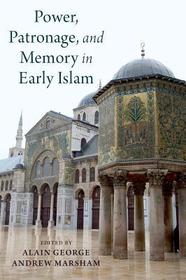
Power, Patronage, and Memory in Early Islam
-
10% KEDVEZMÉNY?
- A kedvezmény csak az 'Értesítés a kedvenc témákról' hírlevelünk címzettjeinek rendeléseire érvényes.
- Kiadói listaár GBP 120.00
-
57 330 Ft (54 600 Ft + 5% áfa)
Az ár azért becsült, mert a rendelés pillanatában nem lehet pontosan tudni, hogy a beérkezéskor milyen lesz a forint árfolyama az adott termék eredeti devizájához képest. Ha a forint romlana, kissé többet, ha javulna, kissé kevesebbet kell majd fizetnie.
- Kedvezmény(ek) 10% (cc. 5 733 Ft off)
- Kedvezményes ár 51 597 Ft (49 140 Ft + 5% áfa)
Iratkozzon fel most és részesüljön kedvezőbb árainkból!
Feliratkozom
57 330 Ft

Beszerezhetőség
Megrendelésre a kiadó utánnyomja a könyvet. Rendelhető, de a szokásosnál kicsit lassabban érkezik meg.
Why don't you give exact delivery time?
A beszerzés időigényét az eddigi tapasztalatokra alapozva adjuk meg. Azért becsült, mert a terméket külföldről hozzuk be, így a kiadó kiszolgálásának pillanatnyi gyorsaságától is függ. A megadottnál gyorsabb és lassabb szállítás is elképzelhető, de mindent megteszünk, hogy Ön a lehető leghamarabb jusson hozzá a termékhez.
A termék adatai:
- Kiadó OUP USA
- Megjelenés dátuma 2018. február 8.
- ISBN 9780190498931
- Kötéstípus Keménykötés
- Terjedelem370 oldal
- Méret 163x239x33 mm
- Súly 748 g
- Nyelv angol
- Illusztrációk 119 b/w and 13 color images 0
Kategóriák
Rövid leírás:
Power, Patronage, and Memory in Early Islam elucidates the ways in which Umayyad élites fashioned and projected their self-image, and how these articulations, in turn, mirrored their own times. The authors, combining perspectives from different disciplines, present new material evidence, introduce fresh perspectives about key themes and monuments, and revisit the nature of the historical writing that shaped our knowledge of this period.
TöbbHosszú leírás:
When the Umayyads, the first Islamic dynasty, rose to power shortly after the death of the Prophet Muhammad (d. 632), the polity of which they assumed control had only recently expanded out of Arabia into the Roman eastern Mediterranean, Iraq and Iran. A century later, by the time of their downfall in 750, the last Umayyad caliphs governed the largest empire that the world had seen, stretching from Spain in the West to the Indus valley and Central Asia in the East. By then, their dynasty and the ruling circles around it had articulated with increasing clarity the public face of the new monotheistic religion of Islam, created major masterpieces of world art and architecture, some of which still stand today, and built a state apparatus that was crucial to ensuring the continuity of the Islamic polity. Within the vast lands under their control, the Umayyads and their allies ruled over a mosaic of peoples, languages and faiths, first among them Christianity, Judaism and the Ancient religion of Iran, Zoroastrianism. The Umayyad period is profoundly different from ours, yet it also resonates with modern concerns, from the origins of Islam to dynamics of cultural exchange.
Editors Alain George and Andrew Marsham bring together a collection of essays that shed new light on this crucial period. Power, Patronage, and Memory in Early Islam elucidates the ways in which Umayyad élites fashioned and projected their self-image, and how these articulations, in turn, mirrored their own times. The authors, combining perspectives from different disciplines, present new material evidence, introduce fresh perspectives about key themes and monuments, and revisit the nature of the historical writing that shaped our knowledge of this period.
The book offers both important novel research and an overview of some of the main themes of wider research into the Umayyad era.
Tartalomjegyzék:
Acknowledgements
Introduction
Chapter 1: "God's Caliph" Revisited Andrew Marsham
Chapter 2: Paradise and Empire Alain George
Chapter 3: A Qur'anic Script from Umayyad Times François Déroche
Chapter 4: Hisham's Balancing Act Robert Hillenbrand
Chapter 5: Khanasira and Andarin in the Umayyad Period and a New Arabic Tax Document Robert G. Hoyland
Chapter 6: Two Possible Caliphal Representations from Qasr al-Hayr al-Sharqi and their Implication for the History of the Site Denis Genequand
Chapter 7: Umayyad Palace Iconography Nadia Ali and Mattia Guidetti
Chapter 8: Christians in Umayyad Iraq Philip Wood
Chapter 9: The Future of the Past Antoine Borrut
Chapter 10: Caliphs and Conquerors Nicola Clarke
Chapter 11: The Umayyads in Contemporary Arab TV Drama Jakob Skovgaard-Petersen
References
Index

