

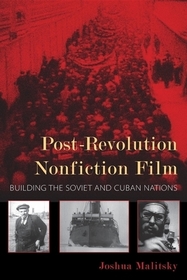
Post–Revolution Nonfiction Film – Building the Soviet and Cuban Nations
Building the Soviet and Cuban Nations
Sorozatcím: New Directions in National Cinemas;
-
10% KEDVEZMÉNY?
- A kedvezmény csak az 'Értesítés a kedvenc témákról' hírlevelünk címzettjeinek rendeléseire érvényes.
- Kiadói listaár GBP 64.00
-
30 576 Ft (29 120 Ft + 5% áfa)
Az ár azért becsült, mert a rendelés pillanatában nem lehet pontosan tudni, hogy a beérkezéskor milyen lesz a forint árfolyama az adott termék eredeti devizájához képest. Ha a forint romlana, kissé többet, ha javulna, kissé kevesebbet kell majd fizetnie.
- Kedvezmény(ek) 10% (cc. 3 058 Ft off)
- Kedvezményes ár 27 518 Ft (26 208 Ft + 5% áfa)
Iratkozzon fel most és részesüljön kedvezőbb árainkból!
Feliratkozom
30 576 Ft

Beszerezhetőség
Becsült beszerzési idő: A Prosperónál jelenleg nincsen raktáron, de a kiadónál igen. Beszerzés kb. 3-5 hét..
A Prosperónál jelenleg nincsen raktáron.
Why don't you give exact delivery time?
A beszerzés időigényét az eddigi tapasztalatokra alapozva adjuk meg. Azért becsült, mert a terméket külföldről hozzuk be, így a kiadó kiszolgálásának pillanatnyi gyorsaságától is függ. A megadottnál gyorsabb és lassabb szállítás is elképzelhető, de mindent megteszünk, hogy Ön a lehető leghamarabb jusson hozzá a termékhez.
A termék adatai:
- Kiadó MH – Indiana University Press
- Megjelenés dátuma 2013. március 20.
- Kötetek száma Print PDF
- ISBN 9780253007643
- Kötéstípus Keménykötés
- Terjedelem290 oldal
- Méret 240x163x24 mm
- Súly 604 g
- Nyelv angol
- Illusztrációk 19 b&w illus. 0
Kategóriák
Hosszú leírás:
In the charged atmosphere of post-revolution, artistic and political forces often join in the effort to reimagine a new national space for a liberated people. Joshua Malitsky examines nonfiction film and nation building to better understand documentary film as a tool used by the state to create powerful historical and political narratives. Drawing on newsreels and documentaries produced in the aftermath of the Russian revolution of 1917 and the Cuban revolution of 1959, Malitsky demonstrates the ability of nonfiction film to help shape the new citizen and unify, edify, and modernize society as a whole. Post-Revolution Nonfiction Film not only presents a critical historical view of the politics, rhetoric, and aesthetics shaping post-revolution Soviet and Cuban culture but also provides a framework for understanding the larger political and cultural implications of documentary and nonfiction film.
Több
