

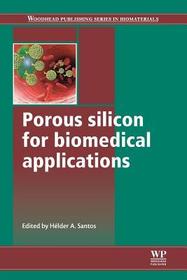
Porous Silicon for Biomedical Applications
Sorozatcím: Woodhead Publishing Series in Biomaterials;
-
10% KEDVEZMÉNY?
- A kedvezmény csak az 'Értesítés a kedvenc témákról' hírlevelünk címzettjeinek rendeléseire érvényes.
- Kiadói listaár EUR 215.00
-
89 171 Ft (84 925 Ft + 5% áfa)
Az ár azért becsült, mert a rendelés pillanatában nem lehet pontosan tudni, hogy a beérkezéskor milyen lesz a forint árfolyama az adott termék eredeti devizájához képest. Ha a forint romlana, kissé többet, ha javulna, kissé kevesebbet kell majd fizetnie.
- Kedvezmény(ek) 10% (cc. 8 917 Ft off)
- Kedvezményes ár 80 254 Ft (76 433 Ft + 5% áfa)
Iratkozzon fel most és részesüljön kedvezőbb árainkból!
Feliratkozom
89 171 Ft

Beszerezhetőség
Megjelenése törölve vagy kivonva a forgalomból. Sajnos nem rendelhető.
Why don't you give exact delivery time?
A beszerzés időigényét az eddigi tapasztalatokra alapozva adjuk meg. Azért becsült, mert a terméket külföldről hozzuk be, így a kiadó kiszolgálásának pillanatnyi gyorsaságától is függ. A megadottnál gyorsabb és lassabb szállítás is elképzelhető, de mindent megteszünk, hogy Ön a lehető leghamarabb jusson hozzá a termékhez.
A termék adatai:
- Kiadó Elsevier Science
- Megjelenés dátuma 2018. október 30.
- ISBN 9780081014097
- Kötéstípus Puhakötés
- Terjedelem558 oldal
- Méret 233x155 mm
- Nyelv angol 0
Kategóriák
Hosszú leírás:
Porous silicon has a range of properties, making it ideal for drug delivery, cancer therapy, and tissue engineering. Porous Silicon for Biomedical Applications provides a comprehensive review of this emerging nanostructured and biodegradable biomaterial.
Chapters in part one focus on the fundamentals and properties of porous silicon for biomedical applications, including thermal properties and stabilization, photochemical and nonthermal chemical modification, protein-modified porous silicon films, and biocompatibility of porous silicon. Part two discusses applications in bioimaging and sensing, and explores the optical properties of porous silicon materials; in vivo imaging assessment and radiolabelling of porous silicon; and nanoporous silicon biosensors for DNA sensing and for bacteria detection. Finally, part three highlights drug loading and characterization of porous silicon materials, tumor targeting and imaging, and porous silicon scaffolds for functional tissue engineering, stem cell growth, and osteodifferentiation.
With its acclaimed editor and international team of expert contributors, Porous Silicon for Biomedical Applications is a technical resource and indispensable guide for all those involved in the research, development, and application of porous silicon and other biomaterials, while providing a comprehensive introduction for students and academics interested in the field.
TöbbTartalomjegyzék:
Contributor contact details
Woodhead Publishing Series in Biomaterials
Foreword
Preface
Dedication
Part I: Fundamentals of porous silicon for biomedical applications
1. Porous silicon for medical use: from conception to clinical use
Abstract:
1.1 Introduction
1.2 Biocompatibility of micromachined silicon
1.3 From concept to clinic
1.4 Producing useful physical forms of nanostructured silicon
1.5 Clinical manufacture
1.6 Clinical trials
1.7 Conclusions and future trends
1.8 Acknowledgements
1.9 References
2. Thermal stabilization of porous silicon for biomedical applications
Abstract:
2.1 Introduction
2.2 Thermal oxidation
2.3 Thermal carbonization
2.4 Thermal nitridation and annealing
2.5 Conclusions and future trends
2.6 References
3. Thermal properties of nanoporous silicon materials
Abstract:
3.1 Introduction
3.2 Thermal constants of porous silicon (PSi)
3.3 Thermo-acoustic effect
3.4 Applications
3.5 Conclusions and future trends
3.6 Acknowledgment
3.7 References
4. Photochemical and nonthermal chemical modification of porous silicon for biomedical applications
Abstract:
4.1 Introduction
4.2 Hydrosilylation and controlled surface modification of Si
4.3 Photo-initiated reactions
4.4 Mechanism of photo-initiated reaction
4.5 Electrochemical grafting
4.6 Reactions initiated by other means
4.7 Conclusions and future trends
4.8 Acknowledgments
4.9 References
5. Modifying porous silicon with self-assembled monolayers for biomedical applications
Abstract:
5.1 Introduction
5.2 Silane-based monolayers
5.3 Hydrosilylation of alkenes and alkynes
5.4 Building more complicated interfaces
5.5 Conclusions and future trends
5.6 References
6. Protein-modified porous silicon films for biomedical applications
Abstract:
6.1 Introduction
6.2 Proteins on surfaces
6.3 Porous silicon monolayers and multilayers
6.4 Characterization methods
6.5 Protein-modified PSi
6.6 Conclusions and future trends
6.7 References
7. Biocompatibility of porous silicon for biomedical applications
Abstract:
7.1 Introduction
7.2 Assessment methods for testing the biocompatibility of biomaterials
7.3 Effects of the PSi-based material interactions at the cellular level
7.4 In vivo behaviour of PSi-based materials
7.5 Conclusions and future trends
7.6 Acknowledgements
7.7 References
Part II: Porous silicon for bioimaging and biosensing applications
8. Optical properties of porous silicon materials for biomedical applications
Abstract:
8.1 Introduction
8.2 Morphology of PSi
8.3 Effective medium models
8.4 Optical constants of nano-PSi
8.5 Stability of the optical properties of nano-PSi
8.6 Multilayer structures
8.7 Optical applications of PSi optical filters
8.8 Conclusions and future trends
8.9 References
9. In vivo imaging assessment of porous silicon
Abstract:
9.1 Introduction
9.2 Magnetic resonance imaging (MRI)
9.3 Nuclear imaging
9.4 Optical imaging
9.5 Compiling PSi-based systems for imaging
9.6 In vivo imaging studies with PSi particles
9.7 Conclusions and future trends
9.8 Acknowledgments
9.9 References
10. Radiolabeled porous silicon for bioimaging applications
Abstract:
10.1 Introduction
10.2 Methods for tracing drug delivery
10.3 Nuclear imaging in drug development
10.4 Radiolabeled PSi nanomaterials
10.5 Conclusions and future trends
10.6 References
11. Desorption/ionization on porous silicon (DIOS) for metabolite imaging
Abstract:
11.1 Introduction
11.2 Substrate preparation for DIOS
11.3 Desorption and ionization mechanism of DIOS
11.4 Improved ionization methods based on DIOS
11.5 DIOS in mass spectrometry imaging (MSI)
11.6 Conclusions and future trends
11.7 References
12. Porous silicon for bacteria detection
Abstract:
12.1 Introduction
12.2 'Indirect' bacteria detection
12.3 'Direct' bacteria detection
12.4 Conclusions and future trends
12.5 References
13. Nanoporous silicon biosensors for DNA sensing
Abstract:
13.1 Introduction
13.2 Porous silicon (PSi) sensor preparation
13.3 PSi DNA sensor structures, measurement techniques, and sensitivity
13.4 Optical transduction
13.5 Electrical and electrochemical transduction
13.6 Corrosion of PSi DNA sensors
13.7 Effect of pore size on DNA infiltration and detection
13.8 Control of DNA surface density in nanoscale pores
13.9 Kinetics for real-time sensing
13.10 Conclusions and future trends
13.11 Acknowledgement
13.12 References
Part III: Porous silicon for drug delivery, cancer therapy and tissue engineering applications
14. Drug loading and characterization of porous silicon materials
Abstract:
14.1 Introduction
14.2 Methods for the loading of the cargo molecules into PSi pores
14.3 Characterization of drug-loaded PSi materials
14.4 Conclusions and future trends
14.5 References
15. Nanoporous silicon to enhance drug solubility
Abstract:
15.1 Introduction
15.2 Loading poorly soluble drugs into PSi
15.3 In vitro studies of drug dissolution
15.4 In vivo studies of drug delivery
15.5 Conclusions and future trends
15.6 References
16. Multistage porous silicon for cancer therapy
Abstract:
16.1 Introduction
16.2 The biology of cancer
16.3 Current therapeutics
16.4 Mesoporous silicon and therapeutic applications
16.5 Conclusions and future trends
16.6 References
17. Porous silicon for tumour targeting and imaging
Abstract:
17.1 Introduction
17.2 Tumour targeting and imaging
17.3 Preparation of PSi particles
17.4 PSi particles for in vivo tumour targeting
17.5 PSi particles for in vivo tumour imaging
17.6 Conclusions and future trends
17.7 References
18. Porous silicon-polymer composites for cell culture and tissue engineering applications
Abstract:
18.1 Introduction
18.2 Fundamentals of porous silicon (PSi) and PSi/polymer composite fabrication and functionalization
18.3 PSi/polymer composites
18.4 Polymers for tissue engineering
18.5 The grafting of biopolymers to PSi
18.6 PSi and tissue engineering
18.7 Applications of PSi-polymer composites in tissue culture and bioengineering
18.8 Conclusions and future trends
18.9 Sources of further information and advice
18.10 Acknowledgement
18.11 References
19. Porous silicon and related composites as functional tissue engineering scaffolds
Abstract:
19.1 Introduction
19.2 Role of porous silicon (PSi) biodegradability
19.3 Strategies for PSi/polymer composite formulation
19.4 Studies related to orthopedic tissue engineering
19.5 Conclusions and future trends
19.6 References
20. Porous silicon scaffolds for stem cells growth and osteodifferentiation
Abstract:
20.1 Introduction
20.2 Stem cells for bone tissue engineering: adult, neonatal and embryonic stem cells (ESCs)
20.3 Stem cells osteogenic differentiation and bone formation
20.4 Influence of pore size, nanoroughness and chemical surface treatment
20.5 Growth factors delivery and Si effects on osteodifferentiation
20.6 Conclusions and future trends
20.7 References
Index
Több
