

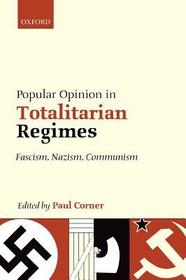
Popular Opinion in Totalitarian Regimes
Fascism, Nazism, Communism
-
10% KEDVEZMÉNY?
- A kedvezmény csak az 'Értesítés a kedvenc témákról' hírlevelünk címzettjeinek rendeléseire érvényes.
- Kiadói listaár GBP 39.99
-
18 055 Ft (17 195 Ft + 5% áfa)
Az ár azért becsült, mert a rendelés pillanatában nem lehet pontosan tudni, hogy a beérkezéskor milyen lesz a forint árfolyama az adott termék eredeti devizájához képest. Ha a forint romlana, kissé többet, ha javulna, kissé kevesebbet kell majd fizetnie.
- Kedvezmény(ek) 10% (kb. 1 806 Ft)
- Kedvezményes ár 16 249 Ft (15 476 Ft + 5% áfa)
Iratkozzon fel most és részesüljön kedvezőbb árainkból!
Feliratkozom
18 055 Ft

Beszerezhetőség
Megrendelésre a kiadó utánnyomja a könyvet. Rendelhető, de a szokásosnál kicsit lassabban érkezik meg.
Why don't you give exact delivery time?
A beszerzés időigényét az eddigi tapasztalatokra alapozva adjuk meg. Azért becsült, mert a terméket külföldről hozzuk be, így a kiadó kiszolgálásának pillanatnyi gyorsaságától is függ. A megadottnál gyorsabb és lassabb szállítás is elképzelhető, de mindent megteszünk, hogy Ön a lehető leghamarabb jusson hozzá a termékhez.
A termék adatai:
- Kiadó OUP Oxford
- Megjelenés dátuma 2017. augusztus 3.
- ISBN 9780198810759
- Kötéstípus Puhakötés
- Terjedelem248 oldal
- Méret 234x156x13 mm
- Súly 384 g
- Nyelv angol 0
Kategóriák
Rövid leírás:
A team of internationally acknowledged experts examines the question of popular opinion in totalitarian regimes, looking at the ways in which ordinary people experienced everyday life in the Soviet Union, Nazi Germany, and Fascist Italy, with consideration also of Poland and East Germany between 1945 and 1989.
TöbbHosszú leírás:
Fascism, Nazism, and Communism dominated the history of much of the twentieth century, yet comparatively little attention has focused on popular reactions to the regimes that sprang from these ideologies. Popular Opinion in Totalitarian Regimes is the first volume to investigate popular reactions to totalitarian rule in the Soviet Union, Fascist Italy, Nazi Germany, and the communist regimes in Poland and East Germany after 1945.
The contributions, written by internationally acknowledged experts in their fields, move beyond the rather static vision provided by traditional themes of consent and coercion to construct a more nuanced picture of everyday life in the various regimes. The book provides many new insights into the ways totalitarian regimes functioned and the reasons for their decline, encouraging comparisons between the different regimes and stimulating re-evaluation of long-established positions.
[an] extremely interesting volume
Tartalomjegyzék:
Notes on Contributors
Introducton
Part I: Two Overview
Popular Opinion in Russia under Prewar Stalinism
Consensus, Coercion and Popular Opinion in the Third Reich: Some Reflections
Part II: The First Dictatorshipe
Liberation from Autonomy: Mapping Self-understandings in Stalin's Time
Beyond Binaries: Popular Opinion in Stalinism
Popular Opinion in Nazi Germany as a Factor in the Policy of the 'Solution of the Jewish Question': The Nuremberg Laws and the Reichskristallnacht
Popular Opinion in Nazi Germany: Mobilisation, Experience, Perceptions. The View from the Württemberg Countryside
Fascist Italy in the 1930s: Popular Opinion in the Provinces
Part III: Dictatorship After 1945
Poland: The Silence of Those Deprived of Voice.
Consent in the Communist GDR or How to Interpret Lion Feuchtwanger's Blindness in Moscow 1937
Demography, Opportunity, or Ideological Conversion? Reflections on the role of the 'second Hitler Youth generation', or '1929ers', in the GDR
Tacit Minimal Consensus: the Always Precarious East German Dictatorship
Select Bibliography
Index of Names

