

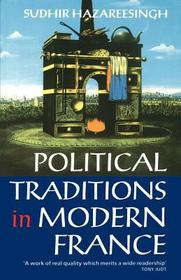
Political Traditions in Modern France
-
10% KEDVEZMÉNY?
- A kedvezmény csak az 'Értesítés a kedvenc témákról' hírlevelünk címzettjeinek rendeléseire érvényes.
- Kiadói listaár GBP 61.99
-
29 615 Ft (28 205 Ft + 5% áfa)
Az ár azért becsült, mert a rendelés pillanatában nem lehet pontosan tudni, hogy a beérkezéskor milyen lesz a forint árfolyama az adott termék eredeti devizájához képest. Ha a forint romlana, kissé többet, ha javulna, kissé kevesebbet kell majd fizetnie.
- Kedvezmény(ek) 10% (cc. 2 962 Ft off)
- Kedvezményes ár 26 654 Ft (25 385 Ft + 5% áfa)
Iratkozzon fel most és részesüljön kedvezőbb árainkból!
Feliratkozom
29 615 Ft

Beszerezhetőség
Megrendelésre a kiadó utánnyomja a könyvet. Rendelhető, de a szokásosnál kicsit lassabban érkezik meg.
Why don't you give exact delivery time?
A beszerzés időigényét az eddigi tapasztalatokra alapozva adjuk meg. Azért becsült, mert a terméket külföldről hozzuk be, így a kiadó kiszolgálásának pillanatnyi gyorsaságától is függ. A megadottnál gyorsabb és lassabb szállítás is elképzelhető, de mindent megteszünk, hogy Ön a lehető leghamarabb jusson hozzá a termékhez.
A termék adatai:
- Kiadó OUP Oxford
- Megjelenés dátuma 1994. május 26.
- ISBN 9780198780755
- Kötéstípus Puhakötés
- Terjedelem364 oldal
- Méret 216x137x22 mm
- Súly 495 g
- Nyelv angol 0
Kategóriák
Rövid leírás:
This book provides an integrated account of French political experience, explaining three key features: the role of political ideas, the nature of political movements, and the significance of history in creating and sustaining divisions among political groups. It has chapters on the roles of intellectuals, the ideologies of republicanism, clericalism, and nationalism, and the functions of the state. The last four chapters examine the political traditions of liberalism, socialism, Gaullism, and Communism.
TöbbHosszú leírás:
This book provides an integrated account of French political experience, explaining three key features: the role of political ideas, the nature of political movements, and the significance of history in creating and sustaining divisions among political groups. It has chapters on the roles of intellectuals, the ideologies of republicanism, clericalism, and nationalism, and the functions of the state. The last four chapters examine the political traditions of liberalism, socialism, Gaullism, and Communism.
the book continually beguiles the reader by the skill and economy with which it explains complex matters in a way that is both intelligible to the relative newcomer to French politics and is a lesson to seasoned travellers on how to combine simplicity of exposition with fidelity to the subtleties of the subject ... this book is a valuable addition to the surprisingly lean list of works that successfully make sense of political traditions of the last two centuries in France without oversimplification or distortion. It would seem destined for a long life as staple student reading.

