

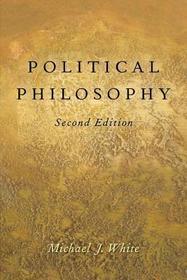
Political Philosophy
An Historical Introduction
-
10% KEDVEZMÉNY?
- A kedvezmény csak az 'Értesítés a kedvenc témákról' hírlevelünk címzettjeinek rendeléseire érvényes.
- Kiadói listaár GBP 46.99
-
21 215 Ft (20 205 Ft + 5% áfa)
Az ár azért becsült, mert a rendelés pillanatában nem lehet pontosan tudni, hogy a beérkezéskor milyen lesz a forint árfolyama az adott termék eredeti devizájához képest. Ha a forint romlana, kissé többet, ha javulna, kissé kevesebbet kell majd fizetnie.
- Kedvezmény(ek) 10% (kb. 2 121 Ft)
- Kedvezményes ár 19 094 Ft (18 185 Ft + 5% áfa)
Iratkozzon fel most és részesüljön kedvezőbb árainkból!
Feliratkozom
21 215 Ft

Beszerezhetőség
Becsült beszerzési idő: A Prosperónál jelenleg nincsen raktáron, de a kiadónál igen. Beszerzés kb. 3-5 hét..
A Prosperónál jelenleg nincsen raktáron.
Why don't you give exact delivery time?
A beszerzés időigényét az eddigi tapasztalatokra alapozva adjuk meg. Azért becsült, mert a terméket külföldről hozzuk be, így a kiadó kiszolgálásának pillanatnyi gyorsaságától is függ. A megadottnál gyorsabb és lassabb szállítás is elképzelhető, de mindent megteszünk, hogy Ön a lehető leghamarabb jusson hozzá a termékhez.
A termék adatai:
- Kiadás sorszáma 2
- Kiadó OUP USA
- Megjelenés dátuma 2012. június 14.
- ISBN 9780199860517
- Kötéstípus Puhakötés
- Terjedelem448 oldal
- Méret 208x140x33 mm
- Súly 476 g
- Nyelv angol 0
Kategóriák
Rövid leírás:
This historical survey of political philosophy explores the theme of how political philosophy relates to the nature of man. It illustrates how great political thinkers have always grounded their political thought in what the author terms a 'normative anthropology', which typically has not only ethical but also metaphysical or theological components.
TöbbHosszú leírás:
From Greek antiquity to the latest theories, this historical survey of political philosophy not only covers the major thinkers in the field but also explores the theme of how political philosophy relates to the nature of man. It illustrates how the great political thinkers have always grounded their political thought in what the author terms a 'normative anthropology', which typically has not only ethical but metaphysical and/or theological components.
Starting with the ancient Greek Sophists, author Michael J. White examines how thinkers over the centuries have approached such political and philosophical concerns as justice, morality, and human flourishing, offering substantial studies of-among others-Plato, Aristotle, Cicero, Locke, Hobbes, Rousseau, Marx, and J. S. Mill.
White highlights the impact of Christianity on political philosophy, illustrating the diversity of that impact by studies of Augustine, Aquinas, and Marsilius of Padua. Concluding with an in-depth analysis of John Rawls and contemporary liberal political philosophy, this text blends insight and information in a refreshing and useful manner. A brief Epilogue considers both the value and the limitations of political philosophy and its study.
"This book is a challenging book, in the best sense. White's central thesis, while controversial, is nevertheless important, consistently argued - both historically and philosophically, and presented in a thoroughly engaging manner." - Philosophy in Review
"A masterpiece of clear thinking, this well-written text will challenge many to reflect more closely on matters often too quickly decided. The result is more than one might ever have expected of an introductory text of this size; indeed a better introduction to the subject is hard to imagine." - Alastair Hannay, University of Oslo
Tartalomjegyzék:
Acknowledgments and Preface to Second Edition
Chapter 1. Introduction
Politics and Human Nature
The Idea of Human Nature or the Human Good as 'Function': Normative Anthropology
My 'Story' of Political Philosophy-and my Cast of Characters
Enduring Issues in Political Philosophy
Chapter 2. Classical Greek Political Philosophy: Beginnings
Nature or Nurture?
Protagoras' Democratic Traditionalism
The Functionalistic Foundation of the Political Aretai in Nature (physis)
Glaucon's Contractarian Political Theory
Chapter 3. Plato: Government for Corrupted Intellects
Socrates' Polis of Pigs
The 'Republic' of Plato's Republic
The Human Ergon and the Purpose of Political Organization
Furthering Rationality by Means of the Polis?
Why Should Anyone Return to the Cave?
Plato and 'the Rule of Law'
Chapter 4. Aristotle: Politics as the Master Art
The Human Good: Intellectual and Political
Acting Correctly (eupraxia) as a Grand End?
The Polis as a Complete Community
The Role of Politics: The Master Art?
Concluding Thoughts
Chapter 5. Cicero: The Cosmic Significance of Politics
Cicero as Champion of the Res Publica
What is Right (ius): The Rule of Law (lex) and Normative Anthropology
Virtues, Duties, and Laws
Chapter 6. Christianity: A Political Religion?
The New Testament and Beyond
Pauline Cosmopolitanism
The Roman Empire Christianized
The Advent of Tempora Christiana (the Christian era)
Chapter 7. Augustine, Aquinas and Marsilius of Padua: Politics for Saints, Sinners, and Heretics
St. Augustine
The Two Rationales of Augustine's City of God
The Two Cities
Theoretical Political Consequences
Christians as Good Citizens of Secular States?
St. Thomas Aquinas
The Human Function: Nature and Praeternature
The 'Parts' of the Eternal Law: Divine, Natural, and Human Law
Political Forms, Procedures, and Other Particulars
Aquinas' Political Philosophy: Some Concluding Observations
Marsilius of Padua
The Autonomous but Coercive Regnum (Political Community) and its Law
The Political Wisdom and Authority of the Whole Body of Citizens (or the weightier part thereof)
Chapter 8. Hobbes and Locke: Seventeenth-Century Contractarianism
Thomas Hobbes: Natural Law Simplified and Modernized
Natural Law, Natural Rights, and the Human Function
Law, Contracts, and the 'Leviathan'
The Civil State: Sovereigns and Subjects
Concluding Thoughts on God and Sovereigns
John Locke: Divinely Mandated Autonomy, Natural Rights, and Property
Moral Knowledge and Human Motivation
The State of Nature and the Social Contract
Property and Liberal Political Theory: Lockean Origins
Chapter 9. Rousseau and Marx: Reaction to Bourgeois-Liberalism
Jean-Jacques Rousseau: Autonomous Citizens for the true Republic
The Intertwined Development of Civilization, Corruption, and Morality
The Social Contract and the Émile: Republics and Republican Citizens
Politics and the Human Function
Karl Marx: Distortion of the Human Function within the Bourgeois-Liberal State
Political Emancipation and the Bourgeois-Liberal State
Alienation and the Human Function
Historical Materialism and the Coming of Communism
Concluding Thoughts: The Cook Shops of the Future Made Present
Chapter 10. Mill and Rawls: Liberalism Ascendant?
John Stuart Mill: Perfectionist Liberalism
Mill's Liberalism
Liberty and Government
Democratic Republicanism
Concluding Thought on Mill and Liberalism
John Rawls: Political (and Non-Perfectionist?) Liberalism
Egalitarian Justice as the "First Virtue of Social Institutions": Basic Assumptions
Rawls' Two Principles of Justice: What they Apply to and Why
Consensus, Public Reason, and the Distinction between Citoyen and Bourgeois
The Ultimate Justification of Rawlsian liberalism?
Epilogue
Notes

