

-
10% KEDVEZMÉNY?
- A kedvezmény csak az 'Értesítés a kedvenc témákról' hírlevelünk címzettjeinek rendeléseire érvényes.
- Kiadói listaár GBP 185.00
-
83 527 Ft (79 550 Ft + 5% áfa)
Az ár azért becsült, mert a rendelés pillanatában nem lehet pontosan tudni, hogy a beérkezéskor milyen lesz a forint árfolyama az adott termék eredeti devizájához képest. Ha a forint romlana, kissé többet, ha javulna, kissé kevesebbet kell majd fizetnie.
- Kedvezmény(ek) 10% (cc. 8 353 Ft off)
- Kedvezményes ár 75 175 Ft (71 595 Ft + 5% áfa)
Iratkozzon fel most és részesüljön kedvezőbb árainkból!
Feliratkozom
83 527 Ft

Beszerezhetőség
Megrendelésre a kiadó utánnyomja a könyvet. Rendelhető, de a szokásosnál kicsit lassabban érkezik meg.
Why don't you give exact delivery time?
A beszerzés időigényét az eddigi tapasztalatokra alapozva adjuk meg. Azért becsült, mert a terméket külföldről hozzuk be, így a kiadó kiszolgálásának pillanatnyi gyorsaságától is függ. A megadottnál gyorsabb és lassabb szállítás is elképzelhető, de mindent megteszünk, hogy Ön a lehető leghamarabb jusson hozzá a termékhez.
A termék adatai:
- Kiadó OUP Oxford
- Megjelenés dátuma 2002. március 7.
- ISBN 9780198296690
- Kötéstípus Keménykötés
- Terjedelem384 oldal
- Méret 241x162x25 mm
- Súly 695 g
- Nyelv angol
- Illusztrációk numerous tables and figures 0
Kategóriák
Rövid leírás:
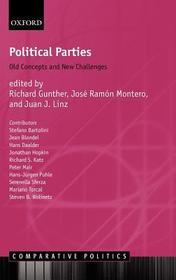
Several of the world's leading scholars present critical analyses (both conceptual and empirical) of important substantive themes on political parties in contemporary democracies. They critically re-examine the classic concepts and typologies that have guided research in this field over the past decades, and explore new challenges faced by parties today.
TöbbHosszú leírás:
This book, with contributions from leading scholars in the field, presents a critical overview of much of the recent literature on political parties. It systematically assesses the capacity of existing concepts, typologies, and methodological approaches to deal with contemporary parties. It critically analyses the 'decline of parties' literature both from a conceptual perspective and - with regard to antiparty attitudes among citizens - on the basis of empirical analyses of survey data. It systematically re-examines the underpinnings of rational-choice analyses of electoral competition, as well as the misapplication of standard party models as the 'catch-all party.' Several chapters reexamine existing models of parties and party typologies, particularly with regard to the capacity of commonly used concepts to capture the wide variation among parties that exist in old and new democracies today, and with regard to their ability to deal adequately with the new challenges that parties are facing in rapidly changing political, social and technological environments. In particular, two detailed case studies demonstrate how party models are significant not only as frameworks for scholarly research, but also insofar as they can affect party performance. Other chapters also examine in detail how corruption and party patronage have contributed to party decline, as well as the public attitudes towards parties in several countries. In the aggregate, the various contributions to this volume reject the notion that a 'decline of party' has progressed to such an extent as to threaten the survival of parties as the crucial intermediary actors in modern democracies. The contributing authors argue, however, that parties are facing a new set of sometimes demanding challenges. Not only have parties differed significantly in their ability to successfully meet these challenges, but the core concepts, typologies, party chdels and methodological approaches that have guided research in this area over the past 40 years have met with only mixed success in adequately capturing these recent developments and serving as fruitful frameworks for analysis. This book is intended to remedy some of these shortcomings.
... the individual papers are well worth reading in their own right and most contain innovative research and interesting approaches to the study of political parties.
Tartalomjegyzék:
Introduction
Part I. Reconceptualizing parties and party competition
Parties: denied, dismissed, or redundant
Still the age of catch-allism? Volksparteien and Parteienstaat in crisis and reequilibration
Electoral and party competition: analytical dimensions and empirical problems
Part II. Reexaming party organization and party models
The ascendancy of the party in public office: party organizational change in 20th-century democracies
Beyond the catch-all party: approaches to the study of parties and party organization in contemporary democracies
Party organization and party performance: the case of the French Socialist party
A crisis of institutionalisation: the collapse of the UCD in Spain
Part III. Revisiting Party linkages and attitudes toward parties
Antiparty sentiments in Southern Europe
Parties in contemporary democracies: problems and paradoxes

