

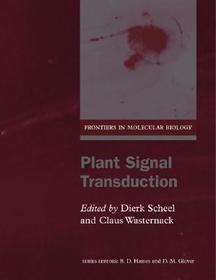
Plant Signal Transduction
Sorozatcím: Frontiers in Molecular Biology;
-
10% KEDVEZMÉNY?
- A kedvezmény csak az 'Értesítés a kedvenc témákról' hírlevelünk címzettjeinek rendeléseire érvényes.
- Kiadói listaár GBP 51.00
-
24 365 Ft (23 205 Ft + 5% áfa)
Az ár azért becsült, mert a rendelés pillanatában nem lehet pontosan tudni, hogy a beérkezéskor milyen lesz a forint árfolyama az adott termék eredeti devizájához képest. Ha a forint romlana, kissé többet, ha javulna, kissé kevesebbet kell majd fizetnie.
- Kedvezmény(ek) 10% (cc. 2 437 Ft off)
- Kedvezményes ár 21 929 Ft (20 885 Ft + 5% áfa)
Iratkozzon fel most és részesüljön kedvezőbb árainkból!
Feliratkozom
24 365 Ft

Beszerezhetőség
Megrendelésre a kiadó utánnyomja a könyvet. Rendelhető, de a szokásosnál kicsit lassabban érkezik meg.
Why don't you give exact delivery time?
A beszerzés időigényét az eddigi tapasztalatokra alapozva adjuk meg. Azért becsült, mert a terméket külföldről hozzuk be, így a kiadó kiszolgálásának pillanatnyi gyorsaságától is függ. A megadottnál gyorsabb és lassabb szállítás is elképzelhető, de mindent megteszünk, hogy Ön a lehető leghamarabb jusson hozzá a termékhez.
A termék adatai:
- Kiadó OUP Oxford
- Megjelenés dátuma 2002. március 28.
- ISBN 9780199638796
- Kötéstípus Puhakötés
- Terjedelem346 oldal
- Méret 245x189x20 mm
- Súly 810 g
- Nyelv angol
- Illusztrációk numerous line figures 0
Kategóriák
Rövid leírás:
Plant growth and development is controlled by environmental cues (e.g. light, salinity) that are sensed by the plant via a variety of signal transduction pathways. This book gives an up-to-date summary of the large amount of information that is now available on the processes involved in the communication of plants with their environment.
TöbbHosszú leírás:
The growth and differentiation of living organisms are continuously adjusted to a multitude of environmental factors, each of which underlies a perpetual variation. The sessile existence of plants further emphasizes the requirement for efficient adaptation and defence mechanisms. The changes in environmental factors may range from moderate to dramatic and can concern many components at the same time. They may be abiotic or biotic in nature and range from essential to toxic in their effects. Among the numerous abiotic factors are nutrients, light, oxygen, water, temperature, gravity, wind, touch and chemicals. Biotic factors are represented by other organisms involved in symbiotic, pathogenic or herbivorous interactions with plants. All of these environmental factors are independently and specifically recognized by plants.
Perception and overall response are linked by signal transduction pathways at cellular, systemic and interorganismic levels. In order to guarantee proper adaptation to the environment, signals generated following perception of a multitude of environmental factors need to be integrated and evaluated according to their importance. Cross-talk between different signaling pathways within such networks appears to be the basis for the evaluation of the importance of incoming signals. Knowledge of these complex processes allows a better understanding of the molecular mechanisms underlying adaptation. Modulation of distinct signaling elements can generate plants with improved stress resistance.
This book represents a comprehensive summary of the enormous amount of information that is now available on signal transduction processes involved in the communication of plants with abiotic and biotic elements of their environment.
... provides a broad spectrum of information and is a valuable reference source ... can be recommended for a readership from senior undergraduates to scientists working on or interested in plant signal transduction.
Tartalomjegyzék:
Signal transduction in plants: cross talk with the environment
Light perception and signal transduction
Wound- and mechanical signalling
The role of active oxygen species in plant signal transduction
Heat stress-induced signalling
Molecular mechanisms of signal transduction in cold acclimation
Dehydration stress signal transduction
Salt stress signal transduction in plants
Recognition and defense signalling in plant/bacterial and fungal interactions
Signalling in plant-virus interactions
LCO signalling in the interaction between rhizobia and legumes
Rhizospheric signals and early molecular events in the ectomycorrhizal symbiosis
Signalling in plant-insect interactions: signal transduction in direct and indirect plant defence

