

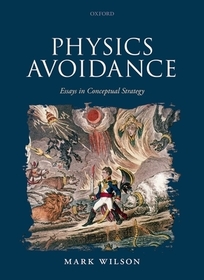
Physics Avoidance
and other essays in conceptual strategy
-
10% KEDVEZMÉNY?
- A kedvezmény csak az 'Értesítés a kedvenc témákról' hírlevelünk címzettjeinek rendeléseire érvényes.
- Kiadói listaár GBP 120.00
-
54 180 Ft (51 600 Ft + 5% áfa)
Az ár azért becsült, mert a rendelés pillanatában nem lehet pontosan tudni, hogy a beérkezéskor milyen lesz a forint árfolyama az adott termék eredeti devizájához képest. Ha a forint romlana, kissé többet, ha javulna, kissé kevesebbet kell majd fizetnie.
- Kedvezmény(ek) 10% (cc. 5 418 Ft off)
- Kedvezményes ár 48 762 Ft (46 440 Ft + 5% áfa)
Iratkozzon fel most és részesüljön kedvezőbb árainkból!
Feliratkozom
54 180 Ft

Beszerezhetőség
Megrendelésre a kiadó utánnyomja a könyvet. Rendelhető, de a szokásosnál kicsit lassabban érkezik meg.
Why don't you give exact delivery time?
A beszerzés időigényét az eddigi tapasztalatokra alapozva adjuk meg. Azért becsült, mert a terméket külföldről hozzuk be, így a kiadó kiszolgálásának pillanatnyi gyorsaságától is függ. A megadottnál gyorsabb és lassabb szállítás is elképzelhető, de mindent megteszünk, hogy Ön a lehető leghamarabb jusson hozzá a termékhez.
A termék adatai:
- Kiadó OUP Oxford
- Megjelenés dátuma 2017. november 2.
- ISBN 9780198803478
- Kötéstípus Keménykötés
- Terjedelem448 oldal
- Méret 253x178x29 mm
- Súly 1048 g
- Nyelv angol 0
Kategóriák
Rövid leírás:
Mark Wilson explores our strategies for understanding the world. We frequently cannot reason about nature in the straightforward manner we anticipate, but must use alternative thought processes that reach useful answers in opaque and roundabout ways; and philosophy must find better descriptive tools to reflect this.
TöbbHosszú leírás:
Mark Wilson presents a series of explorations of our strategies for understanding the world. "Physics avoidance" refers to the fact that we frequently cannot reason about nature in the straightforward manner we anticipate, but must seek alternative policies that allow us to address the questions we want answered in a tractable way. Within both science and everyday life, we find ourselves relying upon thought processes that reach useful answers in opaque and roundabout manners. Conceptual innovators are often puzzled by the techniques they develop, when they stumble across reasoning patterns that are easy to implement but difficult to justify. But simple techniques frequently rest upon complex foundations--a young magician learns how to execute a card-guessing trick without understanding how its progressive steps squeeze in on a proper answer. As we collectively improve our inferential skills in this gradually evolving manner, we often wander into unfamiliar explanatory landscapes in which simple words encode physical information in complex and unanticipated ways. Like our juvenile conjurer, we fail to recognize the true strategic rationales underlying our achievements and may turn instead to preposterous rationalizations for our policies. We have learned how to reach better conclusions in a more fruitful way, but we remain baffled by our own successes.
At its best, philosophical reflection illuminates the natural developmental processes that generate these confusions and explicates their complexities. But current thinking within philosophy of science and language works to opposite effect by relying upon simplistic conceptions of "cause", "law of nature", "possibility", and "reference" that ignore the strategic complexities in which these concepts become entangled within real life usage. To avoid these distortions, better descriptive tools are required in philosophy. The nine new essays within this volume illustrate this need for finer discriminations through a range of revealing cases, of both historical and contemporary significance.
Tartalomjegyzék:
Pragmatics' Place at the Table
Physics Avoidance
From the Bending of Beams to the Problem of Free Will
Two Cheers for Anti-Atomism
The Greediness of Scales
Believers in the Land of Glory
Is There Life in Possible Worlds?
Semantic Mimicry
A Second Pilgrim's Progress

