

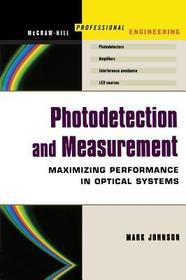
Photodetection and Measurement
Making Effective Optical Measurements for an Acceptable Cost
Sorozatcím: Professional Engineering;
-
10% KEDVEZMÉNY?
- A kedvezmény csak az 'Értesítés a kedvenc témákról' hírlevelünk címzettjeinek rendeléseire érvényes.
- Kiadói listaár GBP 106.99
-
51 114 Ft (48 680 Ft + 5% áfa)
Az ár azért becsült, mert a rendelés pillanatában nem lehet pontosan tudni, hogy a beérkezéskor milyen lesz a forint árfolyama az adott termék eredeti devizájához képest. Ha a forint romlana, kissé többet, ha javulna, kissé kevesebbet kell majd fizetnie.
- Kedvezmény(ek) 10% (cc. 5 111 Ft off)
- Kedvezményes ár 46 003 Ft (43 812 Ft + 5% áfa)
Iratkozzon fel most és részesüljön kedvezőbb árainkból!
Feliratkozom
51 114 Ft

Beszerezhetőség
Megrendelésre a kiadó utánnyomja a könyvet. Rendelhető, de a szokásosnál kicsit lassabban érkezik meg.
Why don't you give exact delivery time?
A beszerzés időigényét az eddigi tapasztalatokra alapozva adjuk meg. Azért becsült, mert a terméket külföldről hozzuk be, így a kiadó kiszolgálásának pillanatnyi gyorsaságától is függ. A megadottnál gyorsabb és lassabb szállítás is elképzelhető, de mindent megteszünk, hogy Ön a lehető leghamarabb jusson hozzá a termékhez.
A termék adatai:
- Kiadó McGraw Hill
- Megjelenés dátuma 2003. augusztus 16.
- ISBN 9780071409445
- Kötéstípus Keménykötés
- Terjedelem298 oldal
- Méret 241x190x28 mm
- Súly 832 g
- Nyelv angol 0
Kategóriák
Rövid leírás:
MAKE OPTICAL MEASUREMENTS WITH MAXIMUM ACCURACY AND MINIMUM COST
The "opto-electronics revolution" has made the art and science of making sensitive, accurate, and inexpensive optical measurements must-know information for legions of electronic engineers and research students. And there’s no faster or easier way to master photodetection and measurement techniques than with this hands-on tutorial written by a teacher with experience enough to know the questions you would ask.
A clear, easy-to-understand "rules-of-thumb" approach shows you how to make high-performance optical measurements by getting the fundamentals right, often with simple, inexpensive equipment commonly found in laboratories. It includes treatment of:* Photodetectors
* Amplifiers
* LED sources
* Electronic modulation and demodulation
* Interference avoidance
* Data acquisition and basic DSP You’ll also gain a firm understanding of noise-reduction techniques and the essentials of building-in speed, sensitivity,and stability. If you want to learn the secret of making sound optical measurements without expensive equipment, this is the one resource you shouldn’t work without. Több
Hosszú leírás:
Photodetection techniques are becoming increasingly necessary for electronics design work
This reference provides a practical "rules of thumb" approach to making accurate optical measurements with equipment commonly found in labs and companies.
Photodetection techniques are becoming increasingly necessary for electronics design work
This reference provides a practical "rules of thumb" approach to making accurate optical measurements with equipment commonly found in labs and companies.

