

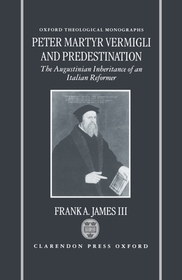
Peter Martyr Vermigli and Predestination
The Augustinian Inheritance of an Italian Reformer
Sorozatcím: Oxford Theological Monographs;
-
10% KEDVEZMÉNY?
- A kedvezmény csak az 'Értesítés a kedvenc témákról' hírlevelünk címzettjeinek rendeléseire érvényes.
- Kiadói listaár GBP 222.50
-
100 458 Ft (95 675 Ft + 5% áfa)
Az ár azért becsült, mert a rendelés pillanatában nem lehet pontosan tudni, hogy a beérkezéskor milyen lesz a forint árfolyama az adott termék eredeti devizájához képest. Ha a forint romlana, kissé többet, ha javulna, kissé kevesebbet kell majd fizetnie.
- Kedvezmény(ek) 10% (kb. 10 045 Ft)
- Kedvezményes ár 90 413 Ft (86 108 Ft + 5% áfa)
Iratkozzon fel most és részesüljön kedvezőbb árainkból!
Feliratkozom
100 458 Ft

Beszerezhetőség
Megrendelésre a kiadó utánnyomja a könyvet. Rendelhető, de a szokásosnál kicsit lassabban érkezik meg.
Why don't you give exact delivery time?
A beszerzés időigényét az eddigi tapasztalatokra alapozva adjuk meg. Azért becsült, mert a terméket külföldről hozzuk be, így a kiadó kiszolgálásának pillanatnyi gyorsaságától is függ. A megadottnál gyorsabb és lassabb szállítás is elképzelhető, de mindent megteszünk, hogy Ön a lehető leghamarabb jusson hozzá a termékhez.
A termék adatai:
- Kiadó OUP Oxford
- Megjelenés dátuma 1998. október 8.
- ISBN 9780198269694
- Kötéstípus Keménykötés
- Terjedelem308 oldal
- Méret 225x146x21 mm
- Súly 514 g
- Nyelv angol 0
Kategóriák
Rövid leírás:
This study is in its broadest sense an inquiry into the intellectual origins of the Reformed branch of Protestantism. More specifically, it concerns one of the early theologians who gave formative shape to Reformed theology, Peter Martyr Vermigli (1499-1562), and focuses on his adoption of the soteriological doctrine of double predestination, thus illustrating an important aspect of continuity between late medieval and reformation thought.
TöbbHosszú leírás:
This study is in its broadest sense an inquiry into the intellectual origins of the Reformed branch of Protestantism generally, but inaccurately, designated Calvinism. More specifically, it concerns one of the early theologians who gave formative shape to Reformed theology, Peter Martyr Vermigli (1499-1562), and focuses on his adoption of the soteriological doctrine of gemina praedestinatio, double predestination: divine election and divine reprobation.
One of the most erudite men of his age, Vermigli was also one of the most remarkable, for his religious career spanned the ecclesiastical horizon from prominence as a Roman Catholic theologian to one of the formative theologians of sixteenth century Reformed Protestantism. No other theologian of the early sixteenth century was so distinguished in both camps. James argues that Vermigli derived the doctrine of gemina praedestinatio from the writings of Gregory of Rimini and that it was fully formed before he allied himself with the Protestant cause, thus illustrating an important aspect of soteriological continuity between late medieval and reformation thought.
This book marks the passing of the torch to a new generation of Vermigli scholars, establishing James as a central figure in the next stage of the Vermigli renaissance.

