

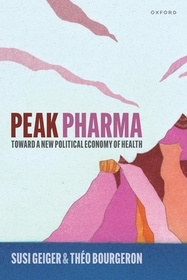
Peak Pharma
Toward a New Political Economy of Health
-
10% KEDVEZMÉNY?
- A kedvezmény csak az 'Értesítés a kedvenc témákról' hírlevelünk címzettjeinek rendeléseire érvényes.
- Kiadói listaár GBP 30.00
-
13 545 Ft (12 900 Ft + 5% áfa)
Az ár azért becsült, mert a rendelés pillanatában nem lehet pontosan tudni, hogy a beérkezéskor milyen lesz a forint árfolyama az adott termék eredeti devizájához képest. Ha a forint romlana, kissé többet, ha javulna, kissé kevesebbet kell majd fizetnie.
- Kedvezmény(ek) 10% (cc. 1 355 Ft off)
- Kedvezményes ár 12 191 Ft (11 610 Ft + 5% áfa)
Iratkozzon fel most és részesüljön kedvezőbb árainkból!
Feliratkozom
13 545 Ft

Beszerezhetőség
Becsült beszerzési idő: A Prosperónál jelenleg nincsen raktáron, de a kiadónál igen. Beszerzés kb. 3-5 hét..
A Prosperónál jelenleg nincsen raktáron.
Why don't you give exact delivery time?
A beszerzés időigényét az eddigi tapasztalatokra alapozva adjuk meg. Azért becsült, mert a terméket külföldről hozzuk be, így a kiadó kiszolgálásának pillanatnyi gyorsaságától is függ. A megadottnál gyorsabb és lassabb szállítás is elképzelhető, de mindent megteszünk, hogy Ön a lehető leghamarabb jusson hozzá a termékhez.
A termék adatai:
- Kiadó OUP Oxford
- Megjelenés dátuma 2025. december 11.
- ISBN 9780198884521
- Kötéstípus Puhakötés
- Terjedelem320 oldal
- Méret 235x155x18 mm
- Súly 480 g
- Nyelv angol 661
Kategóriák
Rövid leírás:
This book argues that we have reached the 'peak' of a particular model for pharmaceutical production - the neoliberal value model that has been in place since the early 1980s.
TöbbHosszú leírás:
This book argues that we have reached the 'peak' of a particular model for pharmaceutical production - the neoliberal value model that has been in place since the early 1980s. 'Peak' designates a state where a value model's contradictions become exacerbated to a point where the system cannot but change: it is a point where an industry's products become too expensive and its resources exhausted, and where the coalitions that have held up that particular value model disintegrate. In other words, it is the point where an industry collapses under its own greed, of having captured too much value for itself, leaving too little to the other actors in the system.
Peak Pharma argues that the neoliberal pharmaceutical system is reaching its 'peak' in several vital respects - peak pricing, peak concentration, peak financialization, and peak expansion. It uses the term to signal the crisis and possible end of an era-defining business model in the pharmaceutical sector. The book presents a synthesis of the authors' decade-long empirical investigations into social movements contesting the pharmaceutical market. It brings together a large body of knowledge that is currently spread across political economy, sociology, STS, organization studies, and the history of medicine, to follow the neoliberal dynamics that have engendered an acceleration toward 'peak' over the span of the last 40 years. It traces the emergence of different voices and groups that have contested this evolution, particularly around specific crisis points and revelatory moments, including the fight for access to HIV/AIDS medicines, the global health era, pharmaceutical corporate social responsibility, the advent of personalized medicine and digital health, Covid-19, and others. The authors trace the shifting coalitions between the pharmaceutical industry, patient organisations, and governments that kept propping up the neoliberal value system throughout this evolution. They show that the recent acceleration toward peak has led many centrist voices from patient organizations, academia and politics to start changing course from market repair to imagining alternative pharmaceutical economies, prominently including imaginaries around the pharmaceutical commons. The book closes with a set of recommendations for policy makers and civil society actors interested in fostering an alternative political economy of health.
This is an open access title available under the terms of a [CC BY-NC-ND 4.0 International] licence. It is free to read at Oxford Scholarship Online and offered as a free PDF download from OUP and selected open access locations.

