

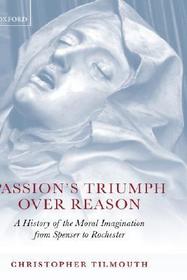
Passion's Triumph over Reason
A History of the Moral Imagination from Spenser to Rochester
-
10% KEDVEZMÉNY?
- A kedvezmény csak az 'Értesítés a kedvenc témákról' hírlevelünk címzettjeinek rendeléseire érvényes.
- Kiadói listaár GBP 167.50
-
75 626 Ft (72 025 Ft + 5% áfa)
Az ár azért becsült, mert a rendelés pillanatában nem lehet pontosan tudni, hogy a beérkezéskor milyen lesz a forint árfolyama az adott termék eredeti devizájához képest. Ha a forint romlana, kissé többet, ha javulna, kissé kevesebbet kell majd fizetnie.
- Kedvezmény(ek) 10% (kb. 7 562 Ft)
- Kedvezményes ár 68 064 Ft (64 823 Ft + 5% áfa)
Iratkozzon fel most és részesüljön kedvezőbb árainkból!
Feliratkozom
75 626 Ft

Beszerezhetőség
Megrendelésre a kiadó utánnyomja a könyvet. Rendelhető, de a szokásosnál kicsit lassabban érkezik meg.
Why don't you give exact delivery time?
A beszerzés időigényét az eddigi tapasztalatokra alapozva adjuk meg. Azért becsült, mert a terméket külföldről hozzuk be, így a kiadó kiszolgálásának pillanatnyi gyorsaságától is függ. A megadottnál gyorsabb és lassabb szállítás is elképzelhető, de mindent megteszünk, hogy Ön a lehető leghamarabb jusson hozzá a termékhez.
A termék adatai:
- Kiadó OUP Oxford
- Megjelenés dátuma 2007. május 10.
- ISBN 9780199212378
- Kötéstípus Keménykötés
- Terjedelem432 oldal
- Méret 240x160x30 mm
- Súly 793 g
- Nyelv angol 0
Kategóriák
Rövid leírás:
Christopher Tilmouth's wide-ranging study of Early Modern ideas of the passions explores a series of philosophical authors in relation to poets and dramatists of the period 1580 to 1680. Aristotle, Aquinas, Augustine, and Hobbes receive detailed treatment here, alongside Spenser's Faerie Queene, Hamlet and Julius Caesar, the lyrics of Herbert and Crashaw, and Milton's Paradise Lost. Central to this innovative exploration of literary-philosophical relations is a comprehensive reappraisal of the works of the Earl of Rochester.
TöbbHosszú leírás:
Passion's Triumph over Reason presents a comprehensive survey of ideas of emotion, appetite, and self-control in English literature and moral thought of the sixteenth and seventeenth centuries. In a narrative which draws on tragedy, epic poetry, and moral philosophy, Christopher Tilmouth explores how Renaissance writers transformed their understanding of the passions, re-evaluating emotion so as to make it an important constituent of ethical life rather than the enemy within which allegory had traditionally cast it as being. This interdisciplinary study departs from current emphases in intellectual history, arguing that literature should be explored alongside the moral rather than political thought of its time. The book also develops a new approach to understanding the relationship between literature and philosophy. Consciously or not, moral thinkers tend to ground their philosophising in certain images of human nature. Their work is premissed on imagined models of the mind and presumed estimates of man's moral potential. In other words, the thinking of philosophical authors (as much as that of literary ones) is shaped by the pre-rational assumptions of the 'moral imagination'. Because that is so, poets and dramatists in their turn, in speaking to this material, typically do more than just versify the abstract ideas of ethics. They reflect, directly and critically, upon those same core assumptions which are integral to the writings of their philosophical counterparts.
Authors examined here include Aristotle, Augustine, Hobbes, and an array of lyric poets; but there are new readings, too, of The Faerie Queene and Paradise Lost, Hamlet and Julius Caesar, Dryden's 'Lucretius', and Etherege's Man of Mode. Tilmouth's study concludes with a revisionist interpretation of the works of the Earl of Rochester, presenting this libertine poet as a challenging, intellectually serious figure. Written in a lucid, accessible style, this book will appeal to a wide range of readers.
Christopher Tilmouth has written one of the more engaging early modern studies in recent memory ... an impressive display of erudition combined with incisive and often savvy readings of a number of literary and philosophical texts
Tartalomjegyzék:
Introduction
Part One: Governance and the Passions
Positions in early modern moral thought
Spenser, psychomachia, and the limits of governance
Hamlet 'lapsed in passion'
Renaissance tragedy and the fracturing of familiar terms
Augustinian and Aristotelian influences from Herbert to Milton
Part Two: The Rise and Fall of Libertinism
Hobbes: fear, power, and the passions
The Restoration ethos of libertinism
Rochester: the disappointments of Hobbism and libertinism
Coda
Bibliography of references

