

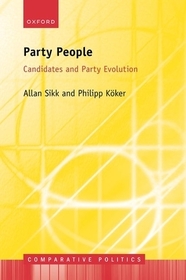
-
10% KEDVEZMÉNY?
- A kedvezmény csak az 'Értesítés a kedvenc témákról' hírlevelünk címzettjeinek rendeléseire érvényes.
- Kiadói listaár GBP 93.00
-
41 989 Ft (39 990 Ft + 5% áfa)
Az ár azért becsült, mert a rendelés pillanatában nem lehet pontosan tudni, hogy a beérkezéskor milyen lesz a forint árfolyama az adott termék eredeti devizájához képest. Ha a forint romlana, kissé többet, ha javulna, kissé kevesebbet kell majd fizetnie.
- Kedvezmény(ek) 10% (kb. 4 198 Ft)
- Kedvezményes ár 37 791 Ft (35 991 Ft + 5% áfa)
Iratkozzon fel most és részesüljön kedvezőbb árainkból!
Feliratkozom
41 989 Ft

Beszerezhetőség
Becsült beszerzési idő: A Prosperónál jelenleg nincsen raktáron, de a kiadónál igen. Beszerzés kb. 3-5 hét..
A Prosperónál jelenleg nincsen raktáron.
Why don't you give exact delivery time?
A beszerzés időigényét az eddigi tapasztalatokra alapozva adjuk meg. Azért becsült, mert a terméket külföldről hozzuk be, így a kiadó kiszolgálásának pillanatnyi gyorsaságától is függ. A megadottnál gyorsabb és lassabb szállítás is elképzelhető, de mindent megteszünk, hogy Ön a lehető leghamarabb jusson hozzá a termékhez.
A termék adatai:
- Kiadó OUP Oxford
- Megjelenés dátuma 2023. október 19.
- ISBN 9780198868125
- Kötéstípus Keménykötés
- Terjedelem272 oldal
- Méret 242x165x22 mm
- Súly 568 g
- Nyelv angol 430
Kategóriák
Rövid leírás:
This book presents a candidate-based approach to party evolution, conceptualizing candidates as 'party genes' that ultimately decide what a party does and what it stands for. It draws on extensive new data from Central and Eastern Europe and beyond to show that candidate change is linked to changes in party organization, programmes, and leadership.
TöbbHosszú leírás:
Political parties are nothing without their people and candidates are essential to parties' core functions - contesting elections, filling political offices, and shaping policy. Candidates are the literal 'face' of parties, yet they are not wedded to them permanently: candidates can enter or leave politics, switch parties, move along or stay behind when parties split or merge. Even in parties that look stable, candidate change happens below the surface, ultimately altering what the parties stand for. Inspired by evolutionary theories, Party People: Candidates and Party Evolution conceptualizes candidates as 'party genes' and develops a candidate-based approach to party evolution. Tracking candidates between elections and parties opens up new perspectives on party development in complex and dynamic settings in Central and Eastern Europe (CEE) and beyond. Based on a new database of 200,000 electoral candidates from over 60 elections across nine CEE democracies, this book presents a groundbreaking study of party evolution using candidate change as an indicator of party change. Allan Sikk and Philipp Köker offer a series of methodological and conceptual advances for the measurement of candidate turnover, party fission and fusion, programmatic change, and party leadership change; the resulting analyses make a significant contribution to the study of CEE party politics as well as to the general scholarship on elections, parties, and political change.
Comparative Politics is a series for researchers, teachers, and students of political science that deals with contemporary government and politics. Global in scope, books in the series are characterized by a stress on comparative analysis and strong methodological rigour. The series is published in association with the European Consortium for Political Research. For more information visit: www.ecprnet.eu.
The series is edited by Nicole Bolleyer, Chair of Comparative Political Science, Geschwister Scholl Institut, LMU Munich and Jonathan Slapin, Professor of Political Institutions and European Politics, Department of Political Science, University of Zurich.
Featuring a new database, an innovative theoretical framework, and fascinating findings that may well change the way we think about parties, old and new, this is a great book-and one that will repay reading by scholars of Western and Eastern Europe alike.
Tartalomjegyzék:
Preface and acknowledgements
Introduction: Candidates and party evolution
A conceptual model of candidate and party change
Measures matter: New concepts, methods, and big data
Determinants of candidate change
Old, new, and partially new parties
Getting volatility right
Fission and fusion
Leadership change
Programmatic change
Conclusion
Bibliography
Index

