

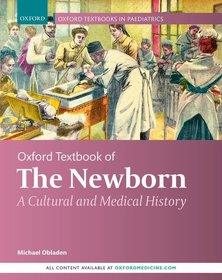
Oxford Textbook of the Newborn
A Cultural and Medical History
Sorozatcím: Oxford Textbooks in Paediatrics;
-
10% KEDVEZMÉNY?
- A kedvezmény csak az 'Értesítés a kedvenc témákról' hírlevelünk címzettjeinek rendeléseire érvényes.
- Kiadói listaár GBP 81.00
-
36 571 Ft (34 830 Ft + 5% áfa)
Az ár azért becsült, mert a rendelés pillanatában nem lehet pontosan tudni, hogy a beérkezéskor milyen lesz a forint árfolyama az adott termék eredeti devizájához képest. Ha a forint romlana, kissé többet, ha javulna, kissé kevesebbet kell majd fizetnie.
- Kedvezmény(ek) 10% (cc. 3 657 Ft off)
- Kedvezményes ár 32 914 Ft (31 347 Ft + 5% áfa)
Iratkozzon fel most és részesüljön kedvezőbb árainkból!
Feliratkozom
36 571 Ft

Beszerezhetőség
Megrendelésre a kiadó utánnyomja a könyvet. Rendelhető, de a szokásosnál kicsit lassabban érkezik meg.
Why don't you give exact delivery time?
A beszerzés időigényét az eddigi tapasztalatokra alapozva adjuk meg. Azért becsült, mert a terméket külföldről hozzuk be, így a kiadó kiszolgálásának pillanatnyi gyorsaságától is függ. A megadottnál gyorsabb és lassabb szállítás is elképzelhető, de mindent megteszünk, hogy Ön a lehető leghamarabb jusson hozzá a termékhez.
A termék adatai:
- Kiadás sorszáma 1
- Kiadó OUP Oxford
- Megjelenés dátuma 2021. augusztus 18.
- ISBN 9780198854807
- Kötéstípus Keménykötés
- Terjedelem464 oldal
- Méret 284x229x24 mm
- Súly 1382 g
- Nyelv angol 130
Kategóriák
Rövid leírás:
The Oxford Textbook of the Newborn: A Cultural and Medical History provides readers with an accessible exploration of the natural lifecycle of a neonate throughout history,
TöbbHosszú leírás:
Well into the 20th century, one in four newborns failed to survive their first year of life. It was after World War II that medicine "discovered" the newborn as a human being entitled to medical treatment and prioritised care. Since its definition by Alexander Schaffer in 1960, neonatology has evolved into a mature, innovative, and ethical field. A large number of medical professionals' care for neonates, yet no definitive medical history of the newborn has been available until now.
The Oxford Textbook of the Newborn: A Cultural and Medical History offers readers a unique and authoritative resource on the 3000-year history of the newborn within Western societies. Written by Professor Michael Obladen, a leading voice in neonatology, this book reflects on our perception of newborns, from the earliest days of human thought, through to the traces that remained in medieval life and persist today. It unearths ideas and evidence of societies' perceptions of newborns through a beautifully illustrated, impressive and often never-seen-before set of historical sources from libraries, archives, churches, excavation fields, and hospital charts around the world.
Split into 8 sections which each cover aspects of the natural lifecycle of a neonate, this book demonstrates the impact of religion, law, ethics, philosophy and culture on newborns' quality of life, and covers fascinating topics such as the rites of passage for the newborn, infanticide, opium use, breastfeeding, and artificial feeding. Each chapter is written in an accessible style and includes high-quality historical illustrations which really bring the subject to life.
This is a wonderful book that brings a whole new perspective to the present-day care of newborns by reviewing the history of that care. It will not teach readers how to care for a specific disease but may influence them by putting into context the historical, cultural, and ethical biases we bring to the bedside. I recommend it without reservation.
Tartalomjegyzék:
Part One: Early Life
Animatio: Ideas about the Beginning of Personhood
Hepar Uterinum: Ideas about Fetal Nutrition
Pulmo Uterinus: Ideas about Fetal Respiration
Part Two: Birth
From Apparent Death to Birth Asphyxia
Resuscitation 1: Artificial Ventilation
Resuscitation 2: Oxygen and other Drugs
Resuscitation 3: Endotracheal Intubation
Umbilical Cord and Umbilical Care
Postverta, Agrippa and Cesarea: Born Feet-First
Social Birth: Rites of Passage for the Newborn
Part Three: Prematurity
Measures of Viability
Surviving Against the Odds
Respiratory Distress: Understanding Surfactant Deficiency
Holding Breath: The Development of Surfactant Substitution
Anatomy and Spontaneous Closure of the Ductus Arteriosus
Persisting Patency of the Ductus Arteriosus in the Preterm Infant
Intraventricular Hemorrhage
Part Four: Multiple Birth
Unwelcome: The Abominable Twins
Fertility and Fatality: Higher-order Multiples
Unequal but Monozygotic: Twin-Twin Transfusion Syndrome
From Monster to Reversed Perfusion: Acardiac Twins
Part Five: Odd Shape
Cats, Frogs and Snakes: Concepts of Neural Tube Defects
In God's Image ? Infant Head Shaping
Lame from Birth: Concepts of Cerebral Palsy
Possessed by Evil Spirits: Seizures in Infancy
Birthmark and Blemish: The Doctrine of Maternal Imagination
Cast Aside: Infants with Down's Syndrome
Crooked Limbs: The Thalidomide Catastrophe.
A Wretched Condition: Cleft Urinary Bladder
Part Six: Breast is Best
Bad Milk: Medical Doctrines that Impeded Breastfeeding
Regulated Wet-Nursing: Managed Care or Organized Crime?
Guttus, Tiralatte and Téterelle: Breast Pumps
Pap, Gruel, and Panada: Early Approaches to Artificial Feeding
Milk Demystified by Chemistry
From Swill Milk to Certified Milk: Progress in Cow's Milk Quality
Technical Innovations that Enabled Artificial Infant Feeding
Selling Safety: Commercial Production of Infant Formula
Feeding the Feeble: Steps towards Nourishing Preterm Infants
Much Ado about Nothing: Controversies on Tongue-tie
Lethal Lullabies: Opium Use in Infants
Part Seven: Disease
Innocent Blood: Hemorrhagic Disease of the Newborn
Yellow Brains and Blue lights: Neonatal Jaundice
Weak Giants: Infants of Diabetic Mothers
Filth, Impurity, and Threat: Meconium
Necrotizing Enterocolitis: 150 years of Fruitless Search for the Cause
Better Baby Bones: Attacking Rickets and Scurvy
Curse on Two Generations: Congenital Syphilis
Thrush: Nightmare of the Foundling Hospitals
Systemic Infection: Sepsis
Part Eight: Early Death
From Right to Sin: Laws on Infanticide in Antiquity
From Sin to Crime: Laws on Infanticide in the Middle Ages
From Crime to Disease: Laws on Infanticide in the Modern Era
Despising the Weak: Long Shadows of Infant Murder in Nazi Germany
Cot Death: An Iatrogenic Disaster
Theirs is the Kingdom of Heaven: Infant Mortality Statistics
For Whom no Bell Tolled: History of Infant Burials
Revived for Paradise: Respite Sanctuaries
Appendix

