

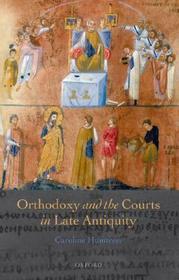
Orthodoxy and the Courts in Late Antiquity
-
10% KEDVEZMÉNY?
- A kedvezmény csak az 'Értesítés a kedvenc témákról' hírlevelünk címzettjeinek rendeléseire érvényes.
- Kiadói listaár GBP 142.50
-
64 338 Ft (61 275 Ft + 5% áfa)
Az ár azért becsült, mert a rendelés pillanatában nem lehet pontosan tudni, hogy a beérkezéskor milyen lesz a forint árfolyama az adott termék eredeti devizájához képest. Ha a forint romlana, kissé többet, ha javulna, kissé kevesebbet kell majd fizetnie.
- Kedvezmény(ek) 10% (kb. 6 433 Ft)
- Kedvezményes ár 57 905 Ft (55 148 Ft + 5% áfa)
Iratkozzon fel most és részesüljön kedvezőbb árainkból!
Feliratkozom
64 338 Ft

Beszerezhetőség
Megrendelésre a kiadó utánnyomja a könyvet. Rendelhető, de a szokásosnál kicsit lassabban érkezik meg.
Why don't you give exact delivery time?
A beszerzés időigényét az eddigi tapasztalatokra alapozva adjuk meg. Azért becsült, mert a terméket külföldről hozzuk be, így a kiadó kiszolgálásának pillanatnyi gyorsaságától is függ. A megadottnál gyorsabb és lassabb szállítás is elképzelhető, de mindent megteszünk, hogy Ön a lehető leghamarabb jusson hozzá a termékhez.
A termék adatai:
- Kiadó OUP Oxford
- Megjelenés dátuma 2007. november 1.
- ISBN 9780198208419
- Kötéstípus Keménykötés
- Terjedelem358 oldal
- Méret 222x145x26 mm
- Súly 581 g
- Nyelv angol 0
Kategóriák
Rövid leírás:
Approaching the subject of late Roman law from the perspective of legal practice revealed in courtroom processes, Caroline Humfress argues for a vibrant culture of forensic argumentation in late Antiquity - which included Christian controversies concerning 'heresy' and 'orthodoxy', revealing its far-reaching effects on theological debate.
TöbbHosszú leírás:
This book approaches the subject of late Roman law from the perspective of legal practice revealed in courtroom processes, as well as more 'informal' types of dispute settlement. From at least the early fourth century, leading bishops, ecclesiastics, and Christian polemicists participated in a vibrant culture of forensic argument, with far-reaching effects on theological debate, the development of ecclesiastical authority, and the elaboration of early 'Canon law'. One of the most innovative aspects of late Roman law was the creation and application of new legal categories used in the prosecution of 'heretics'. Leading Christian polemicists not only used techniques of argument learnt in the late Roman rhetorical schools to help position the Church within the structure of Empire, they also used those techniques in cases involving accusations against 'heretics'- thus defining and developing the concept of Christian orthodoxy itself.
H.'s discussion of the way the categories of heresiological thinking were reinforced and even created through legal modes of expression and practice is fascinating... Orthodoxy and the Courts makes its most significant contribution, however, in the way it rethinks the relationship between secular law and cannon law.
Tartalomjegyzék:
Introduction
Part I Forensic practitioners and the development of late Roman law
Introduction and background
Litigation and late Roman judges
Legal experts and the late Roman courts
Late Roman advocates
Part II Forensic practitioners in the service of the Late Antique church
Introduction and background
Ecclesiastics as forensic practitioners
Forensic expertise and the development of early Canon law
Part III Orthodoxy, Heresy and the Courts.
Defining heresy and orthodoxy
Heresy and the courts
Conclusion

