

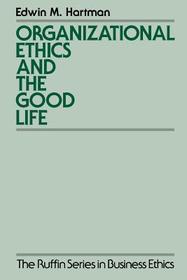
Organizational Ethics and the Good Life
Sorozatcím: The Ruffin Series in Business Ethics;
-
10% KEDVEZMÉNY?
- A kedvezmény csak az 'Értesítés a kedvenc témákról' hírlevelünk címzettjeinek rendeléseire érvényes.
- Kiadói listaár GBP 140.00
-
66 885 Ft (63 700 Ft + 5% áfa)
Az ár azért becsült, mert a rendelés pillanatában nem lehet pontosan tudni, hogy a beérkezéskor milyen lesz a forint árfolyama az adott termék eredeti devizájához képest. Ha a forint romlana, kissé többet, ha javulna, kissé kevesebbet kell majd fizetnie.
- Kedvezmény(ek) 10% (cc. 6 689 Ft off)
- Kedvezményes ár 60 197 Ft (57 330 Ft + 5% áfa)
Iratkozzon fel most és részesüljön kedvezőbb árainkból!
Feliratkozom
66 885 Ft

Beszerezhetőség
Megrendelésre a kiadó utánnyomja a könyvet. Rendelhető, de a szokásosnál kicsit lassabban érkezik meg.
Why don't you give exact delivery time?
A beszerzés időigényét az eddigi tapasztalatokra alapozva adjuk meg. Azért becsült, mert a terméket külföldről hozzuk be, így a kiadó kiszolgálásának pillanatnyi gyorsaságától is függ. A megadottnál gyorsabb és lassabb szállítás is elképzelhető, de mindent megteszünk, hogy Ön a lehető leghamarabb jusson hozzá a termékhez.
A termék adatai:
- Kiadó OUP USA
- Megjelenés dátuma 1997. június 26.
- ISBN 9780195100778
- Kötéstípus Puhakötés
- Terjedelem232 oldal
- Méret 235x159x14 mm
- Súly 325 g
- Nyelv angol 0
Kategóriák
Rövid leírás:
Edwin Hartman argues that ethical priciples should not derive from abstract theory, but from the real world of experience in organizations. He explains how ethical principles derive from what workers learn in their communities (firms), and that an ethical firm is one that creates the good life for the workers who contribute to its mission. His aproach is based on the Aristotelian tradition of refined common sense, from recent work on collective action problems in organizations, and from social contract theory.
TöbbHosszú leírás:
Edwin Hartman argues that ethical priciples should not derive from abstract theory, but from the real world of experience in organizations. He explains how ethical principles derive from what workers learn in their communities (firms), and that an ethical firm is one that creates the good life for the workers who contribute to its mission. His aproach is based on the Aristotelian tradition of refined common sense, from recent work on collective action problems in organizations, and from social contract theory.
Hartman's book is a significant and welcome addition to the business ethics lexicon. . . . If philosophers are to continue to play a role in the business ethics dialogue, this is the kind of book a philosopher should be writing. It will be a rich and rewarding experience for those who read it and a useful text in a business ethics class.

