

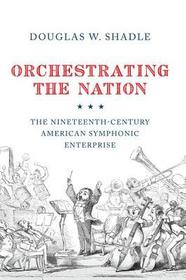
Orchestrating the Nation
The Nineteenth-Century American Symphonic Enterprise
-
10% KEDVEZMÉNY?
- A kedvezmény csak az 'Értesítés a kedvenc témákról' hírlevelünk címzettjeinek rendeléseire érvényes.
- Kiadói listaár GBP 32.99
-
14 894 Ft (14 185 Ft + 5% áfa)
Az ár azért becsült, mert a rendelés pillanatában nem lehet pontosan tudni, hogy a beérkezéskor milyen lesz a forint árfolyama az adott termék eredeti devizájához képest. Ha a forint romlana, kissé többet, ha javulna, kissé kevesebbet kell majd fizetnie.
- Kedvezmény(ek) 10% (kb. 1 489 Ft)
- Kedvezményes ár 13 405 Ft (12 767 Ft + 5% áfa)
Iratkozzon fel most és részesüljön kedvezőbb árainkból!
Feliratkozom
14 894 Ft

Beszerezhetőség
Becsült beszerzési idő: A Prosperónál jelenleg nincsen raktáron, de a kiadónál igen. Beszerzés kb. 3-5 hét..
A Prosperónál jelenleg nincsen raktáron.
Why don't you give exact delivery time?
A beszerzés időigényét az eddigi tapasztalatokra alapozva adjuk meg. Azért becsült, mert a terméket külföldről hozzuk be, így a kiadó kiszolgálásának pillanatnyi gyorsaságától is függ. A megadottnál gyorsabb és lassabb szállítás is elképzelhető, de mindent megteszünk, hogy Ön a lehető leghamarabb jusson hozzá a termékhez.
A termék adatai:
- Kiadó OUP USA
- Megjelenés dátuma 2018. szeptember 27.
- ISBN 9780190914479
- Kötéstípus Puhakötés
- Terjedelem344 oldal
- Méret 231x155x22 mm
- Súly 499 g
- Nyelv angol
- Illusztrációk 9 halftones, 93 line 0
Kategóriák
Rövid leírás:
During the nineteenth century, nearly one hundred symphonies were written by over fifty composers living in the United States. In the award-winning Orchestrating the Nation: The Nineteenth-Century American Symphonic Enterprise, author Douglas W. Shadle explores the stunning stylistic diversity of this substantial repertoire and uncovers why it failed to enter the musical mainstream. An engagingly written account of a largely unknown repertoire, Orchestrating the Nation shows how artistic and ideological debates from the nineteenth century shape the culture of American orchestral music today.
TöbbHosszú leírás:
During the nineteenth century, nearly one hundred symphonies were written by over fifty composers living in the United States. With few exceptions, this repertoire is virtually forgotten today. In the award-winning Orchestrating the Nation: The Nineteenth-Century American Symphonic Enterprise, author Douglas W. Shadle explores the stunning stylistic diversity of this substantial repertoire and uncovers why it failed to enter the musical mainstream.
Throughout the century, Americans longed for a distinct national musical identity. As the most prestigious of all instrumental genres, the symphony proved to be a potent vehicle in this project as composers found inspiration for their works in a dazzling array of subjects, including Niagara Falls, Hiawatha, and Western pioneers. With a wealth of musical sources at his disposal, including never-before-examined manuscripts, Shadle reveals how each component of the symphonic enterprise-from its composition, to its performance, to its immediate and continued reception by listeners and critics-contributed to competing visions of American identity.
Employing an innovative transnational historical framework, Shadle's narrative covers three continents and shows how the music of major European figures such as Beethoven, Schumann, Wagner, Liszt, Brahms, and Dvorák exerted significant influence over dialogues about the future of American musical culture. Shadle demonstrates that the perceived authority of these figures allowed snobby conductors, capricious critics, and even orchestral musicians themselves to thwart the efforts of American symphonists despite widespread public support of their music. Consequently, these works never entered the performing canons of American orchestras.
An engagingly written account of a largely unknown repertoire, Orchestrating the Nation shows how artistic and ideological debates from the nineteenth century continue to shape the culture of American orchestral music today.
More than anything else, Orchestrating the Nation illuminates the origins and myriad strategies of the classical music world's eternal animus against American composers.
Tartalomjegyzék:
Acknowledgments
About the Companion Website
Introduction
1: The Launch of the Enterprise
2: Anthony Philip Heinrich, Hapless Wanderer
3: William Henry Fry, Operatic Translator
4: George Frederick Bristow, American Stalwart
5: The Rivalry of Nations
6: The End of an Era
Interlude: The Country Divided
7: Louis Moreau Gottschalk, Pan-American Republican
8: John Knowles Paine, Universal Classicist
9: The Rivalry of Generations
10: Ellsworth Phelps, Brooklyn Patriot
11: The Winds of Change
12: Antonín Dvorák, Bohemian Prophet
Epilogue
Works Cited

