

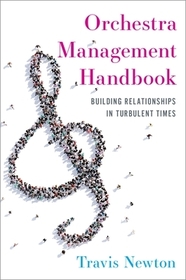
Orchestra Management Handbook
Building Relationships in Turbulent Times
-
10% KEDVEZMÉNY?
- A kedvezmény csak az 'Értesítés a kedvenc témákról' hírlevelünk címzettjeinek rendeléseire érvényes.
- Kiadói listaár GBP 29.49
-
13 314 Ft (12 680 Ft + 5% áfa)
Az ár azért becsült, mert a rendelés pillanatában nem lehet pontosan tudni, hogy a beérkezéskor milyen lesz a forint árfolyama az adott termék eredeti devizájához képest. Ha a forint romlana, kissé többet, ha javulna, kissé kevesebbet kell majd fizetnie.
- Kedvezmény(ek) 10% (cc. 1 331 Ft off)
- Kedvezményes ár 11 983 Ft (11 412 Ft + 5% áfa)
Iratkozzon fel most és részesüljön kedvezőbb árainkból!
Feliratkozom
13 314 Ft

Beszerezhetőség
Megrendelésre a kiadó utánnyomja a könyvet. Rendelhető, de a szokásosnál kicsit lassabban érkezik meg.
Why don't you give exact delivery time?
A beszerzés időigényét az eddigi tapasztalatokra alapozva adjuk meg. Azért becsült, mert a terméket külföldről hozzuk be, így a kiadó kiszolgálásának pillanatnyi gyorsaságától is függ. A megadottnál gyorsabb és lassabb szállítás is elképzelhető, de mindent megteszünk, hogy Ön a lehető leghamarabb jusson hozzá a termékhez.
A termék adatai:
- Kiadó OUP USA
- Megjelenés dátuma 2022. május 3.
- ISBN 9780197550687
- Kötéstípus Puhakötés
- Terjedelem248 oldal
- Méret 244x157x17 mm
- Súly 363 g
- Nyelv angol
- Illusztrációk 20 halftones 201
Kategóriák
Rövid leírás:
In the Orchestra Management Handbook, longtime orchestra manager, violinist, and professor Travis Newton offers the key tools and skills necessary to successfully enter the world of orchestra management.
TöbbHosszú leírás:
Those who choose to make the orchestra enterprise their life's work face a host of challenges that have beset orchestra managers since the very beginning of the art form, alongside new challenges that continue to arise in the twenty-first century. Written for those who are contemplating jumping into the orchestra management realm, the Orchestra Management Handbook will provide a significant head-start for people entering this complicated, exciting, and challenging line of work. Whether short-term, long-term, internal, external or existential, an intentional approach to building, maintaining, and sustaining relationships must be at the core of the orchestra manager's daily routine. Few arts organizations have more potential for building community than orchestras. With a typically large permanent complement of artists, a high volume of performances, and a need for large audiences, building community should be central to the internal and external operations of the modern orchestra.
Each chapter of this handbook provides practical strategies, tools, and a variety of resources to workers in the orchestra management field, always with an emphasis on building relationships. Throughout the book, author and experienced orchestra manager, violinist, and professor Travis Newton regularly features illustrative case studies highlighting innovative practices being undertaken at orchestras across the country, providing the reader an opportunity to learn from the experiences of others. Additionally, each chapter concludes with a series of discussion questions to ponder, teasing out some of the key concepts.
In the Orchestra Management Handbook, Travis Newton has performed an extremely valuable service. He has captured a wide range of intelligent thinking about the complex job of managing symphony orchestras in the United States, he has added his own intelligence and synthesized it all in a way that is not only remarkably readable, but useful and practical as well. Anyone interested in orchestra management, or in the health of orchestras in general, should read this book.
Tartalomjegyzék:
Acknowledgements
Foreword
Introduction
Chapter 1 What is Orchestra Management?
Chapter 2 Internal Relationships
Chapter 3 Steering the Ship
Chapter 4 Community Relationships
Chapter 5 Artistic Planning
Chapter 6 Financial Management
Chapter 7 Building Sustaining Relationships
Chapter 8 Marketing and Public Relations
Chapter 9: Toward Relevance
Chapter 10 From the Field
Appendices
Glossary
Notes
Author Bio
Index

