

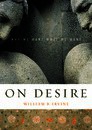
On Desire
Why We Want What We Want
-
10% KEDVEZMÉNY?
- A kedvezmény csak az 'Értesítés a kedvenc témákról' hírlevelünk címzettjeinek rendeléseire érvényes.
- Kiadói listaár GBP 15.99
-
7 639 Ft (7 275 Ft + 5% áfa)
Az ár azért becsült, mert a rendelés pillanatában nem lehet pontosan tudni, hogy a beérkezéskor milyen lesz a forint árfolyama az adott termék eredeti devizájához képest. Ha a forint romlana, kissé többet, ha javulna, kissé kevesebbet kell majd fizetnie.
- Kedvezmény(ek) 10% (cc. 764 Ft off)
- Kedvezményes ár 6 875 Ft (6 548 Ft + 5% áfa)
Iratkozzon fel most és részesüljön kedvezőbb árainkból!
Feliratkozom
7 639 Ft

Beszerezhetőség
A kiadónál véglegesen elfogyott, nem rendelhető. Érdemes újra keresni a címmel, hátha van újabb kiadás.
Why don't you give exact delivery time?
A beszerzés időigényét az eddigi tapasztalatokra alapozva adjuk meg. Azért becsült, mert a terméket külföldről hozzuk be, így a kiadó kiszolgálásának pillanatnyi gyorsaságától is függ. A megadottnál gyorsabb és lassabb szállítás is elképzelhető, de mindent megteszünk, hogy Ön a lehető leghamarabb jusson hozzá a termékhez.
A termék adatai:
- Kiadó Oxford University Press
- Megjelenés dátuma 2005. november 24.
- ISBN 9780195188622
- Kötéstípus Keménykötés
- Terjedelem336 oldal
- Méret 176x129x29 mm
- Súly 407 g
- Nyelv angol 0
Kategóriák
Rövid leírás:
A multi-disciplinary study of the phenomenon of desire: how it controls us, how we seek to control it; what wisdom has been offered on the subject by philosophy, religion and science over the ages.
TöbbHosszú leírás:
Often, we don't choose our desires; desires choose us, and we frequently get carried away by them. But if we want to lead fulfilled and meaningful lives, we must learn to control them, to sift through and pursue the important ones; in short, to master our desires. Enter Irvine's On Desire , a book which turns desire inside-out - to explore how and why desires arise, how they affect our lives, what advice exists from both religious and philosophical thinkers on mastering
desire, and what methods they have pursued to achieve that goal. Irvine first turns to the science of desire, summarizing popular philosophy of mind theories, the veto-power of emotion over intellect, what we can and cannot know about the unconscious mind, and his theory that we have an incentive system
biologically wired in us, which shapes and motivates our particular desires. He brings together a broad range of religious advice on mastering desire, from the Buddhist middle path to the promise of a glorious Christian or Islamic afterlife. But Irvine also heeds the less well-known religious groups, such as the Hutterites, Shakers, and Amish, whose doctrines of self-denial and self-sacrifice for the good of God and the larger Amish community, he argues, are aimed at curbing desires by losing
the self. In philosophy, Irvine draws from the Stoic tracts of Epictetus, Marcus Aurelius, and Seneca, who taught ways in which to desire only what one already possesses or what is in one's power to control and achieve. He goes on to discuss the "eccentric" lifestyles of Diogenes and Thoreau, parsing
their strange behavior in terms of their attempts to avoid the inundation of pressures and wants of mainstream society. In the end, Irvine will cull the important elements of all these theories to defend the argument that mastering desire is important, in order to differentiate us from other species, evolving from what we are hardwired to want, and most of all, in order to lead meaningful lives and appreciate being content in a world motivated by endless want.
Tartalomjegyzék:
Introduction PART ONE: THE SECRET LIFE OF DESIRE - Chapter 1: The Ebb and Flow of Desire - Chapter 2: Other People - PART TWO: THE SCIENCE OF DESIRE - Chapter 3: Mapping Our Desires - Chapter 4: The Wellsprings of Desire - Chapter 5: The Psychology of Desire - Chapter 6: The Evolution of Desire - Chapter 7: The Biological Incentive System (BIS) - PART THREE: DEALING WITH OUR DESIRES - Chapter 8: The Human Condition - Chapter 9: Religious Advice - Chapter 10: Religious Advice
Continued-Protestant Sects Chapter 11: Philosophical Advice - Chapter 12: The Eccentrics - Chapter 13: Conclusions

