

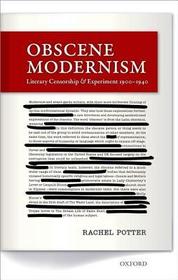
Obscene Modernism
Literary Censorship and Experiment 1900-1940
-
10% KEDVEZMÉNY?
- A kedvezmény csak az 'Értesítés a kedvenc témákról' hírlevelünk címzettjeinek rendeléseire érvényes.
- Kiadói listaár GBP 125.00
-
56 437 Ft (53 750 Ft + 5% áfa)
Az ár azért becsült, mert a rendelés pillanatában nem lehet pontosan tudni, hogy a beérkezéskor milyen lesz a forint árfolyama az adott termék eredeti devizájához képest. Ha a forint romlana, kissé többet, ha javulna, kissé kevesebbet kell majd fizetnie.
- Kedvezmény(ek) 10% (kb. 5 643 Ft)
- Kedvezményes ár 50 794 Ft (48 375 Ft + 5% áfa)
Iratkozzon fel most és részesüljön kedvezőbb árainkból!
Feliratkozom
56 437 Ft

Beszerezhetőség
Megrendelésre a kiadó utánnyomja a könyvet. Rendelhető, de a szokásosnál kicsit lassabban érkezik meg.
Why don't you give exact delivery time?
A beszerzés időigényét az eddigi tapasztalatokra alapozva adjuk meg. Azért becsült, mert a terméket külföldről hozzuk be, így a kiadó kiszolgálásának pillanatnyi gyorsaságától is függ. A megadottnál gyorsabb és lassabb szállítás is elképzelhető, de mindent megteszünk, hogy Ön a lehető leghamarabb jusson hozzá a termékhez.
A termék adatai:
- Kiadó OUP Oxford
- Megjelenés dátuma 2013. augusztus 29.
- ISBN 9780199680986
- Kötéstípus Keménykötés
- Terjedelem242 oldal
- Méret 224x148x21 mm
- Súly 428 g
- Nyelv angol 0
Kategóriák
Rövid leírás:
This book analyses the censorship of literature for obscenity in the period 1900-1940. It considers why writers were so interested in writing about obscenity as well as attempts by lawyers, writers and publishers to define literature as a special area of free speech.
TöbbHosszú leírás:
During the period 1900-1940 novels and poems in the UK and US were subject to strict forms of censorship and control because of their representation of sex and sexuality. At the same time, however, writers were more interested than ever before in writing about sex and excrement, incorporating obscene slang words into literary texts, and exploring previously uncharted elements of the modern psyche. This book explores the far-reaching literary, legal and philosophical consequences of this historical conflict between law and literature. Alongside the famous prosecutions of D. H. Lawrence's The Rainbow and James Joyce's Ulysses huge numbers of novels and poems were altered by publishers and printers because of concerns about prosecution. Far from curtailing the writing of obscenity, however, censorship seemed to stimulate writers to explore it further. During the period covered by this book novels and poems became more experimentally obscene, and writers were intensely interested in discussing the author's rights to free speech, the nature of obscenity and the proper parameters of literature. Literature, seen as a dangerous form of corruption by some, was identified with sexual liberation by others. While legislators tried to protect UK and US borders from obscene literature, modernist publishers and writers gravitated abroad, a development that prompted writers to defend the international rights of banned authors and books. While the period 1900-1940 was one of the most heavily policed in the history of literature, it was also the time when the parameters of literature opened up and writers seriously questioned the rights of nation states to control the production and dissemination of literature.
Obscene Modernism is a rigorous and lucid book that will be of great interest to anyone researching in the now broad fields of literary modernism and censorship.
Tartalomjegyzék:
Introduction
Censorship Networks
Anonymity and Self-Regulation
Publishers and Journals
Words and Minds
Offense
International Rights
Laughter
Conclusion
Bibliography
Index

