

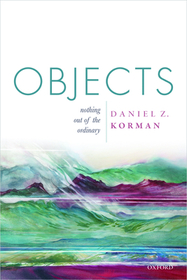
Objects
Nothing out of the Ordinary
-
20% KEDVEZMÉNY?
- A kedvezmény csak az 'Értesítés a kedvenc témákról' hírlevelünk címzettjeinek rendeléseire érvényes.
- Kiadói listaár GBP 33.49
-
15 120 Ft (14 400 Ft + 5% áfa)
Az ár azért becsült, mert a rendelés pillanatában nem lehet pontosan tudni, hogy a beérkezéskor milyen lesz a forint árfolyama az adott termék eredeti devizájához képest. Ha a forint romlana, kissé többet, ha javulna, kissé kevesebbet kell majd fizetnie.
- Kedvezmény(ek) 20% (cc. 3 024 Ft off)
- Kedvezményes ár 12 096 Ft (11 520 Ft + 5% áfa)
- A kedvezmény érvényes eddig: 2026. június 30.
Iratkozzon fel most és részesüljön kedvezőbb árainkból!
Feliratkozom
15 120 Ft

Beszerezhetőség
Becsült beszerzési idő: A Prosperónál jelenleg nincsen raktáron, de a kiadónál igen. Beszerzés kb. 3-5 hét..
A Prosperónál jelenleg nincsen raktáron.
Why don't you give exact delivery time?
A beszerzés időigényét az eddigi tapasztalatokra alapozva adjuk meg. Azért becsült, mert a terméket külföldről hozzuk be, így a kiadó kiszolgálásának pillanatnyi gyorsaságától is függ. A megadottnál gyorsabb és lassabb szállítás is elképzelhető, de mindent megteszünk, hogy Ön a lehető leghamarabb jusson hozzá a termékhez.
A termék adatai:
- Kiadó OUP Oxford
- Megjelenés dátuma 2020. április 2.
- ISBN 9780198861195
- Kötéstípus Puhakötés
- Terjedelem264 oldal
- Méret 235x156x15 mm
- Súly 392 g
- Nyelv angol 0
Kategóriák
Rövid leírás:
Daniel Z. Korman defends a conservative and commonsense view of material-object metaphysics, and especially the question of which highly visible objects there are right before our eyes. He argues that our ordinary, natural judgments about what is there are more or less correct, and defends his claim against a variety of objections.
TöbbHosszú leírás:
One of the central questions of material-object metaphysics is which highly visible objects there are right before our eyes. Daniel Z. Korman defends a conservative view, according to which our ordinary, natural judgments about which objects there are are more or less correct. He begins with an overview of the arguments that have led people away from the conservative view, into revisionary views according to which there are far more objects than we ordinarily take there to be (permissivism) or far fewer (eliminativism). Korman criticizes a variety of compatibilist strategies, according to which these revisionary views are actually compatible with our ordinary beliefs, and responds to debunking arguments, according to which these beliefs are the products of arbitrary biological and cultural influences. He goes on to respond to objections that the conservative's verdicts about which objects that are and aren't are objectionably arbitrary, and to the argument from vagueness, which purports to show that the sort of restriction that conservatives want to impose on which composites there are is bound to give rise to vagueness about what exists, something that is ruled out by widely accepted theories of vagueness. Finally, Korman responds to the overdetermination argument, the argument from material constitution, and the problem of the many, all of which are meant to motivate eliminativism by showing that accepting ordinary objects commits one to one or another absurdity.
This book is highly recommended. This is because it engages with a wide range of contemporary literature on the topics it deals with, and because it gives such a good overview of the different positions and arguments involved. On top of this, it is very engagingly written. Korman has a knack for presenting complex positions and arguments clearly and directly. The book will be very useful to those who may not already be passionate about one or another of these positions but wants to get some of idea of what is going on in one large corner of contemporary analytic metaphysics. And it will be really invaluable to anyone already in this corner.
Tartalomjegyzék:
Introduction
The Arguments
The Positions
The Counterexamples
Compatibilism
Ontologese
Debunking
Arbitrariness
Vagueness
Overdetermination
Constitution
The Many
Conclusion

