

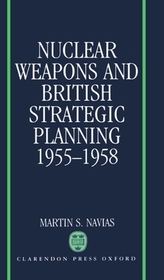
Nuclear Weapons and British Strategic Planning, 1955-1958
Sorozatcím: Nuclear History Program; 1;
-
10% KEDVEZMÉNY?
- A kedvezmény csak az 'Értesítés a kedvenc témákról' hírlevelünk címzettjeinek rendeléseire érvényes.
- Kiadói listaár GBP 225.00
-
101 587 Ft (96 750 Ft + 5% áfa)
Az ár azért becsült, mert a rendelés pillanatában nem lehet pontosan tudni, hogy a beérkezéskor milyen lesz a forint árfolyama az adott termék eredeti devizájához képest. Ha a forint romlana, kissé többet, ha javulna, kissé kevesebbet kell majd fizetnie.
- Kedvezmény(ek) 10% (kb. 10 158 Ft)
- Kedvezményes ár 91 429 Ft (87 075 Ft + 5% áfa)
Iratkozzon fel most és részesüljön kedvezőbb árainkból!
Feliratkozom
101 587 Ft

Beszerezhetőség
Megrendelésre a kiadó utánnyomja a könyvet. Rendelhető, de a szokásosnál kicsit lassabban érkezik meg.
Why don't you give exact delivery time?
A beszerzés időigényét az eddigi tapasztalatokra alapozva adjuk meg. Azért becsült, mert a terméket külföldről hozzuk be, így a kiadó kiszolgálásának pillanatnyi gyorsaságától is függ. A megadottnál gyorsabb és lassabb szállítás is elképzelhető, de mindent megteszünk, hogy Ön a lehető leghamarabb jusson hozzá a termékhez.
A termék adatai:
- Kiadó Clarendon Press
- Megjelenés dátuma 1991. május 16.
- ISBN 9780198277545
- Kötéstípus Keménykötés
- Terjedelem280 oldal
- Méret 223x145x22 mm
- Súly 499 g
- Nyelv angol 0
Kategóriák
Hosszú leírás:
During the 1950s nuclear weapons began to play an increasingly important role in Britain's defence policy. The development of thermonuclear bombs and assessments of the great destruction that would result from an exchange of nuclear warheads helped alter Britain's planning for war, and influenced the structure and deployment of her armed forces.
In this study Martin Navias seeks to analyse the significance of the 1957 White Paper on Defence in the context of British strategic planning during the mid-1950s. He assesses claims that the White Paper represented a culmination of trends already prevalent in British defence planning, discusses whether the basis for a truly independent deterrent was established during 1955-6, and identifies continuities and discontinuities in strategic policies.
A major theme throughout is the relationship between nuclear deterrence and the shape and size of conventional forces. Before Duncan Sandys became Minister of Defence, that ministry seemed unable to impose itself on the service departments. Sandys, however, was able to override many traditional service preferences. The result was the adoption of a British New Look: conventional forces were reduced, greater relative importance was placed on the nuclear deterrent, but once more the requirements of a truly independent deterrent did not receive priority.
`he has used a wide range of material very carefully. The book is based upon his doctoral thesis, but it has been reworked and amplified, and fairly reflects the intricacy of a period when most of the new truths that seemed to be emerging were insistent and uncomfortable.'
The RUSI Journal
Tartalomjegyzék:
Introduction; Nuclear weapons and British Alliance commitments 1955-1956; The services and war planning in the thermonuclear era 1955-1956; The nuclear deterrent 1955-1956: Moving towards independence?; The Sandys White Paper of 1957; Independent deterrence and Anglo-American Co-operation: 1957-1958; Conclusion
Több
