

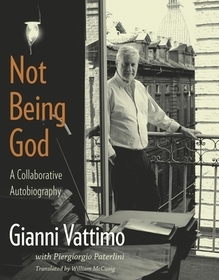
Not Being God
A Collaborative Autobiography
-
10% KEDVEZMÉNY?
- A kedvezmény csak az 'Értesítés a kedvenc témákról' hírlevelünk címzettjeinek rendeléseire érvényes.
- Kiadói listaár GBP 84.00
-
37 926 Ft (36 120 Ft + 5% áfa)
Az ár azért becsült, mert a rendelés pillanatában nem lehet pontosan tudni, hogy a beérkezéskor milyen lesz a forint árfolyama az adott termék eredeti devizájához képest. Ha a forint romlana, kissé többet, ha javulna, kissé kevesebbet kell majd fizetnie.
- Kedvezmény(ek) 10% (kb. 3 793 Ft)
- Kedvezményes ár 34 133 Ft (32 508 Ft + 5% áfa)
Iratkozzon fel most és részesüljön kedvezőbb árainkból!
Feliratkozom
37 926 Ft

Beszerezhetőség
Becsült beszerzési idő: A Prosperónál jelenleg nincsen raktáron, de a kiadónál igen. Beszerzés kb. 3-5 hét..
A Prosperónál jelenleg nincsen raktáron.
Why don't you give exact delivery time?
A beszerzés időigényét az eddigi tapasztalatokra alapozva adjuk meg. Azért becsült, mert a terméket külföldről hozzuk be, így a kiadó kiszolgálásának pillanatnyi gyorsaságától is függ. A megadottnál gyorsabb és lassabb szállítás is elképzelhető, de mindent megteszünk, hogy Ön a lehető leghamarabb jusson hozzá a termékhez.
A termék adatai:
- Kiadó Columbia University Press
- Megjelenés dátuma 2009. június 12.
- ISBN 9780231147200
- Kötéstípus Keménykötés
- Terjedelem200 oldal
- Méret 177x139 mm
- Nyelv angol 0
Kategóriák
Rövid leírás:
With Piergiorgio Paterlini, a noted Italian writer and journalist, Gianni Vattimo, a leading philosopher of the continental school, reflects on a lifetime of politics, sexual radicalism, and philosophical exuberance in postwar Italy. Turin, the city in which he was born and one of the intellectual capitals of Europe (also the city in which Nietzsche went mad), forms the core of his reminiscences, enriched by fascinating vignettes of studying under Hans Georg Gadamer, teaching in the United States, serving as a public intellectual and interlocutor of Habermas and Derrida, and working within the European Parliament to unite Europe.
Vattimo's status as a left-wing faculty president paradoxically made him a target of the Red Brigades in the 1970s, causing him to flee Turin for his life. Left-wing terrorism did not deter the philosopher from his quest for social progress, however, and in the 1980s, he introduced a daring formulation called "weak thought," which stripped metaphysics, science, religion, and all other absolute systems of their authority. Vattimo then became notorious for his renewed commitment to the core values of Christianity (he was trained as a Catholic intellectual) and for the Vatican's denunciation of his views. Through these interviews, Paterlini composes an utterly candid first-person portrait of a major thinker and a riveting account of homosexuality, history, politics, and philosophical invention in the twentieth century.
TöbbHosszú leírás:
With Piergiorgio Paterlini, a noted Italian writer and journalist, Gianni Vattimo, a leading philosopher of the continental school, reflects on a lifetime of politics, sexual radicalism, and philosophical exuberance in postwar Italy. Turin, the city in which he was born and one of the intellectual capitals of Europe (also the city in which Nietzsche went mad), forms the core of his reminiscences, enriched by fascinating vignettes of studying under Hans Georg Gadamer, teaching in the United States, serving as a public intellectual and interlocutor of Habermas and Derrida, and working within the European Parliament to unite Europe.
Vattimo's status as a left-wing faculty president paradoxically made him a target of the Red Brigades in the 1970s, causing him to flee Turin for his life. Left-wing terrorism did not deter the philosopher from his quest for social progress, however, and in the 1980s, he introduced a daring formulation called "weak thought," which stripped metaphysics, science, religion, and all other absolute systems of their authority. Vattimo then became notorious for his renewed commitment to the core values of Christianity (he was trained as a Catholic intellectual) and for the Vatican's denunciation of his views. Through these interviews, Paterlini composes an utterly candid first-person portrait of a major thinker and a riveting account of homosexuality, history, politics, and philosophical invention in the twentieth century.
Több
