

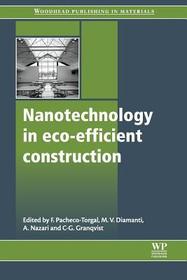
Nanotechnology in Eco-Efficient Construction
Materials, Processes and Applications
Sorozatcím: Woodhead Publishing Series in Civil and Structural Engineering;
-
10% KEDVEZMÉNY?
- A kedvezmény csak az 'Értesítés a kedvenc témákról' hírlevelünk címzettjeinek rendeléseire érvényes.
- Kiadói listaár EUR 190.00
-
78 802 Ft (75 050 Ft + 5% áfa)
Az ár azért becsült, mert a rendelés pillanatában nem lehet pontosan tudni, hogy a beérkezéskor milyen lesz a forint árfolyama az adott termék eredeti devizájához képest. Ha a forint romlana, kissé többet, ha javulna, kissé kevesebbet kell majd fizetnie.
- Kedvezmény(ek) 10% (cc. 7 880 Ft off)
- Kedvezményes ár 70 922 Ft (67 545 Ft + 5% áfa)
Iratkozzon fel most és részesüljön kedvezőbb árainkból!
Feliratkozom
78 802 Ft

Beszerezhetőség
Megjelenése törölve vagy kivonva a forgalomból. Sajnos nem rendelhető.
Why don't you give exact delivery time?
A beszerzés időigényét az eddigi tapasztalatokra alapozva adjuk meg. Azért becsült, mert a terméket külföldről hozzuk be, így a kiadó kiszolgálásának pillanatnyi gyorsaságától is függ. A megadottnál gyorsabb és lassabb szállítás is elképzelhető, de mindent megteszünk, hogy Ön a lehető leghamarabb jusson hozzá a termékhez.
A termék adatai:
- Kiadó Elsevier Science
- Megjelenés dátuma 2018. október 30.
- ISBN 9780081015995
- Kötéstípus Puhakötés
- Terjedelem458 oldal
- Méret 234x156 mm
- Nyelv angol 0
Kategóriák
Hosszú leírás:
As the environmental impact of existing construction and building materials comes under increasing scrutiny, the search for more eco-efficient solutions has intensified. Nanotechnology offers great potential in this area and is already being widely used to great success. Nanotechnology in eco-efficient construction is an authoritative guide to the role of nanotechnology in the development of eco-efficient construction materials and sustainable construction.Following an introduction to the use of nanotechnology in eco-efficient construction materials, part one considers such infrastructural applications as nanoengineered cement-based materials, nanoparticles for high-performance and self-sensing concrete, and the use of nanotechnology to improve the bulk and surface properties of steel for structural applications. Nanoclay-modified asphalt mixtures and safety issues relating to nanomaterials for construction applications are also reviewed before part two goes on to discuss applications for building energy efficiency. Topics explored include thin films and nanostructured coatings, switchable glazing technology and third generation photovoltaic (PV) cells, high-performance thermal insulation materials, and silica nanogel for energy-efficient windows. Finally, photocatalytic applications are the focus of part three, which investigates nanoparticles for pollution control, self-cleaning and photosterilisation, and the role of nanotechnology in manufacturing paints and purifying water for eco-efficient buildings.Nanotechnology in eco-efficient construction is a technical guide for all those involved in the design, production and application of eco-efficient construction materials, including civil engineers, materials scientists, researchers and architects within any field of nanotechnology, eco-efficient materials or the construction industry.
TöbbTartalomjegyzék:
Contributor contact details
Chapter 1: Introduction to nanotechnology in eco-efficient construction
Abstract:
1.1 Introduction
1.2 The need for nanotechnology in the construction sector
1.3 Outline of the book
Part I: Infrastructural applications
Chapter 2: Nanoscience and nanoengineering of cement-based materials
Abstract:
2.1 Introduction
2.2 Nanoscience of cement-based materials
2.3 Nanoengineering of cement-based materials
2.4 Conclusion
Chapter 3: Nanoparticles for high performance concrete (HPC)
Abstract:
3.1 Introduction
3.2 Concrete with nanoparticles
3.3 The problem of efficient nanoparticle dispersion
3.4 Conclusions
Chapter 4: Self-sensing concrete with nanomaterials
Abstract:
4.1 Introduction
4.2 Studying conductive admixtures in concrete
4.3 Influence of conductive admixtures on the mechanical properties of concrete
4.4 Influence of conductive admixtures on the electrical properties of concrete beams
4.5 Strain and damage in concrete beams (self-diagnosing of damage)
4.6 Diphasic electrical conductive materials
4.7 Conclusions
Chapter 5: The use of nanotechnology to improve the bulk and surface properties of steel for structural applications
Abstract:
5.1 Introduction
5.2 Research relating to nanocomposite steel
5.3 Properties of nanocomposite steel
5.4 Future trends
Chapter 6: Nanoclay-modified asphalt mixtures for eco-efficient construction
Abstract:
6.1 Introduction
6.2 Research on nanoclay-modified asphalt mixtures
6.3 Material and methods
6.4 Rheological tests and results
6.5 Mechanical testing of asphalt mixtures
6.6 Conclusion
6.7 Future trends
Chapter 7: Safety issues relating to nanomaterials for construction applications
Abstract:
7.1 Introduction to nanotoxicity
7.2 Potential nano-hazards of manufactured nanomaterials (MNMs) utilized in construction
7.3 Lifecycle of nano-enabled structures
7.4 Toxicity profiling for nanomaterials
7.5 Future trends and conclusions
Part II: Applications for building energy efficiency
Chapter 8: Thin films and nanostructured coatings for eco-efficient buildings
Abstract:
8.1 Introduction
8.2 Major thin film technologies and some illustrative examples
8.3 Large-scale manufacturing
8.4 Conclusion and future trends
Chapter 9: High performance thermal insulation materials for buildings
Abstract:
9.1 Introduction
9.2 Heat transfer in thermal insulators
9.3 State-of-the-art insulators
9.4 Applications
9.5 Future trends
Chapter 10: Silica nanogel for energy-efficient windows
Abstract:
10.1 Introduction
10.2 Aerogels for windows
10.3 Current applications of aerogels in buildings
10.4 Performance of nanogel windows
10.5 Future trends
Chapter 11: Switchable glazing technology for eco-efficient construction
Abstract:
11.1 Introduction
11.2 Electrochromics: materials and devices
11.3 Thermochromics: materials and devices
11.4 Future trends in electrochromic and thermochromic glazing
Chapter 12: Third generation photovoltaic (PV) cells for eco-efficient buildings and other applications
Abstract:
12.1 Introduction
12.2 History of photovoltaic (PV) cells
12.3 Functions of a photovoltaic (PV) cell
12.4 Overview of photovoltaic (PV) technology: first, second and third generation cells
12.5 The use of nanotechnology in photovoltaic (PV) technology
12.6 Future trends
Part III: Photocatalytic applications
Chapter 13: Concrete, mortar and plaster using titanium dioxide nanoparticles: applications in pollution control, self-cleaning and photo sterilization
Abstract:
13.1 Introduction
13.2 Principles of heterogeneous photocatalysis
13.3 Applications of semiconductor photocatalysis
13.4 TiO2 in cement-based materials
13.5 Efficiency of TiO2 in the built environment
13.6 Pilot projects and field tests
13.7 Existing patents and standards relating to photocatalytic cementitious materials
Chapter 14: Self-cleaning tiles and glasses for eco-efficient buildings
Abstract:
14.1 Introduction
14.2 Important production parameters
14.3 Mechanism of self-cleaning glasses and tiles
14.4 Future trends
Chapter 15: Nanotechnology in manufacturing paints for eco-efficient buildings
Abstract:
15.1 Introduction
15.2 Application of photocatalytic paints in an outdoor environment
15.3 Application of photocatalytic paints in an indoor environment
15.4 Potential formation of by-products
15.5 Future trends
Chapter 16: Nanotechnology for domestic water purification
Abstract:
16.1 Introduction
16.2 Nanomaterials and water purification
16.3 The need for nanomaterials in water purification
16.4 Types, properties and uses of nanomaterials in water purification
16.5 Synthesis of nanomaterials
16.6 Nanotechnology: health, safety and environment
16.7 Domestic water purification: challenges to bring about an integrated system
16.7.2 Challenges with development of integrated nano-based systems for water purification
Index
Több
