

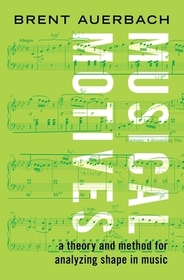
Musical Motives
A Theory and Method for Analyzing Shape in Music
-
10% KEDVEZMÉNY?
- A kedvezmény csak az 'Értesítés a kedvenc témákról' hírlevelünk címzettjeinek rendeléseire érvényes.
- Kiadói listaár GBP 102.50
-
46 278 Ft (44 075 Ft + 5% áfa)
Az ár azért becsült, mert a rendelés pillanatában nem lehet pontosan tudni, hogy a beérkezéskor milyen lesz a forint árfolyama az adott termék eredeti devizájához képest. Ha a forint romlana, kissé többet, ha javulna, kissé kevesebbet kell majd fizetnie.
- Kedvezmény(ek) 10% (cc. 4 628 Ft off)
- Kedvezményes ár 41 651 Ft (39 668 Ft + 5% áfa)
Iratkozzon fel most és részesüljön kedvezőbb árainkból!
Feliratkozom
46 278 Ft

Beszerezhetőség
Becsült beszerzési idő: A Prosperónál jelenleg nincsen raktáron, de a kiadónál igen. Beszerzés kb. 3-5 hét..
A Prosperónál jelenleg nincsen raktáron.
Why don't you give exact delivery time?
A beszerzés időigényét az eddigi tapasztalatokra alapozva adjuk meg. Azért becsült, mert a terméket külföldről hozzuk be, így a kiadó kiszolgálásának pillanatnyi gyorsaságától is függ. A megadottnál gyorsabb és lassabb szállítás is elképzelhető, de mindent megteszünk, hogy Ön a lehető leghamarabb jusson hozzá a termékhez.
A termék adatai:
- Kiadó OUP USA
- Megjelenés dátuma 2021. szeptember 17.
- ISBN 9780197526026
- Kötéstípus Keménykötés
- Terjedelem400 oldal
- Méret 157x239x30 mm
- Súly 748 g
- Nyelv angol
- Illusztrációk 192 musical examples 121
Kategóriák
Rövid leírás:
In Musical Motives, author Brent Auerbach look at the ways that motives--or the small-scale pitch and rhythm shapes ever-present in music--tie musical compositions together, and why we remember some more than others.
TöbbHosszú leírás:
All music fans harbor in their memories vivid fragments of their favorite works. The starting guitar solo of "Satisfaction" by the Rolling Stones, the da-da-da-DUM gesture that opens Beethoven's Fifth Symphony, the lush swelling chords of a beloved movie soundtrack: hearing the briefest snippet of any of these is enough to transport listeners into the piece's sonic and emotional world. But what makes musical motives so powerful? In Musical Motives, author Brent Auerbach looks at the ways that motives — the small-scale pitch and rhythm shapes that are ever-present in music — unify musical compositions and shape our experiences of them.
Motives serve both to communicate basic musical meaning and to tie together sound space like the motifs in visual art. They present in all genres from classical and popular to jazz and world music, making them ideally suited for analysis. Musical Motives opens with a general introduction to these fundamental building blocks, then lays out a comprehensive theory and method to account for music's structure and drama in motivic terms. Aimed at both amateur and expert audiences, the book offers a tiered approach that progresses from Basic to Complex Motivic Analysis. The methods are illustrated by small- and large-scale analyses of pieces by Mozart, Beethoven, Handel, Chaminade, Verdi, Radiohead, and many more.
This is a specialized, albeit excellent, treatment of musical motive and it requires that readers have the ability to read music and are familiar with the discourse style of music theory and with theory's recent history.
Tartalomjegyzék:
PART I: Establishing Grounds for a Discipline of Motivic Analysis
Chapter 1: Introduction to Motives
Chapter 2: A Brief History of Motives, Composition
Chapter 3: A History of Motives, Theory and Analysis
PART II: Methodology
Chapter 4: A Universal Nomenclature for Pitch and Rhythm Motives
Chapter 5: Basic Motivic Analysis (BMA)
Interlude 1 - On the Role of Narrative in Motivic Analysis in General and Its Role in BMA in Particular
Chapter 6: Exemplars of Basic Motivic Analysis
Interlude 2 - Narrative Archetypes of Complex Motivic Analysis (CMA)
Chapter 7: Complex Motivic Analysis 278
PART III: Analysis and Conclusion
Chapter 8 - Analysis of Three Works in Contrasting Styles
Chapter 9: Conclusion - The Future Promise and Persistent Limitations of Motivic Analysis
Selected Bibliography
Index

