

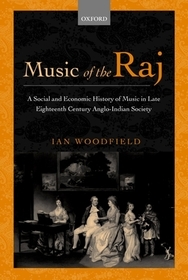
Music of the Raj
A Social and Economic History of Music in Late Eighteenth Century Anglo-Indian Society
-
10% KEDVEZMÉNY?
- A kedvezmény csak az 'Értesítés a kedvenc témákról' hírlevelünk címzettjeinek rendeléseire érvényes.
- Kiadói listaár GBP 217.50
-
98 201 Ft (93 525 Ft + 5% áfa)
Az ár azért becsült, mert a rendelés pillanatában nem lehet pontosan tudni, hogy a beérkezéskor milyen lesz a forint árfolyama az adott termék eredeti devizájához képest. Ha a forint romlana, kissé többet, ha javulna, kissé kevesebbet kell majd fizetnie.
- Kedvezmény(ek) 10% (cc. 0 Ft off)
- Kedvezményes ár 88 381 Ft (84 173 Ft + 5% áfa)
Iratkozzon fel most és részesüljön kedvezőbb árainkból!
Feliratkozom
98 201 Ft

Beszerezhetőség
Megrendelésre a kiadó utánnyomja a könyvet. Rendelhető, de a szokásosnál kicsit lassabban érkezik meg.
Why don't you give exact delivery time?
A beszerzés időigényét az eddigi tapasztalatokra alapozva adjuk meg. Azért becsült, mert a terméket külföldről hozzuk be, így a kiadó kiszolgálásának pillanatnyi gyorsaságától is függ. A megadottnál gyorsabb és lassabb szállítás is elképzelhető, de mindent megteszünk, hogy Ön a lehető leghamarabb jusson hozzá a termékhez.
A termék adatai:
- Kiadó OUP Oxford
- Megjelenés dátuma 2000. november 30.
- ISBN 9780198164333
- Kötéstípus Keménykötés
- Terjedelem292 oldal
- Méret 242x163x20 mm
- Súly 658 g
- Nyelv angol
- Illusztrációk 6 black and white plates, 8 music examples 0
Kategóriák
Rövid leírás:
Music of the Raj provides a colourful portrait of daily musical life in the late eighteenth century. Based on unpublished Anglo-Indian correspondence, Woodfield illustrates in fascinating detail the musical activities of a group of English employees of the East India Company, in Calcutta and London, at that time.
TöbbHosszú leírás:
Music of the Raj is a study of musical life in late eighteenth-century Anglo-Indian society, based on the unpublished correspondence of an extended network of families. The writers of these letters - amateurs with a passionate commitment to the art of music - provide a perceptive commentary on many of the major issues of the day: the stylistic change from Baroque to Galant, the replacement of the harpsichord with the pianoforte, the establishment of the musical canon, and the growing economic and cultural influence of women musicians. Among the topics discussed are the transport, tuning and maintenance of instruments, the relationship between amateur pupil and professional teacher, the conduct of the domestic musical soirée, the role of glee singing in courtship, and the musical education of children. An account is also given of the growth of an expatriate musical culture among the European inhabitants of early colonial Calcutta, and the musical tastes of major Anglo-Indian figures such as Robert Clive, Warren Hastings, and Sir William Jones are assessed. English attitudes to Indian music is an important theme, especially as manifested in the fashion for the Hindostannie airs, transcriptions of Indian melodies in European musical language. The study concludes with an examination of the musical lives of wealthy nabobs back in England, where they immersed themselves in Indian musical culture, taking the Grand Tour, supporting opera at the Kings Theatre, and employing fashionable Italian teachers for their children.
An important study of cultural exchange as well as of gender issues concerning Western society transplanted to what was rapidly emerging as the jewel in the imperial crown.
Tartalomjegyzék:
Preface
Introduction
Supplying the market
Professional musicians in India
The woman amateur
The male dilettante
The encounter with Indian music
The return to England
Appendices
Sources
Bibliography
Index

