

-
10% KEDVEZMÉNY?
- A kedvezmény csak az 'Értesítés a kedvenc témákról' hírlevelünk címzettjeinek rendeléseire érvényes.
- Kiadói listaár GBP 240.00
-
108 360 Ft (103 200 Ft + 5% áfa)
Az ár azért becsült, mert a rendelés pillanatában nem lehet pontosan tudni, hogy a beérkezéskor milyen lesz a forint árfolyama az adott termék eredeti devizájához képest. Ha a forint romlana, kissé többet, ha javulna, kissé kevesebbet kell majd fizetnie.
- Kedvezmény(ek) 10% (cc. 10 836 Ft off)
- Kedvezményes ár 97 524 Ft (92 880 Ft + 5% áfa)
Iratkozzon fel most és részesüljön kedvezőbb árainkból!
Feliratkozom
108 360 Ft

Beszerezhetőség
Megrendelésre a kiadó utánnyomja a könyvet. Rendelhető, de a szokásosnál kicsit lassabban érkezik meg.
Why don't you give exact delivery time?
A beszerzés időigényét az eddigi tapasztalatokra alapozva adjuk meg. Azért becsült, mert a terméket külföldről hozzuk be, így a kiadó kiszolgálásának pillanatnyi gyorsaságától is függ. A megadottnál gyorsabb és lassabb szállítás is elképzelhető, de mindent megteszünk, hogy Ön a lehető leghamarabb jusson hozzá a termékhez.
A termék adatai:
- Kiadó OUP Oxford
- Megjelenés dátuma 1996. március 7.
- ISBN 9780198165644
- Kötéstípus Keménykötés
- Terjedelem260 oldal
- Méret 241x161x20 mm
- Súly 601 g
- Nyelv angol
- Illusztrációk halftones 0
Kategóriák
Rövid leírás:
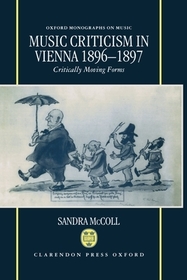
Music Criticism in Vienna is a close study of the work of some two dozen music critics in Vienna in the fifteen months from October 1896 to December 1897, a period which saw the deaths of Bruckner and Brahms and the rise of Mahler and Richard Strauss. It reconstructs in detail the climate of musical debate in a major centre around the turn of the century.
TöbbHosszú leírás:
Music Criticism in Vienna records a culture in which musical criticism had achieved the status of a minor art form. The period covered - October 1896 to December 1897 - was an eventful time in Vienna. Bruckner died, then Brahms; Mahler arrived; premieres of works by Czech composers coincided with increasing tension in the Empire between Czechs and Germans; Puccini's La Boheme reached Vienna on its sensational progress around the world; and the great programme music debate continued. These events and issues were recorded and debated by some two dozen critics ranging from Eduard Hanslick, widely credited with (and blamed for) raising music criticism to an art, to Heinrich Schenker. The focus of Sandra McColl's monograph is unashamedly on the critics themselves, and her reconstruction of the climate of debate about whatever music or musicians came to their notice. She illuminates the intellectual climate in which the music was created, performed and received, and provides a foundation for the study of musical criticism in the post-Hanslick generation.
She opens her study with invaluable thumb-nail sketches of the various Viennese newspapers and journals in which music critics published their work ... this book reveals a wealth of detail about musical life in Vienna ... This study is ... very welcome. That the technical quality of the book's production is outstanding goes without saying, and there is an excellent index.

