

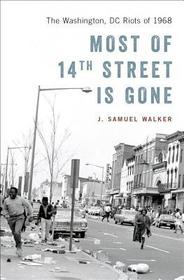
Most of 14th Street Is Gone
The Washington, DC Riots of 1968
-
10% KEDVEZMÉNY?
- A kedvezmény csak az 'Értesítés a kedvenc témákról' hírlevelünk címzettjeinek rendeléseire érvényes.
- Kiadói listaár GBP 26.99
-
12 185 Ft (11 605 Ft + 5% áfa)
Az ár azért becsült, mert a rendelés pillanatában nem lehet pontosan tudni, hogy a beérkezéskor milyen lesz a forint árfolyama az adott termék eredeti devizájához képest. Ha a forint romlana, kissé többet, ha javulna, kissé kevesebbet kell majd fizetnie.
- Kedvezmény(ek) 10% (cc. 1 219 Ft off)
- Kedvezményes ár 10 967 Ft (10 445 Ft + 5% áfa)
Iratkozzon fel most és részesüljön kedvezőbb árainkból!
Feliratkozom
12 185 Ft

Beszerezhetőség
Megrendelésre a kiadó utánnyomja a könyvet. Rendelhető, de a szokásosnál kicsit lassabban érkezik meg.
Why don't you give exact delivery time?
A beszerzés időigényét az eddigi tapasztalatokra alapozva adjuk meg. Azért becsült, mert a terméket külföldről hozzuk be, így a kiadó kiszolgálásának pillanatnyi gyorsaságától is függ. A megadottnál gyorsabb és lassabb szállítás is elképzelhető, de mindent megteszünk, hogy Ön a lehető leghamarabb jusson hozzá a termékhez.
A termék adatai:
- Kiadó OUP USA
- Megjelenés dátuma 2018. április 19.
- ISBN 9780190844790
- Kötéstípus Keménykötés
- Terjedelem200 oldal
- Méret 155x236x17 mm
- Súly 431 g
- Nyelv angol
- Illusztrációk 16 0
Kategóriák
Rövid leírás:
Most of 14th Street is Gone takes an in-depth look at the enormously destructive riots that erupted in Washington, DC in April 1968. This book offers an unprecedently detailed account of the riots that raged in the nation's capital from the perspectives of rioters, victims, law enforcement officials, soldiers, and government leaders.
TöbbHosszú leírás:
"Left behind were hundreds of burned-out buildings, whole blocks that looked as though they had been bombed into oblivion." These words, written by the Washington Post's Leonard Downie Jr., do not describe a war zone but rather the nation's capital reeling in the wake of the riots of April 1968. In the devastating aftermath of Martin Luther King's assassination, a community already exasperated by poor living conditions, unfair policing, and segregation broke into chaos.
These riots brought well-documented tragedy and heartbreak -- not only among the families of those who lost their lives but also among those who lost their homes, possessions, jobs, and businesses. There was anger, fear, and anxiety throughout the city of Washington, from the White House to the residential neighborhoods of the capital. There was an excruciating dilemma for President Lyndon Johnson. He was outraged by the violence in the streets, but he also keenly aware that African American citizens who joined the riots had legitimate grievances that his civil rights initiatives did little to address.
J. Samuel Walker's Most of 14th Street is Gone takes an in-depth look at the causes and consequences of the Washington riots of 1968. It shows the conditions that existed in Washington's low-income neighborhoods, setting the stage for the disorders that began after King's murder. It also traces the growing fears produced by the outbreaks of serious riots in many cities during the mid-1960s. The centerpiece of the book is a detailed account of the riots that raged in Washington from the perspectives of rioters, victims, law enforcement officials, soldiers, and government leaders. The destruction was so extensive that parts of the city were described as "smoldering ruins block after block." Walker analyzes the reasons for the riots and the lessons that authorities drew from them. He also provides an overview of the struggle that the city of Washington faced in recovering from the effects of the 1968 disorders. Finally, he considers why serious riots have been so rare in Washington and other cities since 1968. Walker's timely and sensitive examination of a community, a city, and a country rocked by racial tension, violence, and frustration speaks not only to this nation's past but to its present.
Walker manages to provide a well-rounded account of the DC riots in a refreshingly concise monograph that may find its way into many undergraduate classrooms.
Tartalomjegyzék:
Preface
Introduction
The Other Washington
The Specter of Urban Violence
A City in Flames, April 4-5, 1968
"Smoldering Ruins Block after Block," April 6-12, 1968
"A City of Remorse"
The Long Recovery
Notes
Essay on Sources
Index

