

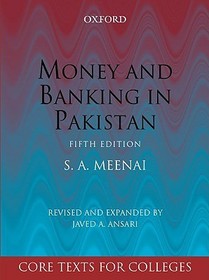
Money and Banking in Pakistan: Money and Banking in Pakistan
-
10% KEDVEZMÉNY?
- A kedvezmény csak az 'Értesítés a kedvenc témákról' hírlevelünk címzettjeinek rendeléseire érvényes.
- Kiadói listaár GBP 11.99
-
5 728 Ft (5 455 Ft + 5% áfa)
Az ár azért becsült, mert a rendelés pillanatában nem lehet pontosan tudni, hogy a beérkezéskor milyen lesz a forint árfolyama az adott termék eredeti devizájához képest. Ha a forint romlana, kissé többet, ha javulna, kissé kevesebbet kell majd fizetnie.
- Kedvezmény(ek) 10% (cc. 573 Ft off)
- Kedvezményes ár 5 155 Ft (4 910 Ft + 5% áfa)
Iratkozzon fel most és részesüljön kedvezőbb árainkból!
Feliratkozom
5 728 Ft

Beszerezhetőség
A kiadónál véglegesen elfogyott, nem rendelhető. Érdemes újra keresni a címmel, hátha van újabb kiadás.
Why don't you give exact delivery time?
A beszerzés időigényét az eddigi tapasztalatokra alapozva adjuk meg. Azért becsült, mert a terméket külföldről hozzuk be, így a kiadó kiszolgálásának pillanatnyi gyorsaságától is függ. A megadottnál gyorsabb és lassabb szállítás is elképzelhető, de mindent megteszünk, hogy Ön a lehető leghamarabb jusson hozzá a termékhez.
A termék adatai:
- Kiadás sorszáma és címe :Money and Banking in Pakistan
- Kiadás sorszáma 5
- Kiadó Oxford University Press
- Megjelenés dátuma 2004. szeptember 23.
- ISBN 9780195978063
- Kötéstípus Puhakötés
- Terjedelem230 oldal
- Méret 180x240x6 mm
- Súly 328 g
- Nyelv angol 0
Kategóriák
Rövid leírás:
This textbook provides a historical record of the growth and development of banking in Pakistan. The book chronicles important events in the field of monetary management and critiques monetary and fiscal policies pursued in Pakistan since independence. The fifth edition has been extensively revised and updated.
TöbbHosszú leírás:
This book provides a historical record of the growth and development of banking in Pakistan. It chronicles important events in the field of monetary management and critiques monetary and fiscal policies pursued in Pakistan since independence.
This edition contains a comprehensive analysis of the current situation of the financial and monetary system in Pakistan from 1947 till 2003. Part One presents the major schools of monetary theory and assesses their policy recommendations in the Pakistani context. Part Two describes the institutional structure, the impact of the financial sector on economic development, and assesses monetary policy. It also includes a review of several empirical studies on monetary and financial development in
Pakistan.
The fifth edition has been extensively revised and updated and includes; New material on the development of the theory of monetary policy since the 1990s and the theory and practice of central bank autonomy; New chapters on Marxist monetary theory and on the theory and practice of Islamic banking.
This book covers graduate and undergraduate courses in Economics, Finance and Banking, and Business Studies. It also serves as a textbook for MBA, ICAP, IBP, and ICMAP course of studies. It is essential reading for those taking the Institute of Bankers and similar professional examinations. Policy-makers and researchers seeking a comprehensive overview of Pakistan's financial sector will find this new edition an essential reference.
Tartalomjegyzék:
List of Figures
List of Tables
How to Use this Book
Preface (To the First Edition)
Abbreviations
Part One: Monetary Theory and Policy
Money: Its Nature and Functions
Defining and Measuring Money
The State Bank's Definition of Money
Monetary Theory: The Classical Model
Assumptions
Quantity Theory of Money
Money and the Real Economy
Interest Rate Determination in the Classical Model
The Marxist Theory of Money and Finance
The Value Form
The Functions of Money
The Marxist Theory of Interest
Money and Crisis
Monetary Theory: The Keynesian Model
Keynes and Classical Macroeconomics
Keynes' Money and Demand Function
IS-LM World
Keynesian Macroeconomic Policy
Monetary Policy
Fiscal Policy
Full Employment of Capital and Need for a Zero Interest Rate
Modern Moetary Theory
Monetarism
New Classical Economics and Real Business Cycle Theory
Post-Keynesianism
Managing Money
Making Money in Capitalist Financial Systems
Money Multiplier and Credit Multiplier
Who Rules? The Central Bank or Commercial Banks
Moentary Policy
Monetary Policy Objectives
Intermediate Targets
Nominal Interest Rates
Money Supply Targeting
Nominal Income as Intermediate Target
Instruments of Monetary Policy
Open Market Operation
Discount Rate Operation
Reserve Requirements
Selective Credit Controls
Credit Ceilings
Credit Planning
Limitations of Monetary Policy
Monetary Policy in the Post Nine Eleven Era
Money and International Finance
Foreign Exchange Market
Foreign Exchange Market
Foreign Exchange Regimes
International Adjustment
Understnading Financial Globalization - The Post Bretton Woods Order
IMF in the International Financial System
Appendix: The Euro
Historical Background
Pakistan's Financial Development 1949-2002
Theory of Financial Development
Financial Sector Development in Pakistan
Conclusion
State Bank of Pakistan
Operational Mandates
Structure and Operations
Relationship with the Government
Implications of State Bank Autonomy for Pakistan
The Theory of Central Bank Autonomy: an Assessment
Implications
Evaluating Performance
Commercial Banks
Historical Background
Structure of Balance Sheet: Domestic Banks
Assets
Liabilities
Structure of Balance Sheet: Foreign Banks
Assets
Liabilities
Performance of Domestic and Foreign Banks
Bank Legislation
Sector Strategy
Development Finance Institutions
Origins and Theory
Evaluating DFI Performance
DFIs in Pakistan
Origins and Mandates
Assessing Financial Performance
Assessing Development Impact
Financial Markets in Pakistan
Money Market
Market for Foreign Exchange
Equity Market
Role of Equity Markets in Financing
Pakistan's Equity Market
Bond Market
Federal Investment Bonds
Non-Bank Financial Intermediaries
Modarabas
Leasing Companies
Unit Trusts and Mutual Funds
Investment Banks
Informal Financial Markets
Short-term Credit
Seasonal Credit
Rotating Savings and Credit Associations
Co-operative Banking
History and Background
Structure and Assets and Liabilities
The Future
Monetary Policy
Monetary Policy: A Period Analysis
1947-1958
1959-1972
1972-1977
1978-1988
1988-2003
Failure of Market-based Monetary Policy
Explaining Monetary Policy Failure
Monetary Aggregates and the Real Economy
Inflation
Prudential Regulations
Globalization
Alternative to Market-based Monetary Policy
Islamic Banking
The Rationale for the Prohibition of Interest
Debt Money
The Islamic Banking Movement in Pakistan
Index

