

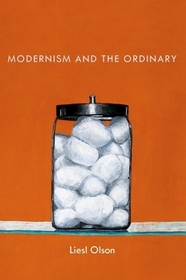
Modernism and the Ordinary
-
10% KEDVEZMÉNY?
- A kedvezmény csak az 'Értesítés a kedvenc témákról' hírlevelünk címzettjeinek rendeléseire érvényes.
- Kiadói listaár GBP 45.99
-
20 764 Ft (19 775 Ft + 5% áfa)
Az ár azért becsült, mert a rendelés pillanatában nem lehet pontosan tudni, hogy a beérkezéskor milyen lesz a forint árfolyama az adott termék eredeti devizájához képest. Ha a forint romlana, kissé többet, ha javulna, kissé kevesebbet kell majd fizetnie.
- Kedvezmény(ek) 10% (kb. 2 077 Ft)
- Kedvezményes ár 18 687 Ft (17 798 Ft + 5% áfa)
Iratkozzon fel most és részesüljön kedvezőbb árainkból!
Feliratkozom
20 764 Ft

Beszerezhetőség
Megrendelésre a kiadó utánnyomja a könyvet. Rendelhető, de a szokásosnál kicsit lassabban érkezik meg.
Why don't you give exact delivery time?
A beszerzés időigényét az eddigi tapasztalatokra alapozva adjuk meg. Azért becsült, mert a terméket külföldről hozzuk be, így a kiadó kiszolgálásának pillanatnyi gyorsaságától is függ. A megadottnál gyorsabb és lassabb szállítás is elképzelhető, de mindent megteszünk, hogy Ön a lehető leghamarabb jusson hozzá a termékhez.
A termék adatai:
- Kiadó OUP USA
- Megjelenés dátuma 2014. április 3.
- ISBN 9780199349784
- Kötéstípus Puhakötés
- Terjedelem216 oldal
- Méret 234x156x12 mm
- Súly 336 g
- Nyelv angol 0
Kategóriák
Rövid leírás:
Modernism and the Ordinary overturns conventional accounts of the modernist period as primarily drawn toward the new, the transcendent, and the extraordinary. Liesl Olson shows how modernist writers were preoccupied, instead, with the unselfconscious actions of everyday life, even in times of political crisis and war.
TöbbHosszú leírás:
Traditionally literary modernism has been seen as a movement marked by transcendent epiphanies, episodes of estrangement, and a privileging of the extraordinary. Yet modernist writings often take great pains to describe the material, seemingly insignificant details of daily life. Modernism and the Ordinary upends our perceived notions of the period's literature as it recognizes just how pivotal commonplace activities are to modernist aesthetics.
Through pointed readings of prose and poetry from both the U. S. and abroad, Liesl Olson highlights the variety of ways modernist writers represented the quotidian details of modern life, even during times of political crisis and war. Run of the mill experiences like walking to work, eating a sandwich, or mending a dress were often resistant to shock, and these daily actions presented a counter-force to the aesthetic of heightened affect with which modernism is often associated. In a series of persuasively argued chapters, we see how the ordinary operates in its many modernist manifestations: the minutiae of list-making and the decidedly unheroic qualities of Bloom in Joyce's Ulysses; Virginia Woolf's rendering of the ordinary as an affective experience in Mrs. Dalloway; the retreat into daily routine as a refuge from the tumult of World War II in Gertrude Stein's Mrs. Reynolds; Wallace Steven's conception of the commonplace as rooted in pragmatist philosophy; and how Beckett and Proust are simultaneously compelled and repelled by the banalities of modern life. These works are read alongside the ideas of philosophers such as William James, Henri Bergson, and Henri Lefebvre to illustrate how these artists responded to the difficulty of representing the mundane without making it transcendent.
A trenchant, richly textured monograph, Modernism and the Ordinary reveals how the non-transformative power of everyday experiences-what Virginia Woolf called the "cotton wool of daily life"-exerts a profound influence on the epoch-defining art of some of the twentieth century's most celebrated writers.
Modernism and the Ordinary is exceptionally well-written, elegantly organized, and compelling in its argument that critical accounts of literary modernism have failed to recognize in the major works of that period the centrality of ordinary experience and everyday life.
Tartalomjegyzék:
Abbreviations
Introduction
I. James Joyce and the Realism of the Ordinary
II. Virginia Woolf and the "cotton wool of daily life"
III. Gertrude Stein, William James, and Habit in the Shadow of War
IV. Wallace Stevens' Commonplace
V. Conclusion
Notes
Bibliography

