

-
10% KEDVEZMÉNY?
- A kedvezmény csak az 'Értesítés a kedvenc témákról' hírlevelünk címzettjeinek rendeléseire érvényes.
- Kiadói listaár GBP 59.00
-
28 187 Ft (26 845 Ft + 5% áfa)
Az ár azért becsült, mert a rendelés pillanatában nem lehet pontosan tudni, hogy a beérkezéskor milyen lesz a forint árfolyama az adott termék eredeti devizájához képest. Ha a forint romlana, kissé többet, ha javulna, kissé kevesebbet kell majd fizetnie.
- Kedvezmény(ek) 10% (cc. 2 819 Ft off)
- Kedvezményes ár 25 369 Ft (24 161 Ft + 5% áfa)
Iratkozzon fel most és részesüljön kedvezőbb árainkból!
Feliratkozom
28 187 Ft

Beszerezhetőség
Megrendelésre a kiadó utánnyomja a könyvet. Rendelhető, de a szokásosnál kicsit lassabban érkezik meg.
Why don't you give exact delivery time?
A beszerzés időigényét az eddigi tapasztalatokra alapozva adjuk meg. Azért becsült, mert a terméket külföldről hozzuk be, így a kiadó kiszolgálásának pillanatnyi gyorsaságától is függ. A megadottnál gyorsabb és lassabb szállítás is elképzelhető, de mindent megteszünk, hogy Ön a lehető leghamarabb jusson hozzá a termékhez.
A termék adatai:
- Kiadó OUP USA
- Megjelenés dátuma 2015. május 28.
- ISBN 9780199948772
- Kötéstípus Keménykötés
- Terjedelem262 oldal
- Méret 147x213x22 mm
- Súly 386 g
- Nyelv angol 0
Kategóriák
Rövid leírás:
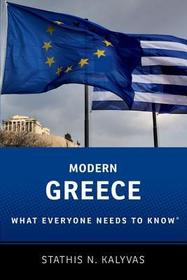
Modern Greece is the go-to resource for understanding both the present turmoil and the deeper past that has brought the country to where it is now
TöbbHosszú leírás:
Just a few years ago, Greece appeared to be a politically secure nation with a healthy economy. Today, Greece can be found at the center of the economic maelstrom in Europe. Beginning in late 2008, the Greek economy entered a nosedive that would transform it into the European country with the most serious and intractable fiscal problems. Both the deficit and the unemployment rate skyrocketed. Quickly thereafter, Greece edged toward a pre-revolutionary condition, as massive anti-austerity protests punctuated by violence and vandalism spread throughout Greek cities. Greece was certainly not the only country hit hard by the recession, but nevertheless the entire world turned its focus toward it for a simple reason: the possibility of a Greek exit from the European Monetary Union, and its potential to unravel the entire Union, with other weaker members heading for the exits as well. The fate of Greece is inextricably tied up with the global politics surrounding austerity as well. Is austerity rough but necessary medicine, or is it an intellectually bankrupt approach to fiscal policy that causes ruin? Through it all, Greece has staggered from crisis to crisis, and the European central bank's periodic attempts to prop up its economy fall short in the face of popular recalcitrance and negative economic growth.
Though the catalysts for Greece's current economic crises can be found in the conditions and events of the past few years, one can only understand the factors that helped to transform these crises into a terrible political and social catastrophe by tracing Greece's development as an independent country over the past two centuries. In Greece: What Everyone Needs to Know, Stathis Kalyvas, an eminent scholar of conflict, Europe, and Greece, begins by elucidating the crisis's impact on contemporary Greek society. He then shifts his focus to modern Greek history, tracing the nation's development from the early nineteenth century to the present. Key episodes include the independence movement of the early nineteenth century, the aftermath of World War I (in which Turkey and Greece engaged in a massive mutual ethnic cleansing), the German occupation of World War II, the brutal civil war that followed, the postwar conflict with Turkey over Cyprus, the military coup of 1967, and-finally-democracy and entry into the European Union. The final part of the book will cover the recent crisis in detail. Written by one of the most brilliant political scientists in the academy, Greece is the go-to resource for understanding both the present turmoil and the deeper past that has brought the country to where it is now.
Kalyvas' slim volume puts this story into perspective with remarkable clarity and brevity. If you read one general introduction to Greek politics, this should be it.
Tartalomjegyzék:
Introduction
Chapter One: Modern Greece as a project
Did Modern Greece spring from Ancient Greece?
How did the Greek National movement begin?
What were the social sources of Greek Nationalism?
Who were the Nationalists?
How did Greece secede from the Ottoman Empire?Who rebelled?
How did a Greek state emerge out of the war?
How did international politics impact on the war?
What was the European reaction to the Modern Greek project?
How was the new state built?
Why was nation-building successful?
What was the state of the economy in 19th century Greece?
How did democracy come to Greece?
How did the new democratic institutions operate?
How did Greece become a national of small land-holders?
Chapter Two: State Consolidation and National Expansion
What was the fate of Trikoupis' modernization project?
What was the Great Idea?
Who were the unredeemed Greeks?
What were the consequences of irredentist foreign policy?
What was the Macedonian Conflict?
How did Greece double its territory?
What was the National Schism?
What was the Anatolian Disaster?
What was the impact of the Anatolian Disaster?
How did the military become politicized?
How popular was communism in Greece?
Chapter Three: War, Occupation, and Civil War
What were the causes of the Greek Civil War?
How did the occupation morph into civil war?
What explains the rise of the communists?
Why did KKE's competitors in the resistance fail?
What drove collaboration in Greece?
How was the postwar fate of Greece sealed?
How did Greece become the frontline of the Cold War?
Why did the winners win and the losers lose?
What is the legacy of the Civil War
Chapter Four: The Greek Miracle and Its Aftermath
How did Greece take off?
What Greece a democracy?
What caused the April 1967 coup?
Why was the transition to democracy so smooth?
What was Greek Socialism and what explains its success?
What was the impact of EU membership?
Is Greek politics clientelistic?
Why are Greeks and Turks fighting?
Chapter Four: The 2010 Crisis
Was the adoption of the Euro a good idea for Greece?
How did Greece end up with an explosive debt?
What has been the effect of the austerity program and the IMF/ECB/EU bailout?
Conclusion
What are the broader lessons of the Greek story?
What does the future hold for Greece?

