

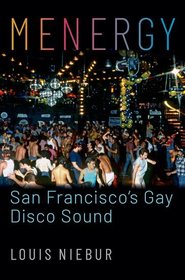
Menergy
San Francisco's Gay Disco Sound
-
10% KEDVEZMÉNY?
- A kedvezmény csak az 'Értesítés a kedvenc témákról' hírlevelünk címzettjeinek rendeléseire érvényes.
- Kiadói listaár GBP 107.50
-
48 536 Ft (46 225 Ft + 5% áfa)
Az ár azért becsült, mert a rendelés pillanatában nem lehet pontosan tudni, hogy a beérkezéskor milyen lesz a forint árfolyama az adott termék eredeti devizájához képest. Ha a forint romlana, kissé többet, ha javulna, kissé kevesebbet kell majd fizetnie.
- Kedvezmény(ek) 10% (kb. 4 853 Ft)
- Kedvezményes ár 43 683 Ft (41 603 Ft + 5% áfa)
Iratkozzon fel most és részesüljön kedvezőbb árainkból!
Feliratkozom
48 536 Ft

Beszerezhetőség
Megrendelésre a kiadó utánnyomja a könyvet. Rendelhető, de a szokásosnál kicsit lassabban érkezik meg.
Why don't you give exact delivery time?
A beszerzés időigényét az eddigi tapasztalatokra alapozva adjuk meg. Azért becsült, mert a terméket külföldről hozzuk be, így a kiadó kiszolgálásának pillanatnyi gyorsaságától is függ. A megadottnál gyorsabb és lassabb szállítás is elképzelhető, de mindent megteszünk, hogy Ön a lehető leghamarabb jusson hozzá a termékhez.
A termék adatai:
- Kiadó OUP USA
- Megjelenés dátuma 2023. február 8.
- ISBN 9780197511077
- Kötéstípus Keménykötés
- Terjedelem288 oldal
- Méret 241x159x20 mm
- Súly 540 g
- Nyelv angol
- Illusztrációk 10 b&w 261
Kategóriák
Rövid leírás:
In Menergy, author Louis Niebur offers a fascinating new look at gay history through the sounds of San Francisco's queer nightlife. In doing so he also reveals new insights in the history of electronic music and dance music.
TöbbHosszú leírás:
For most of the US, disco died in 1979. Triggered by the infamous "Disco Demolition" night at Comiskey Park in Chicago on July 12, 1979, a backlash made the word "disco" an overnight punchline. Major labels dropped disco artists and producers, and those mainstream musicians who had jumped on the bandwagon just as quickly threw themselves off. Gay men, however, continued to dance, and in the gay enclave of the Castro District in San Francisco, enterprising gay DJs, record producers, and musicians started their own small dance music record labels to make up for the lack of new, danceable music. Almost immediately this music reached far beyond the Bay, with Megatone Records, Moby Dick Records, and other labels achieving worldwide success, creating the world's first gay-owned, gay-produced music for a dancing audience. This music reflected a new way of life, a world apart and a culture of sexual liberation for gay men especially.
With Menergy, author Louis Niebur offers a project of reconstruction in order to restore these lost figures to their rightful place in the legacy of 20th-century popular music. Menergy is the product of years of research, with dozens of personal interviews, archival research drawing upon hundreds of contemporary journals, photographs, bar rags, diaries, nightclub ephemera, and, most importantly, the recordings of the San Francisco artists themselves. With its combination of popular music theory, cultural analysis, queer theory and gender studies, and traditional musical analysis, the book will appeal to readers in queer history, popular music history, and electronic dance music.
This book's title, Menergy, evokes the gay culture that Niebur (musicology, Univ. of Nevada, Reno) seeks to restore and narrate, but the title also borrows Patrick Cowley's song "Menergy" (1981), which Nieber writes "is probably the defining track of the high energy San Francisco sound" (p. 8). Disco was more a part of a cultural scene than a specific musical genre in San Francisco's Castro, inextricably linked with gay male clone culture. The author is especially effective when presenting cultural phenomena and context for disco-its drugs, sex, reflections on gay liberation, hypermasculinity, materialism, exclusions, racism, and ultimately-in the early 1980s-the devastation and horror of HIV/AIDS.
Tartalomjegyzék:
Acknowledgements
Introduction: Setting Up the Sound
Chapter One: Disco, the Castro and Gay Liberation
Chapter Two: Liberation for Some: The Continued Expansion of Gay San Francisco in the late 1970s
Chapter Three: Sylvester's Fantasy Comes True
Chapter Four: The First Wave of the San Francisco Sound
Chapter Five: Blecman and Hedges
Chapter Six: Disco's Dead/Not Dead
Chapter Seven: The San Francisco Sound Thrives
Chapter Eight: New Heights
Chapter Nine: Trouble in Paradise
Chapter Ten: Dancing with AIDS
Chapter Eleven: Everything Falls Apart
Chapter Twelve: In Retrospect
Suggested Reading
Selected Discography
Index

