

-
10% KEDVEZMÉNY?
- A kedvezmény csak az 'Értesítés a kedvenc témákról' hírlevelünk címzettjeinek rendeléseire érvényes.
- Kiadói listaár GBP 88.00
-
42 042 Ft (40 040 Ft + 5% áfa)
Az ár azért becsült, mert a rendelés pillanatában nem lehet pontosan tudni, hogy a beérkezéskor milyen lesz a forint árfolyama az adott termék eredeti devizájához képest. Ha a forint romlana, kissé többet, ha javulna, kissé kevesebbet kell majd fizetnie.
- Kedvezmény(ek) 10% (cc. 4 204 Ft off)
- Kedvezményes ár 37 838 Ft (36 036 Ft + 5% áfa)
Iratkozzon fel most és részesüljön kedvezőbb árainkból!
Feliratkozom
42 042 Ft

Beszerezhetőség
Becsült beszerzési idő: A Prosperónál jelenleg nincsen raktáron, de a kiadónál igen. Beszerzés kb. 3-5 hét..
A Prosperónál jelenleg nincsen raktáron.
Why don't you give exact delivery time?
A beszerzés időigényét az eddigi tapasztalatokra alapozva adjuk meg. Azért becsült, mert a terméket külföldről hozzuk be, így a kiadó kiszolgálásának pillanatnyi gyorsaságától is függ. A megadottnál gyorsabb és lassabb szállítás is elképzelhető, de mindent megteszünk, hogy Ön a lehető leghamarabb jusson hozzá a termékhez.
A termék adatai:
- Kiadó OUP Oxford
- Megjelenés dátuma 2025. március 27.
- ISBN 9780198924890
- Kötéstípus Keménykötés
- Terjedelem288 oldal
- Méret 240x160x20 mm
- Súly 590 g
- Nyelv angol 607
Kategóriák
Rövid leírás:
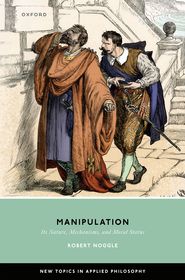
This book is about forms of manipulation like gaslighting, flattery, misdirection, nagging, emotional blackmail, charm offensives, and playing on the emotions. It uses philosophical methodology to build and defend a theory of manipulation, called the Mistake Account.
TöbbHosszú leírás:
Gaslighting, flattery, misdirection, nagging, emotional blackmail, charm offensives, playing on emotions. These are all examples of ordinary manipulation. Such manipulation is common in everyday life, which is unfortunate, since manipulation seems like a bad thing. Manipulation: Its Nature, Mechanisms, and Moral Status answers three questions about manipulation: what is it, how does it work, and why is it bad? Addressing the first question requires us to find something that all forms of manipulation have in common, but which is not shared by other forms of influence. Robert Noggle argues that the common feature of all forms of ordinary manipulation is that they are mistake-inducing. This idea is the basis for the Mistake Account of manipulation, which defines manipulation as a kind of influence that operates by introducing a mistake into the mental states or processes of the person being influenced.
To explain how manipulation works, this book explores the psychological levers that manipulators use to get us to make the mistakes that will get us to do what they want. These include various cognitive and decision-making biases, our tendency to choose the lesser good over the greater good when the lesser good is immediately available, and the simple fact that human reason is an imperfect thing. To explain why manipulation seems like a bad thing, Noggle first argues that, while manipulation is always presumptively immoral, it can be justified in extreme situations. He then shows that manipulation's presumptive immorality derives from the fact that it involves getting someone to make a mistake, and making a mistake is a bad thing. However, the most morally egregious instances of manipulation also have bad effects on well-being and autonomy. This book concludes by applying the Mistake Account to various influences, including priming, conditioning, nudges, advertising, sales, and online influences.
Tartalomjegyzék:
Introduction
Thirteen Forms of Ordinary Manipulation
Nine Accounts of Manipulation
A Unified Account of Manipulation
Perspective, Intent, and Manipulation
The Mistake Account: Definitions and Defense
Mistakes and Manipulation
The Psychology of Manipulation
Manipulation and Morality
Exotic Influences and Problem Cases
Ordinary Influences: Applying the Mistake Account

