

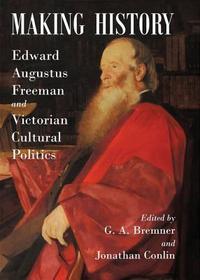
Making History
Edward Augustus Freeman and Victorian Cultural Politics
Sorozatcím: Proceedings of the British Academy; 202;
-
10% KEDVEZMÉNY?
- A kedvezmény csak az 'Értesítés a kedvenc témákról' hírlevelünk címzettjeinek rendeléseire érvényes.
- Kiadói listaár GBP 70.00
-
31 605 Ft (30 100 Ft + 5% áfa)
Az ár azért becsült, mert a rendelés pillanatában nem lehet pontosan tudni, hogy a beérkezéskor milyen lesz a forint árfolyama az adott termék eredeti devizájához képest. Ha a forint romlana, kissé többet, ha javulna, kissé kevesebbet kell majd fizetnie.
- Kedvezmény(ek) 10% (cc. 3 161 Ft off)
- Kedvezményes ár 28 445 Ft (27 090 Ft + 5% áfa)
Iratkozzon fel most és részesüljön kedvezőbb árainkból!
Feliratkozom
31 605 Ft

Beszerezhetőség
Becsült beszerzési idő: A Prosperónál jelenleg nincsen raktáron, de a kiadónál igen. Beszerzés kb. 3-5 hét..
A Prosperónál jelenleg nincsen raktáron.
Why don't you give exact delivery time?
A beszerzés időigényét az eddigi tapasztalatokra alapozva adjuk meg. Azért becsült, mert a terméket külföldről hozzuk be, így a kiadó kiszolgálásának pillanatnyi gyorsaságától is függ. A megadottnál gyorsabb és lassabb szállítás is elképzelhető, de mindent megteszünk, hogy Ön a lehető leghamarabb jusson hozzá a termékhez.
A termék adatai:
- Kiadó The British Academy
- Megjelenés dátuma 2015. október 15.
- ISBN 9780197265871
- Kötéstípus Keménykötés
- Terjedelem300 oldal
- Méret 241x179x10 mm
- Súly 700 g
- Nyelv angol
- Illusztrációk 4 halftones 0
Kategóriák
Rövid leírás:
Freeman was an idiosyncratic and imaginative polymath who saw past and present as interwoven and had a gift for bringing history alive. A colourful and outspoken Victorian, he provides a historical context for current debates on multi-culturalism, race, and national identity. This volume fills an important gap in the history of Victorian thought.
TöbbHosszú leírás:
'History is past politics, politics is present history.' Thus observed Edward Augustus Freeman, 19th-century historian and public intellectual. He was an idiosyncratic and imaginative thinker who saw past and present as interwoven and had a way of collapsing barriers of time - a gift for making the reader feel part of history, rather than merely its student.
Freeman's interests ranged widely beyond history, however, and this volume provides a biographical as well as intellectual survey of his activities. Thus chapters intersect with historical episodes such as Tractarianism, Liberal Anglicanism and the Gothic Revival, cutting across the divides that traditionally separate architectural, political, church and imperial history. New influences and nemeses emerge from this consideration of the 1830s to 1850s, providing context and added depth to the familiar view of the mature Freeman: to his historical writing as well as to the personal feuds (e.g. with Froude) for which he was equally known.
This book fills a gap in the intellectual history of Victorian Britain by providing the first comprehensive, scholarly account of one of its most articulate and outspoken public intellectuals. More broadly, too, Freeman provides a historical context for current debates on multi-culturalism, race and national identity.
[an] entertaining and illuminating volume of essays
Tartalomjegyzék:
- I Introduction
- 1: G. A. Bremner and Jonathan Conlin: 1066 And All That: E. A. Freeman and the Importance of Being Memorable
- II Faith in History
- 2: James Kirby: From Tractarian to Democrat: the Intellectual Formation of E. A. Freeman
- 3: Colm O'Siochru: 'Edward Semper Augustus': Freeman on Rome, the Papacy, and the Unity of History
- 4: Michael Ledger-Lomas: An Erastian Descent: History and Establishment in the Thought of Arthur Penrhyn Stanley and E.A. Freeman
- III Travelling through Time
- 5: William Aird: 'Seeing Things With Our Own Eyes': E. A. Freeman's Historical Travels
- 6: Jonathan Conlin: The Consolations of Amero-Teutonism: E. A. Freeman's Tour of the United States, 1881-2
- 7: William Kelley: Past History and Present Politics: E. A. Freeman and the Eastern Question
- IV The Fabric of History
- 8: Chris Miele: E. A. Freeman and the Culture of Gothic Revival
- 9: Christine Dade-Robertson: Architecture as Evidence: E. A. Freeman and Harold's Church
- 10: G.A. Bremner: E. A. Freeman and G. G. Scott: An Episode in the Influence of Ideas
- V Race and Empire
- 11: Theodore Koditschek: A Liberal Descent? E.A. Freeman's Invention of Racial Traditions
- 12: Duncan Bell: Alter Orbis: E. A. Freeman on Empire and Racial Destiny
- VI The Science of History
- 13: Judith Green: E. A. Freeman and his History of the Norman Conquest
- 14: Ian Hesketh: Fanatical Hatred or Brotherly Love? Rethinking E. A. Freeman's Feud with J. A. Froude
- 15: Herman Paul: Habits of Thought and Judgement: E. A. Freeman on Historical Methods
- VII Conclusion
- 16: H. S. Jones: Historical Mindedness and the World at Large: E. A. Freeman as Public Intellectual

