

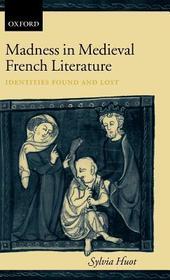
Madness in Medieval French Literature
Identities Found and Lost
-
10% KEDVEZMÉNY?
- A kedvezmény csak az 'Értesítés a kedvenc témákról' hírlevelünk címzettjeinek rendeléseire érvényes.
- Kiadói listaár GBP 187.50
-
84 656 Ft (80 625 Ft + 5% áfa)
Az ár azért becsült, mert a rendelés pillanatában nem lehet pontosan tudni, hogy a beérkezéskor milyen lesz a forint árfolyama az adott termék eredeti devizájához képest. Ha a forint romlana, kissé többet, ha javulna, kissé kevesebbet kell majd fizetnie.
- Kedvezmény(ek) 10% (cc. 8 466 Ft off)
- Kedvezményes ár 76 191 Ft (72 563 Ft + 5% áfa)
Iratkozzon fel most és részesüljön kedvezőbb árainkból!
Feliratkozom
84 656 Ft

Beszerezhetőség
Megrendelésre a kiadó utánnyomja a könyvet. Rendelhető, de a szokásosnál kicsit lassabban érkezik meg.
Why don't you give exact delivery time?
A beszerzés időigényét az eddigi tapasztalatokra alapozva adjuk meg. Azért becsült, mert a terméket külföldről hozzuk be, így a kiadó kiszolgálásának pillanatnyi gyorsaságától is függ. A megadottnál gyorsabb és lassabb szállítás is elképzelhető, de mindent megteszünk, hogy Ön a lehető leghamarabb jusson hozzá a termékhez.
A termék adatai:
- Kiadó OUP Oxford
- Megjelenés dátuma 2003. szeptember 11.
- ISBN 9780199252121
- Kötéstípus Keménykötés
- Terjedelem236 oldal
- Méret 224x144x18 mm
- Súly 416 g
- Nyelv angol 0
Kategóriák
Rövid leírás:
Written by one of the leading critics in medieval studies, this new book explores the representations of madness in medieval French literature. Drawing on a range of modern psychoanalytic theories and an impressive range of texts from the twelfth to the fifteenth century, Sylvia Huot focuses on the relationship between madness and identity, both personal and collective, and demonstrates the cultural significance of madness in the Middle Ages.
TöbbHosszú leírás:
Madness is a frequent theme in medieval French literature. It afflicts the two greatest heroes of the Arthurian world, Lancelot and Tristan, as well as numerous other knights and unlucky lovers in courtly tradition. It also appears in devotional literature, whether in the form of the 'holy fool' who impersonates madness as a kind of penance or in the motif of lunatics cured through the miraculous intervention of a saint. These texts manifest a wide range of attitudes towards madness, which may be associated with nobility and refinement of character, with chivalric or spiritual transcendence, with tragic illness and impairment, with comic ineptitude, or with sin and degradation. Tracing these various depictions allows for a study of how and why madness is used in different texts and different genres.
This new book, from one of the leading critics in medieval studies, ties in with contemporary interest in the politics of identity, and literary constructions of identity. There are many studies of gender, sexuality, race and ethnicity, and class in medieval literature and society, but far fewer of madness. Yet madness is the ultimate 'queerness' or 'otherness', the limit of the human condition. Madness has been identified as an important topic in feminist criticism, but has been explored largely with regard to nineteenth- and twentieth-century studies. The cultural significance of madness in the Middle Ages is often misrepresented in contemporary discussions. Sylvia Huot redresses that imbalance.
...a highly distinctive contribution to the study of cultural concepts of madness. It is an excellent achievment...
Tartalomjegyzék:
Introduction
Abject insanity, madness sublime
The specular madman
Madness and social exclusion
Heterosexuality and its discontents
The living dead
Madness and the body
Conclusion
Bibliography
Index

