

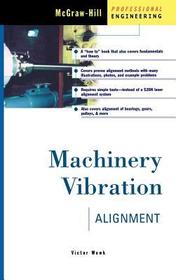
Machinery Vibration Alignment
Sorozatcím: MECHANICAL ENGINEERING;
-
10% KEDVEZMÉNY?
- A kedvezmény csak az 'Értesítés a kedvenc témákról' hírlevelünk címzettjeinek rendeléseire érvényes.
- Kiadói listaár GBP 58.99
-
26 633 Ft (25 365 Ft + 5% áfa)
Az ár azért becsült, mert a rendelés pillanatában nem lehet pontosan tudni, hogy a beérkezéskor milyen lesz a forint árfolyama az adott termék eredeti devizájához képest. Ha a forint romlana, kissé többet, ha javulna, kissé kevesebbet kell majd fizetnie.
- Kedvezmény(ek) 10% (kb. 2 663 Ft)
- Kedvezményes ár 23 970 Ft (22 829 Ft + 5% áfa)
Iratkozzon fel most és részesüljön kedvezőbb árainkból!
Feliratkozom
26 633 Ft

Beszerezhetőség
A kiadónál véglegesen elfogyott, nem rendelhető. Érdemes újra keresni a címmel, hátha van újabb kiadás.
Why don't you give exact delivery time?
A beszerzés időigényét az eddigi tapasztalatokra alapozva adjuk meg. Azért becsült, mert a terméket külföldről hozzuk be, így a kiadó kiszolgálásának pillanatnyi gyorsaságától is függ. A megadottnál gyorsabb és lassabb szállítás is elképzelhető, de mindent megteszünk, hogy Ön a lehető leghamarabb jusson hozzá a termékhez.
A termék adatai:
- Kiadó McGraw Hill
- Megjelenés dátuma 2000. május 16.
- ISBN 9780070719392
- Kötéstípus Keménykötés
- Terjedelem384 oldal
- Méret 231x160x30 mm
- Súly 700 g
- Nyelv angol 0
Kategóriák
Rövid leírás:
How to Correct One of the Most Pervasive Machine Problems - Misalignment. The misalignment of shafts and other components is one of the most common causes of vibration and failures. Here, at last, is a practical handbook that enables you to eliminate this costly problem.Written by a pioneering enigneer and author in the field, this easy-to-follow, step-by-step resource shows you how to:Diagnose Misalignment - using vibration instruments, noise, dial indicators, hand feel, and visual observations.Perform Precision Alignments - using dial indicators, lasers, optical, and electronic measuring instruments. Graphical plotting techniques are illustated with examples of the reverse-indicator method, face-and-rim, and many variations.Move Machines - from small ones to the largest ones with orchestrated positioning techniques.Judge Acceptability - with alignment tolerances based on speed and stresses at the joints.Deal with Complicating Factors - such as faulty foundations, bent shafts, soft foot, bar sag, piping strain, and thermal growth.Align Specific Machines - from normal tw-machine one-coupling horizontal systems, to long drive shafts, large and heavy machines, multiple machne trains, vertical shafts, single-bearing generators, and reciprocating machines. This authoritative guide also covers bearing alignments, gear alignment, and pulley alignements. It also includes specific chapters on couplings, optical tooling, and laser systems. Plus a valuable appendix contains generic alignment specifications and drawings to make an alignment fixture.
TöbbHosszú leírás:
Publisher's Note: Products purchased from Third Party sellers are not guaranteed by the publisher for quality, authenticity, or access to any online entitlements included with the product.
How-to-do-it guide to eliminating machine vibrations
One of the most common causes of severe machinery vibration is the misalignment of drive shafts and othercomponents. Machinery Vibration: Alignment, by Victor Wowk, gives you a practical resource for aligning shafts, bearings, gears, pulleys and a wide variety of power transmission components in machines without further training. You get step-by-step procedures for balancing, resonance, structural vibrations, isolation, instruments, diagnostics, and trending. Many of the methods described require only simple tools, eliminating the need for a $20,000 laser alignment system.
Case studies covering everything from simple fans to high-speed turbines give you examples of real-world problem solving. You will find the extensive coverage of the FFT spectrum analyzer a valuable addition to this hands-on toolkit.
Publisher's Note: Products purchased from Third Party sellers are not guaranteed by the publisher for quality, authenticity, or access to any online entitlements included with the product.
How-to-do-it guide to eliminating machine vibrations
One of the most common causes of severe machinery vibration is the misalignment of drive shafts and othercomponents. Machinery Vibration: Alignment, by Victor Wowk, gives you a practical resource for aligning shafts, bearings, gears, pulleys and a wide variety of power transmission components in machines without further training. You get step-by-step procedures for balancing, resonance, structural vibrations, isolation, instruments, diagnostics, and trending. Many of the methods described require only simple tools, eliminating the need for a $20,000 laser alignment system.
Case studies covering everything from simple fans to high-speed turbines give you examples of real-world problem solving. You will find the extensive coverage of the FFT spectrum analyzer a valuable addition to this hands-on toolkit.
Több
