

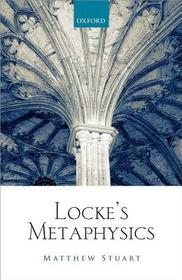
Locke's Metaphysics
-
10% KEDVEZMÉNY?
- A kedvezmény csak az 'Értesítés a kedvenc témákról' hírlevelünk címzettjeinek rendeléseire érvényes.
- Kiadói listaár GBP 127.50
-
57 566 Ft (54 825 Ft + 5% áfa)
Az ár azért becsült, mert a rendelés pillanatában nem lehet pontosan tudni, hogy a beérkezéskor milyen lesz a forint árfolyama az adott termék eredeti devizájához képest. Ha a forint romlana, kissé többet, ha javulna, kissé kevesebbet kell majd fizetnie.
- Kedvezmény(ek) 10% (kb. 5 756 Ft)
- Kedvezményes ár 51 810 Ft (49 343 Ft + 5% áfa)
Iratkozzon fel most és részesüljön kedvezőbb árainkból!
Feliratkozom
57 566 Ft

Beszerezhetőség
Megrendelésre a kiadó utánnyomja a könyvet. Rendelhető, de a szokásosnál kicsit lassabban érkezik meg.
Why don't you give exact delivery time?
A beszerzés időigényét az eddigi tapasztalatokra alapozva adjuk meg. Azért becsült, mert a terméket külföldről hozzuk be, így a kiadó kiszolgálásának pillanatnyi gyorsaságától is függ. A megadottnál gyorsabb és lassabb szállítás is elképzelhető, de mindent megteszünk, hogy Ön a lehető leghamarabb jusson hozzá a termékhez.
A termék adatai:
- Kiadó OUP Oxford
- Megjelenés dátuma 2013. július 18.
- ISBN 9780199645114
- Kötéstípus Keménykötés
- Terjedelem542 oldal
- Méret 234x162x36 mm
- Súly 944 g
- Nyelv angol 0
Kategóriák
Rövid leírás:
Matthew Stuart offers a fresh interpretation of John Locke's Essay Concerning Human Understanding, arguing for the work's profound contribution to metaphysics. He presents new readings of Locke's accounts of personal identity and the primary/secondary quality distinction, and explores Locke's case against materialism and his philosophy of action.
TöbbHosszú leírás:
Though John Locke set out to write a book that would resolve questions about the origin and scope of human knowledge, his Essay Concerning Human Understanding is also a profound contribution to metaphysics, full of arguments about the fundamental features of bodies, the notions of essence and kind, the individuation of material objects, personal identity, the nature and scope of volition, freedom of action, freedom of will, and the relationship between matter and mind. Matthew Stuart examines a broad range of these arguments, and explores the relationships between them. He offers fresh interpretations of such familiar material as the distinction between primary and secondary qualities, and Locke's account of personal identity; and he also takes us deeper into less familiar territory, including Locke's case against materialism and his philosophy of action.
Locke's Metaphysics shows Locke to be a more consistent, systematic and interesting metaphysician than is generally appreciated. It defends him against charges of muddling the definition of 'quality', of waffling between two conceptions of secondary qualities, and of vacillating in his commitment to mechanism. It shows how his rejection of essentialism leads him to embrace relativism about identity, and that his relativism about identity is the key to defending his account of personal identity against several objections.
Yet the picture of Locke that emerges is not always a familiar one. Stuart's account reveals that he is a philosopher who denies the existence of relations, who takes bodies to be colored only so long as we are looking at them, and who is not committed to mechanism. He shows that Locke takes persons to be three-dimensional beings whose pasts are 'gappy' rather than continuous. Finally, he shows that Locke is a volitionist who holds that we can will only our own thoughts and bodily motions, and not such episodes as lighting a candle or turning the pages of a book.
Stuart has written a big, judicious, reliable book ... I recommend it for anyone interested in Lockes metaphysics and for historically minded metaphysicians interested in powers, relative identity, and volitional accounts of agency.
Tartalomjegyzék:
Acknowledgements
Preface
Categories
Qualities
Secondary Qualities
Essence
Substratum
Mind and Matter
Identity
Persons
Agency: the First Edition
Agency: the Revised Account
Bibliography
Index

