

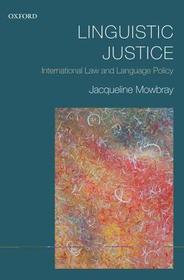
Linguistic Justice
International Law and Language Policy
-
10% KEDVEZMÉNY?
- A kedvezmény csak az 'Értesítés a kedvenc témákról' hírlevelünk címzettjeinek rendeléseire érvényes.
- Kiadói listaár GBP 140.00
-
66 885 Ft (63 700 Ft + 5% áfa)
Az ár azért becsült, mert a rendelés pillanatában nem lehet pontosan tudni, hogy a beérkezéskor milyen lesz a forint árfolyama az adott termék eredeti devizájához képest. Ha a forint romlana, kissé többet, ha javulna, kissé kevesebbet kell majd fizetnie.
- Kedvezmény(ek) 10% (cc. 6 689 Ft off)
- Kedvezményes ár 60 197 Ft (57 330 Ft + 5% áfa)
Iratkozzon fel most és részesüljön kedvezőbb árainkból!
Feliratkozom
66 885 Ft

Beszerezhetőség
Megrendelésre a kiadó utánnyomja a könyvet. Rendelhető, de a szokásosnál kicsit lassabban érkezik meg.
Why don't you give exact delivery time?
A beszerzés időigényét az eddigi tapasztalatokra alapozva adjuk meg. Azért becsült, mert a terméket külföldről hozzuk be, így a kiadó kiszolgálásának pillanatnyi gyorsaságától is függ. A megadottnál gyorsabb és lassabb szállítás is elképzelhető, de mindent megteszünk, hogy Ön a lehető leghamarabb jusson hozzá a termékhez.
A termék adatai:
- Kiadó OUP Oxford
- Megjelenés dátuma 2012. október 25.
- ISBN 9780199646616
- Kötéstípus Keménykötés
- Terjedelem248 oldal
- Méret 240x161x19 mm
- Súly 528 g
- Nyelv angol 0
Kategóriák
Rövid leírás:
An investigation into international law and language policy, this book uses critical analysis to conduct an examination of the aspects of international law which affect language use. It uncovers the conceptual framework which underpins international law on language, addressing the constitution of a 'just' language policy from a legal perspective.
TöbbHosszú leírás:
Globalization and migration are producing societies of increasing linguistic diversity. At the same time, English is achieving unprecedented global dominance, smaller languages are becoming 'extinct' at an alarming rate, and ethnic tensions in countries from Belgium to Tibet continue to centre on questions of language. Against this background, the issue of how to ensure justice between speakers of different languages becomes a pressing social concern. Matters of 'linguistic justice' are therefore drawing increasing scholarly attention across a range of disciplines.
How does international law contribute to linguistic justice? This book explores that question by conducting a comprehensive, interdisciplinary examination of international law on language, analysing the many disparate fields of international law which affect language use both directly (human rights, cultural heritage laws, and EU legislation, for example) and indirectly (international trade law and international labour standards, among others). Moving beyond the technical analysis of legal provisions, the book explores the conceptual framework which underpins international law on language, unearthing underlying assumptions and ideas about what constitutes a 'just' language policy from a legal perspective. In doing so, the book draws on the methodology of sociologist Pierre Bourdieu, whose ideas of 'habitus' and 'field' offer a way of understanding the changing significance of language to human identity, and the way in which language becomes a focal point for the exercise of social power. This analysis reveals the limitations of contemporary international law on language, and charts a course towards the achievement of greater 'linguistic justice'.
Tartalomjegyzék:
Introduction
Language in Education: Context and Complexity
Language in Culture and the Media: Complexity and Change
Language and Work: Systematic Disadvantage
Language and the State: The Politics of Language
Language and Participation in Public Life: Democracy and Doxa
Conclusion

