

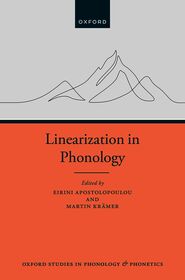
Linearization in Phonology
Sorozatcím: Oxford Studies in Phonology and Phonetics; 9;
-
10% KEDVEZMÉNY?
- A kedvezmény csak az 'Értesítés a kedvenc témákról' hírlevelünk címzettjeinek rendeléseire érvényes.
- Kiadói listaár GBP 125.00
-
56 437 Ft (53 750 Ft + 5% áfa)
Az ár azért becsült, mert a rendelés pillanatában nem lehet pontosan tudni, hogy a beérkezéskor milyen lesz a forint árfolyama az adott termék eredeti devizájához képest. Ha a forint romlana, kissé többet, ha javulna, kissé kevesebbet kell majd fizetnie.
- Kedvezmény(ek) % (cc. 0 Ft off)
- Kedvezményes ár 0 Ft (0 Ft + 5% áfa)
Iratkozzon fel most és részesüljön kedvezőbb árainkból!
Feliratkozom
56 437 Ft

Beszerezhetőség
Még nem jelent meg, de rendelhető. A megjelenéstől számított néhány héten belül megérkezik.
Why don't you give exact delivery time?
A beszerzés időigényét az eddigi tapasztalatokra alapozva adjuk meg. Azért becsült, mert a terméket külföldről hozzuk be, így a kiadó kiszolgálásának pillanatnyi gyorsaságától is függ. A megadottnál gyorsabb és lassabb szállítás is elképzelhető, de mindent megteszünk, hogy Ön a lehető leghamarabb jusson hozzá a termékhez.
A termék adatai:
- Kiadó OUP Oxford
- Megjelenés dátuma 2026. szeptember 24.
- ISBN 9780198974284
- Kötéstípus Keménykötés
- Terjedelem384 oldal
- Méret 234x156 mm
- Nyelv angol 700
Kategóriák
Rövid leírás:
This volume brings together a range of approaches to linearization in phonology and its interfaces with phonetics and syntax. The chapters draw on a wide range of theoretical and methodological approaches to demonstrate that sequencing phenomena can be explained without recourse to underlying linear order.
TöbbHosszú leírás:
This volume brings together a range of approaches to linearization in phonology and its interfaces with phonetics and syntax. Drawing on a wide range of theoretical perspectives and methodological approaches, the chapters explore the viability of accounts of linear order at different levels of representation, from the subsegmental and segmental domain to larger syntactic units. A series of central issues revolving around sequencing and phonological movement form a common theme across the book: these include the nature of rules deriving precedence relations; the indispensability of formal devices determining linearization; the role of phonology in the surface order of morphemes in a word and of words in a sentence; the size and shape of constituents subject to dislocation; and the extent to which (re)arrangement can result in structural optimization. Each chapter engages with a subset of these topics, either addressing broad theoretical questions and challenges to well-established notions, or exploring specific phenomena and patterns. Throughout the volume, the authors demonstrate that sequencing phenomena can be explained without recourse to underlying linear order. The variety of formal frameworks employed in the chapters reflects the rich toolset through which linearization in phonology can be formalized.
Több
