

-
10% KEDVEZMÉNY?
- A kedvezmény csak az 'Értesítés a kedvenc témákról' hírlevelünk címzettjeinek rendeléseire érvényes.
- Kiadói listaár GBP 25.99
-
11 734 Ft (11 175 Ft + 5% áfa)
Az ár azért becsült, mert a rendelés pillanatában nem lehet pontosan tudni, hogy a beérkezéskor milyen lesz a forint árfolyama az adott termék eredeti devizájához képest. Ha a forint romlana, kissé többet, ha javulna, kissé kevesebbet kell majd fizetnie.
- Kedvezmény(ek) 10% (cc. 1 173 Ft off)
- Kedvezményes ár 10 560 Ft (10 058 Ft + 5% áfa)
Iratkozzon fel most és részesüljön kedvezőbb árainkból!
Feliratkozom
11 734 Ft

Beszerezhetőség
Megrendelésre a kiadó utánnyomja a könyvet. Rendelhető, de a szokásosnál kicsit lassabban érkezik meg.
Why don't you give exact delivery time?
A beszerzés időigényét az eddigi tapasztalatokra alapozva adjuk meg. Azért becsült, mert a terméket külföldről hozzuk be, így a kiadó kiszolgálásának pillanatnyi gyorsaságától is függ. A megadottnál gyorsabb és lassabb szállítás is elképzelhető, de mindent megteszünk, hogy Ön a lehető leghamarabb jusson hozzá a termékhez.
A termék adatai:
- Kiadó OUP Oxford
- Megjelenés dátuma 2024. február 29.
- ISBN 9780198898726
- Kötéstípus Keménykötés
- Terjedelem218 oldal
- Méret 225x140x15 mm
- Súly 378 g
- Nyelv angol
- Illusztrációk None 483
Kategóriák
Rövid leírás:
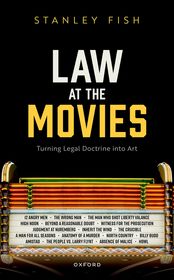
Stanley Fish focuses on well-known movies (such as Anatomy of a Murder, Twelve Angry Men, or A Man for All Seasons) that take law as their subject, and explains how legal doctrine is made into the stuff of plot and character. A book for movie lovers written in an accessible and engaging style.
TöbbHosszú leírás:
This book asks "How can legal doctrine be turned into filmic art?" By "legal doctrine" Stanley Fish does not mean the sonorous abstractions that usually accompany the self-presentation of law--Justice, Equity, Equality, Liberty, Autonomy, and the like. Rather he has in mind the specific rules and procedures invoked and analyzed by courts on the way to declaring a decision--lawyer/client confidentiality, the distinction between interdicted violence and the violence performed by the legal system, the interplay of positive law and laws rooted in morality, the difference between civilian law and military law, the death penalty, the admissibility of different forms of evidence. In the movies he discusses, these and other points of doctrine and procedure do not serve as a background, occasionally visited, to the substantive issues that drive the plot and provide the characters with choices; they declare the plot, and character is formed and tested in relationship to their demands. Apparently technical matters are pressed until they occupy both foreground and background and become the movie's true subject. If large, abstract concepts emerge, they emerge at the back end of doctrine and are, in effect, produced by doctrine. These are not law-themed movies; they are movies about the unfolding of legal process.
The book is a stimulating read.
Tartalomjegyzék:
Introduction
Liberal Heroism and Reasonable Doubt: 12 Angry Men
The Law as Blind Machine: The Wrong Man
The Law Emerges from Violence: The Man Who Shot Liberty Valance and High Noon
The Law as the Object of Manipulation: Beyond a Reasonable Doubt and Witness for the Prosecution
Natural Law vs. Positive Law: Judgment at Nuremberg
The Law's Dogma and Religious Dogma: Inherit the Wind
Visible and Spectral Evidence: The Crucible
Man-made Law as a Refuge from Both the Devil's Assaults and God's Commands: A Man for All Seasons
Law as Craft: Anatomy of a Murder
Sex, Class, and Class Action: North Country
Speech, Radical Innocence, and the Law: Billy Budd
The Law and Storytelling: Amistad
Free Speech for Good or Ill: The People vs. Larry Flynt and Absence of Malice
Poetry Is Against the Law: Howl
Conclusion: No More Delivered than Promised

