

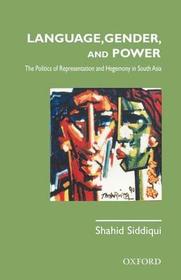
Language, Gender, and Power:
Politics of Representation and Hegemony in South Asia
-
10% KEDVEZMÉNY?
- A kedvezmény csak az 'Értesítés a kedvenc témákról' hírlevelünk címzettjeinek rendeléseire érvényes.
- Kiadói listaár GBP 20.99
-
9 476 Ft (9 025 Ft + 5% áfa)
Az ár azért becsült, mert a rendelés pillanatában nem lehet pontosan tudni, hogy a beérkezéskor milyen lesz a forint árfolyama az adott termék eredeti devizájához képest. Ha a forint romlana, kissé többet, ha javulna, kissé kevesebbet kell majd fizetnie.
- Kedvezmény(ek) 10% (kb. 947 Ft)
- Kedvezményes ár 8 529 Ft (8 123 Ft + 5% áfa)
Iratkozzon fel most és részesüljön kedvezőbb árainkból!
Feliratkozom
9 476 Ft

Beszerezhetőség
A kiadónál véglegesen elfogyott, nem rendelhető. Érdemes újra keresni a címmel, hátha van újabb kiadás.
Why don't you give exact delivery time?
A beszerzés időigényét az eddigi tapasztalatokra alapozva adjuk meg. Azért becsült, mert a terméket külföldről hozzuk be, így a kiadó kiszolgálásának pillanatnyi gyorsaságától is függ. A megadottnál gyorsabb és lassabb szállítás is elképzelhető, de mindent megteszünk, hogy Ön a lehető leghamarabb jusson hozzá a termékhez.
A termék adatai:
- Kiadó OUP Pakistan
- Megjelenés dátuma 2013. december 19.
- ISBN 9780199067398
- Kötéstípus Keménykötés
- Terjedelem384 oldal
- Méret 225x147x19 mm
- Súly 448 g
- Nyelv angol
- Illusztrációk 4 coloured figures 0
Kategóriák
Hosszú leírás:
The book focuses on the role of language as a powerful tool in representing and structuring the world. It explores how language can help construct stereotypes, identities, and human relationships. By constructing stereotypes language also manifests and perpetuates gender differences. The author examines how gender is in fact made up on a continuous basis in different linguistic and artistic expressions, e.g., sayings and proverbs, jokes, songs, films, TV plays,
newspapers, theatre, and slogans behind vehicles, and reveals how these apparently playful activities strengthen gender stereotypes unnoticed. The book highlights the politics of representation and hegemony with regard to women with special reference to language. The readers are encouraged to realize that
on the one hand language is a tool of control and hegemony while on the other hand it can be used to mount resistance against hegemony by reversing the discourse.
Tartalomjegyzék:
Contents:
Part 1: LANGUAGE, REPRESENTATION, AND HEGEMONY
Language: A socio-political phenomenon
Power and politics of discourse
Language, representation, and control
Part 2: LANGUAGE AND GENDER CONSTRUCTION
Manufacturing gender and role of language
Growing up with gender
Language and gender: Revisiting research
Part 3: LANGUAGE, GENDER, AND PERFORMANCE
Literature and politics of exclusion
Sayings, proverbs, and women
Gender and jokes
Matrimonial ads: societal expectations
Part 4: LANGUAGE, GENDER, AND EDUCATION
Gender and education
Nursery rhymes and gender representation
Representation of women in fairy tales
Part 5: LANGUAGE, GENDER, AND MEDIA
Gender and media
Women in advertisements
TV plays and gender stereotypes
Construction of gender in films
Representation of women in songs
Part 6: GENDERED DISCOURSE: REFORM AND RESISTANCE
Need for language reform
Resistance through language
Bibliography

