

-
8% KEDVEZMÉNY?
- A kedvezmény csak az 'Értesítés a kedvenc témákról' hírlevelünk címzettjeinek rendeléseire érvényes.
- Kiadói listaár GBP 175.00
-
79 012 Ft (75 250 Ft + 5% áfa)
Az ár azért becsült, mert a rendelés pillanatában nem lehet pontosan tudni, hogy a beérkezéskor milyen lesz a forint árfolyama az adott termék eredeti devizájához képest. Ha a forint romlana, kissé többet, ha javulna, kissé kevesebbet kell majd fizetnie.
- Kedvezmény(ek) 8% (kb. 6 321 Ft)
- Kedvezményes ár 72 692 Ft (69 230 Ft + 5% áfa)
Iratkozzon fel most és részesüljön kedvezőbb árainkból!
Feliratkozom
79 012 Ft

Beszerezhetőség
Még nem jelent meg, de rendelhető. A megjelenéstől számított néhány héten belül megérkezik.
Why don't you give exact delivery time?
A beszerzés időigényét az eddigi tapasztalatokra alapozva adjuk meg. Azért becsült, mert a terméket külföldről hozzuk be, így a kiadó kiszolgálásának pillanatnyi gyorsaságától is függ. A megadottnál gyorsabb és lassabb szállítás is elképzelhető, de mindent megteszünk, hogy Ön a lehető leghamarabb jusson hozzá a termékhez.
A termék adatai:
- Kiadó Edinburgh University Press
- Megjelenés dátuma 2026. július 31.
- ISBN 9781399559270
- Kötéstípus Keménykötés
- Terjedelem368 oldal
- Méret 244x170 mm
- Nyelv angol
- Illusztrációk 212 colour images, 3 black and white images, and 15 tables 700
Kategóriák
Rövid leírás:
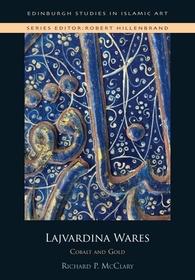
Provides the first comprehensive study of lajvardina as a class of ceramics, their distribution in the thirteenth and fourteenth centuries and their reception in the nineteenth and twentieth centuries.
TöbbHosszú leírás:
This book examines the well-known but still poorly understood corpus of lajvardina ware from Iran, Central Asia and Russia. Acting as a follow-up volume to Mina'i Ware: A Reassessment and Comprehensive Study of Iranian Polychrome Overglaze Wares Through Sherds (Edinburgh University Press, 2024), it employs a broadly similar methodological approach to the next phase in the development of overglaze painted wares. Most vessels in museums are rebuilt, often from pieces of multiple different vessels with extensive plaster fill and modern overpaint. This is similar to mina’i wares, but, unlike the earlier technique, the majority of extant lajvardina wares are tiles, and not subject to the same level of restoration and overpainting.
Beginning with a study of the process of transition from mina’i to lajvardina (with a shift from primarily white glaze to cobalt blue, a decline in figural decoration and a proliferation of new vessel forms), the book then moves on to address the extant corpus of tiles and vessels and integrates the later, related, lajvardina wares produced in Central Asia and Russia in the fourteenth century for the first time. Finally, the book examines the reception, trade, publication and display of lajvardina from the late nineteenth century to today.
Tartalomjegyzék:
List of Illustrations
Series Editor's Foreword
Acknowledgements
Introduction
Chapter 1: Mina’i to Lajvardina: Continuity or Rupture?
Chapter 2: The Materials, Methods and Distribution of Lajvardina
Chapter 3: Lajvardina Vessels: Forms and Decoration
Chapter 4: Lajvardina Tiles: Takht-i Sulayman and Beyond
Chapter 5: Beyond Iran: Lajvardina in Central Asia and the Lands of the Golden Horde
Chapter 6: The Collection, Reception and Display of Lajvardina from the Mid-Nineteenth Century CE until Today
Conclusion
Appendices
Bibliography
Index

