

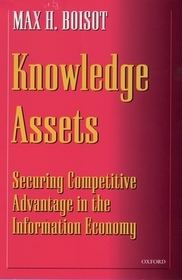
Knowledge Assets
Securing Competitive Advantage in the Information Economy
-
10% KEDVEZMÉNY?
- A kedvezmény csak az 'Értesítés a kedvenc témákról' hírlevelünk címzettjeinek rendeléseire érvényes.
- Kiadói listaár GBP 84.00
-
40 131 Ft (38 220 Ft + 5% áfa)
Az ár azért becsült, mert a rendelés pillanatában nem lehet pontosan tudni, hogy a beérkezéskor milyen lesz a forint árfolyama az adott termék eredeti devizájához képest. Ha a forint romlana, kissé többet, ha javulna, kissé kevesebbet kell majd fizetnie.
- Kedvezmény(ek) 10% (cc. 4 013 Ft off)
- Kedvezményes ár 36 118 Ft (34 398 Ft + 5% áfa)
Iratkozzon fel most és részesüljön kedvezőbb árainkból!
Feliratkozom
40 131 Ft

Beszerezhetőség
Megrendelésre a kiadó utánnyomja a könyvet. Rendelhető, de a szokásosnál kicsit lassabban érkezik meg.
Why don't you give exact delivery time?
A beszerzés időigényét az eddigi tapasztalatokra alapozva adjuk meg. Azért becsült, mert a terméket külföldről hozzuk be, így a kiadó kiszolgálásának pillanatnyi gyorsaságától is függ. A megadottnál gyorsabb és lassabb szállítás is elképzelhető, de mindent megteszünk, hogy Ön a lehető leghamarabb jusson hozzá a termékhez.
A termék adatai:
- Kiadás sorszáma New ed
- Kiadó OUP Oxford
- Megjelenés dátuma 1999. szeptember 23.
- ISBN 9780198296072
- Kötéstípus Puhakötés
- Terjedelem308 oldal
- Méret 234x156x18 mm
- Súly 481 g
- Nyelv angol
- Illusztrációk numerous figures, and tables 0
Kategóriák
Rövid leírás:
The effective management of knowledge assets is a key requirement for securing competitive advantage in the emerging information economy. The nature of knowledge assets, however, remains poorly understood. In this new paperback edition, Max Boisot provides a conceptual framework for managers and students that will help them explore and understand how knowledge and information assets differ from physical assets, and how to deal with them at a strategic level within their organizations.
TöbbHosszú leírás:
It is now widely recognized that the effective management of knowledge assets is a key requirement for securing competitive advantage in the emerging information economy. Yet the physical and institutional differences between tangible assets and knowledge assets remain poorly understood.
In the case of knowledge, the ownership and control of assets are becoming ever more separate, a phenomenon that is actually exacerbated by the phenomenon of learning. If we are to meet the challenges of the information economy, then we need a new approach to property rights based on a deeper theoretical understanding of knowledge assets.
Max Boisot writes clearly and in accessible language providing some of the key building blocks which are needed for a theory of knowledge assets. He develops a powerful conceptual framework, the Information-Space or I-Space, for exploring the way knowledge flows within and between organizations. This framework will enable managers and students to explore and understand how knowledge and information assets differ from physical assets, and how to deal with them at a strategic level within their organizations.
Max Boisot has written a book for any thinking manager, politician or lawyer interested in the role of information and intellectual property in the evolution of the information economy.
Tartalomjegyzék:
Introduction
The Information Perspective
The Information Space
The Paradox of Value
Neoclassical versus Schumpeterian Orientation to Learning
Culture as a Knowledge Asset
Products, Technologies, and Organizations in the Social Learning Cycle
Competence and Intent
IT and its Impact
Applying the I-Space
Recapitulation and Conclusion

