

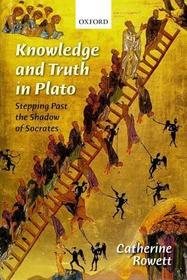
Knowledge and Truth in Plato
Stepping Past the Shadow of Socrates
-
10% KEDVEZMÉNY?
- A kedvezmény csak az 'Értesítés a kedvenc témákról' hírlevelünk címzettjeinek rendeléseire érvényes.
- Kiadói listaár GBP 96.00
-
43 344 Ft (41 280 Ft + 5% áfa)
Az ár azért becsült, mert a rendelés pillanatában nem lehet pontosan tudni, hogy a beérkezéskor milyen lesz a forint árfolyama az adott termék eredeti devizájához képest. Ha a forint romlana, kissé többet, ha javulna, kissé kevesebbet kell majd fizetnie.
- Kedvezmény(ek) 10% (kb. 4 334 Ft)
- Kedvezményes ár 39 010 Ft (37 152 Ft + 5% áfa)
Iratkozzon fel most és részesüljön kedvezőbb árainkból!
Feliratkozom
43 344 Ft

Beszerezhetőség
Megrendelésre a kiadó utánnyomja a könyvet. Rendelhető, de a szokásosnál kicsit lassabban érkezik meg.
Why don't you give exact delivery time?
A beszerzés időigényét az eddigi tapasztalatokra alapozva adjuk meg. Azért becsült, mert a terméket külföldről hozzuk be, így a kiadó kiszolgálásának pillanatnyi gyorsaságától is függ. A megadottnál gyorsabb és lassabb szállítás is elképzelhető, de mindent megteszünk, hogy Ön a lehető leghamarabb jusson hozzá a termékhez.
A termék adatai:
- Kiadó OUP Oxford
- Megjelenés dátuma 2018. április 26.
- ISBN 9780199693658
- Kötéstípus Keménykötés
- Terjedelem328 oldal
- Méret 241x164x26 mm
- Súly 656 g
- Nyelv angol 0
Kategóriák
Rövid leírás:
Catherine Rowett presents an in depth study of Plato's Meno, Republic and Theaetetus and offers both a coherent argument that the project in which Plato was engaging has been widely misunderstood and misrepresented, and detailed new readings of particular thorny issues in the interpretation of these classic texts.
TöbbHosszú leírás:
Several myths about Plato's work are decisively challenged by Catherine Rowett: the idea that Plato agreed with Socrates about the need for a definition of what we know; the idea that he set out to define justice in the Republic; the idea that knowledge is a kind of true belief, or that Plato ever thought that it might be something like that; the idea that "knowledge proper" is propositional, and that the Theaetetus was Plato's best attempt to define knowledge as a species of belief, and that it only failed due to his incompetence.
Instead Rowett argues that Plato was replacing the failed methods of Socrates, including his attempt to find a definition or single common factor, and that he replaced those methods with methods derived from geometry, including methods that involve inference from shadows to their originals (a method which Rowett calls "the iconic method"). As a result we should see that Plato is presenting the knowledge that is acquired as non-propositional and pictorial in nature, and that it is to be identified not with knowledge of facts nor of objects, but of types qua types-types that stand to the tokens that are used in our enquiry as original to shadow. The book includes detailed studies of the Meno, Republic and Theaetetus, and argues that the insights that Plato brings about the nature of conceptual knowledge, its importance in underpinning all other activities, and about the notion of truth as it applies to conceptual competence, are significant and should be taken seriously as a corrective to areas in which current analytic philosophy has lost its way.
Tartalomjegyzék:
Part One: Knowledge, Truth and Belief
Knowledge, Conceptual knowledge and the Iconic Route to Grasping an Idea
Truth and belief
Part Two: Plato's Meno
Introduction and summary for Part Two: Plato's Meno
Knowing what virtue is in Plato's Meno
Knowledge and correct impressions in Plato's Meno
Part Three: Plato's Republic
Introduction and summary for Part Three: Plato's Republic
Discovering what justice is, in Plato's Republic
Platonic method: the philosopher's route to knowledge in Plato's Republic
Part Four: Plato's Theaetetus
Introduction and summary for Part 4: Plato's Theaetetus
Geometry and the Scientific Project: Theaetetus 142a-184b
The division between Sense Perception and non-sensory Doxa in the Interlude: Theaetetus 184a to 187b
On the failure of the remaining two attempts to analyse episteme: Theaetetus 187b to 210a
Part Five: The Bigger Picture
Conclusions and further tasks

