

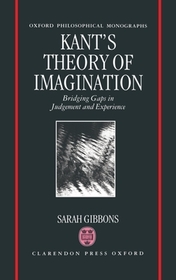
Kant's Theory of Imagination
Bridging Gaps in Judgement and Experience
Sorozatcím: Oxford Philosophical Monographs;
-
10% KEDVEZMÉNY?
- A kedvezmény csak az 'Értesítés a kedvenc témákról' hírlevelünk címzettjeinek rendeléseire érvényes.
- Kiadói listaár GBP 152.50
-
68 853 Ft (65 575 Ft + 5% áfa)
Az ár azért becsült, mert a rendelés pillanatában nem lehet pontosan tudni, hogy a beérkezéskor milyen lesz a forint árfolyama az adott termék eredeti devizájához képest. Ha a forint romlana, kissé többet, ha javulna, kissé kevesebbet kell majd fizetnie.
- Kedvezmény(ek) 10% (kb. 6 885 Ft)
- Kedvezményes ár 61 968 Ft (59 018 Ft + 5% áfa)
Iratkozzon fel most és részesüljön kedvezőbb árainkból!
Feliratkozom
68 853 Ft

Beszerezhetőség
Megrendelésre a kiadó utánnyomja a könyvet. Rendelhető, de a szokásosnál kicsit lassabban érkezik meg.
Why don't you give exact delivery time?
A beszerzés időigényét az eddigi tapasztalatokra alapozva adjuk meg. Azért becsült, mert a terméket külföldről hozzuk be, így a kiadó kiszolgálásának pillanatnyi gyorsaságától is függ. A megadottnál gyorsabb és lassabb szállítás is elképzelhető, de mindent megteszünk, hogy Ön a lehető leghamarabb jusson hozzá a termékhez.
A termék adatai:
- Kiadó Clarendon Press
- Megjelenés dátuma 1994. október 27.
- ISBN 9780198240419
- Kötéstípus Keménykötés
- Terjedelem216 oldal
- Méret 225x144x17 mm
- Súly 378 g
- Nyelv angol 0
Kategóriák
Rövid leírás:
Sarah Gibbons here departs from previous scholarship on Kant by demonstrating the centrality of imagination to Kant's philosophy as a whole. She shows that imagination performs a vital function in `bridging gaps' between the different elements of cognition and experience. Thus, the role imagination plays in Kant's works expresses his fundamental insight into the complexity of human cognition.
TöbbHosszú leírás:
This book departs from much of the scholarship on Kant by demonstrating the centrality of imagination to Kant's philosophy as a whole. In Kant's works, human experience is simultaneously passive and active, thought and sensed, free and unfree: these dualisms are ofen thought of as unfortunate byproducts of his system. Gibbons, however, shows that imagination performs a vital function in 'bridging gaps' between the different elements of cognition and experience. Thus, the role imagination plays in Kant's works expresses his fundamental insight into the complexity of cognition for finite rational beings such as ourselves.
Gibbons begins with an interpretation of synthesis which shows it to be a broader activity than most accounts suggest. Examining the first Critique, she presents a reading of the Transcendental Deduction and the chapter on Schematism that spells out the extraconceptual activities of imagination essential to cognition. This account of imagination is built upon in the Critique of Judgment, where Kant elaborates its role in characterizing the subjective conditions of judgement.
Throughout, the cooperation of imagination and reason is highlighted; Gibbons shows that on Kant's account, human beings pursue reason's ideal ends through the provisional and continuing attempt to articulate them. This attempt involves an appeal to a shared social and historical imagination - thus, a full characterization of the subjective conditions of judgement must include the role of imagination.
This work goes well beyond many books on the Critique of Judgement in the breadth and importance of the issues it raises.

